
If you’ve seen many (or even some) of our posts from the cities we’ve visited in 2025, our first year of extended travel, you have probably noticed that we visit museums in most places we go. Some have been devoted to history, archeology, oceanography, musical instruments, or even chocolate, but the majority are art museums.
After three one-month trips (two to Europe and one to Southeast Asia and Australia), we’ve lost count of the museums we’ve visited. At times, we have felt maxed out on art museums – especially those that specialize in the “classic” European art of the 17th, 18th, and 19th centuries. After a while, they all look the same.
We’ve seen some outstanding art museums and others that were a waste of time. Most have sufficient merit that, at the end of our visit, we felt our time was well spent. Occasionally, a museum stands out as a particularly exceptional experience.
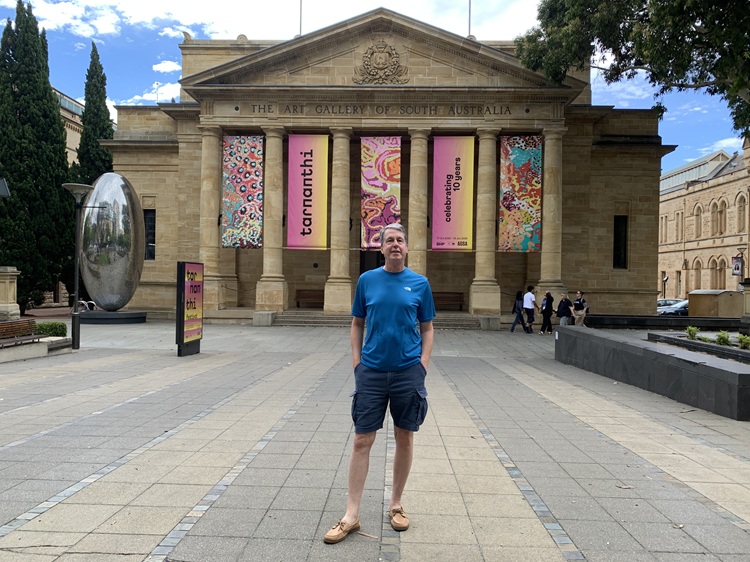
Such was certainly the case at the Art Gallery of South Australia (AGSA) in Adelaide. We spent most of the afternoon absorbed in its exhibits. We had planned to visit the history museum next door during the same afternoon, but we pushed that to a later day.
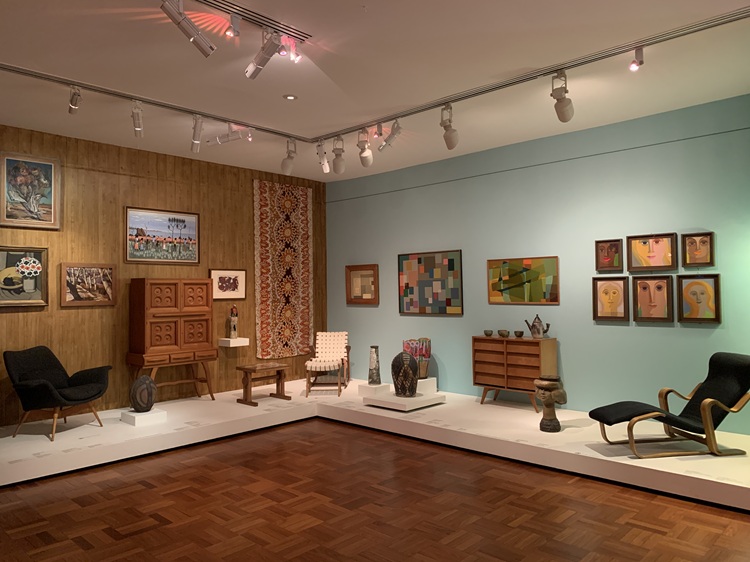
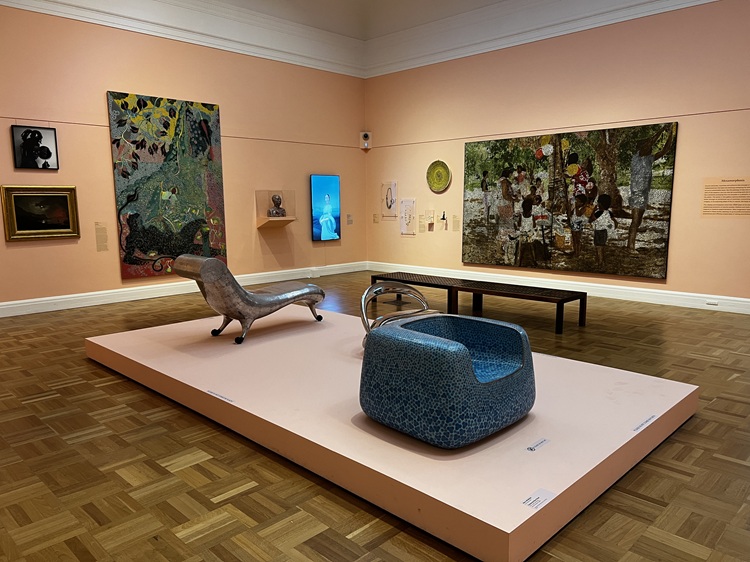
What made AGSA so appealing was the wide range of art on display. Paintings, sculptures, furniture, glass creations, fashion, suspended materials, and more were often placed together to create multi-faceted rooms. Old and new works were displayed side by side. We appreciated this boundary-free approach to experiencing art. The variety kept our interest and allowed us to notice each piece on an individual basis rather than being, for example, one painting in a room of fifty.
The building itself was beautiful. It created an environment worthy of the art it contained.
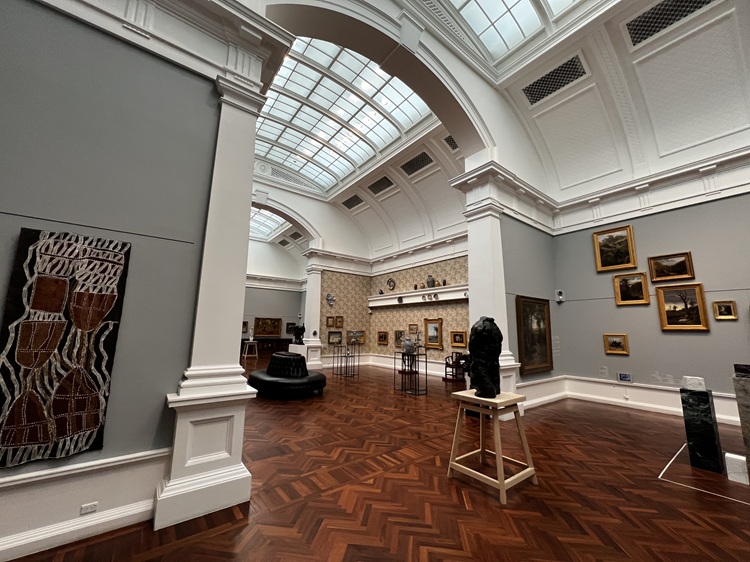
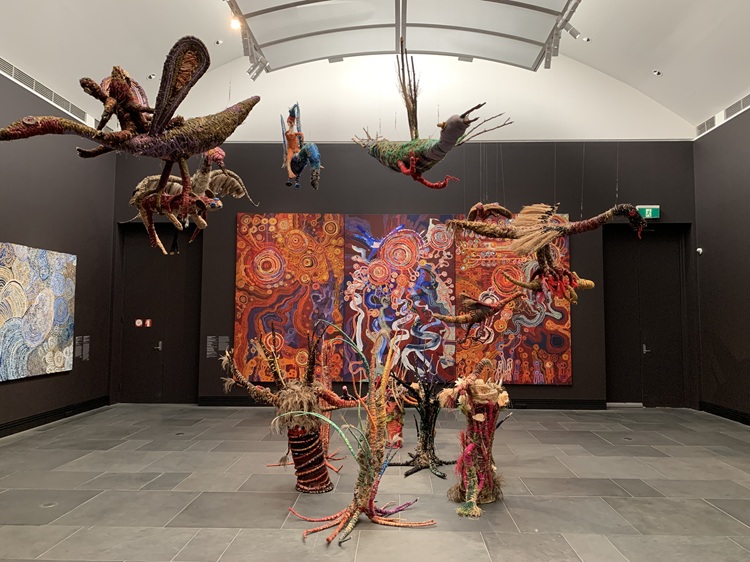
Their featured exhibition, Tarnanthi Festival, displayed indigenous art from Australia’s original inhabitants. While some rooms were devoted entirely to this exhibition, Aboriginal works were also scattered throughout the museum (as in the picture above), placed among the rest of their Australian art, illustrating that native art deserves “a place at the table” along with everything else.
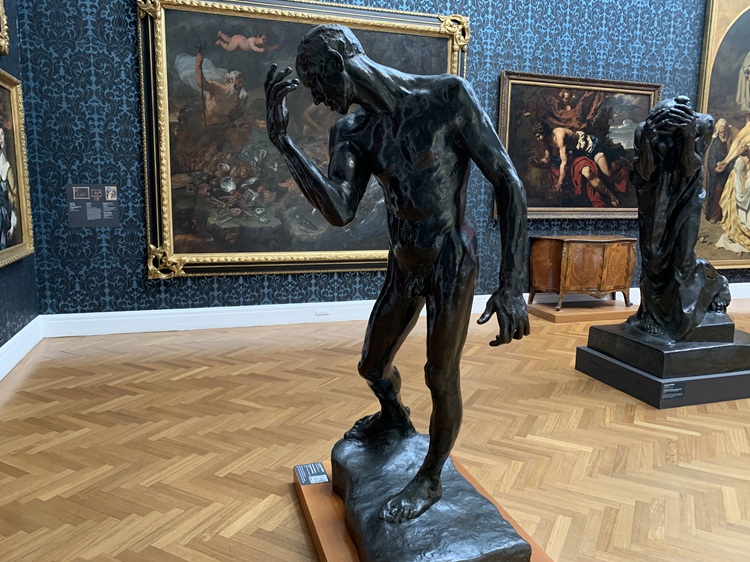
Now, without much more commentary, here is a collection of the works we enjoyed at AGRA. We hope this selection gives you an idea of the breadth of their collection and the effective ways they presented it.
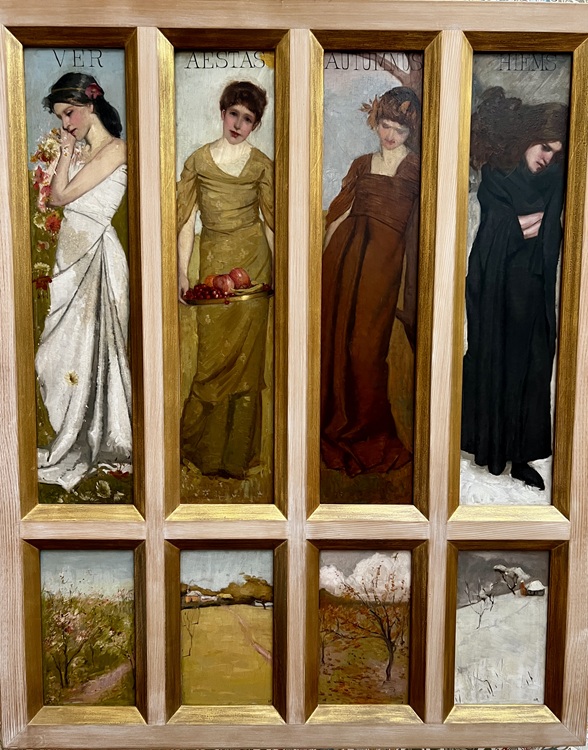

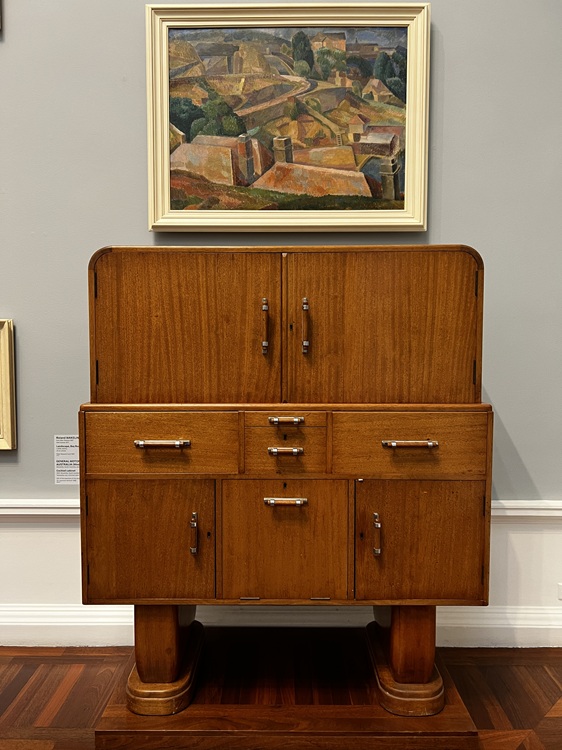
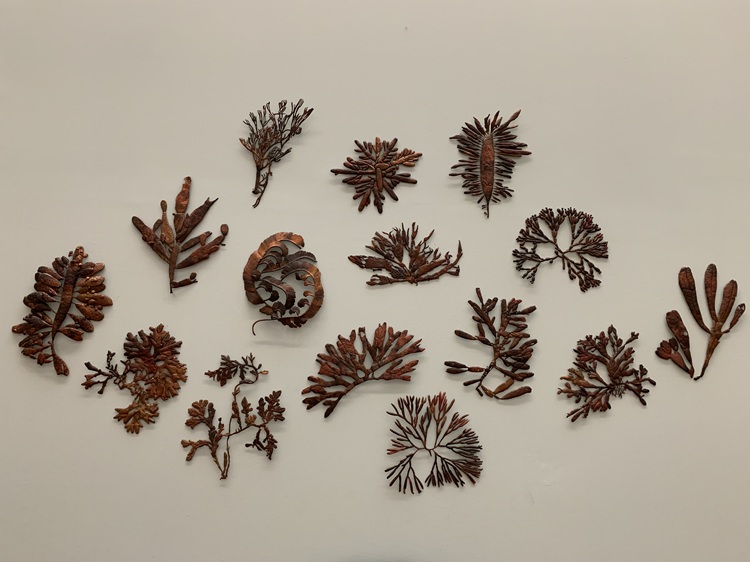
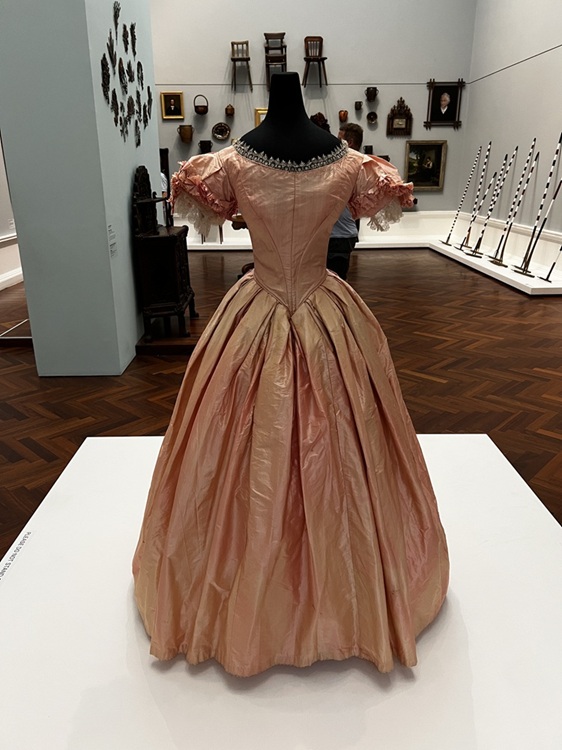
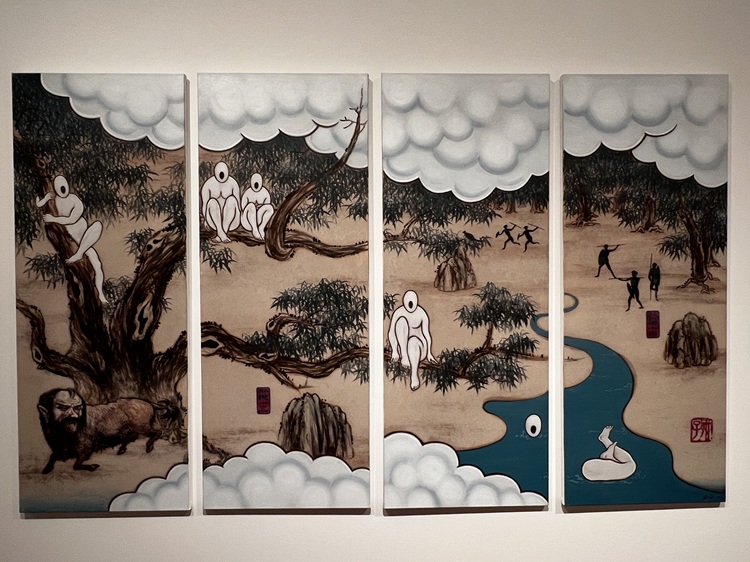
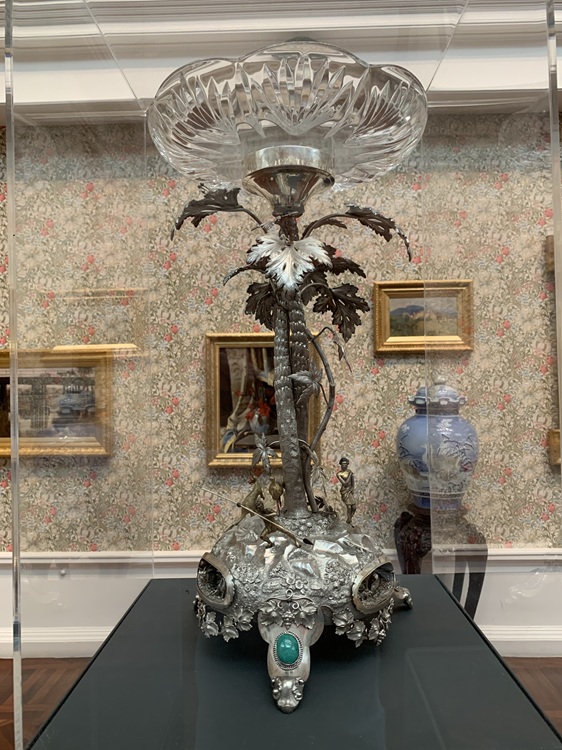
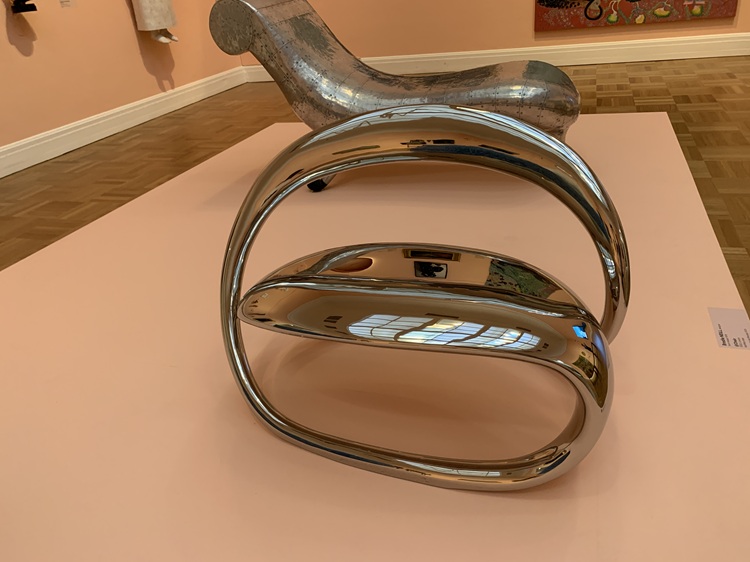
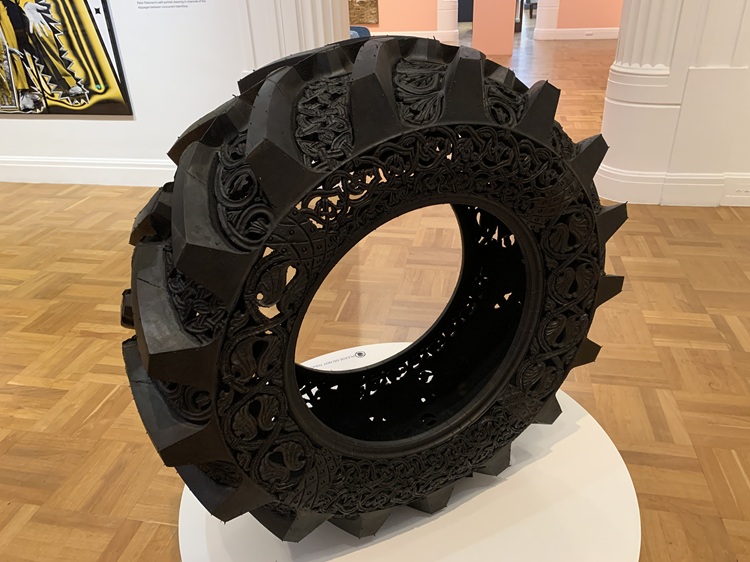
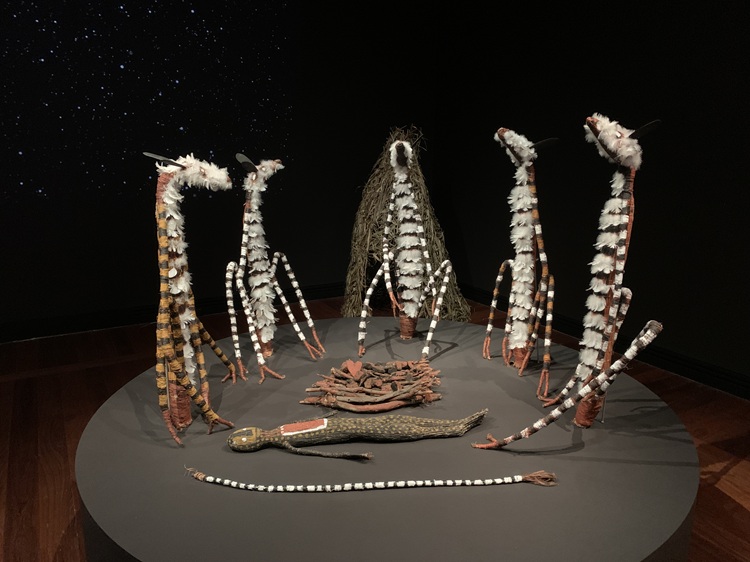
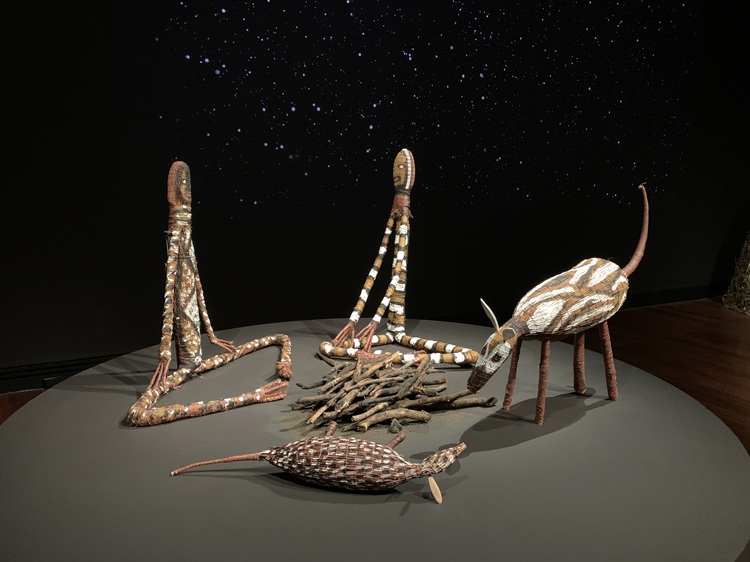
The next five works are from the Tarnanthi Festival exhibit of Aboriginal art.

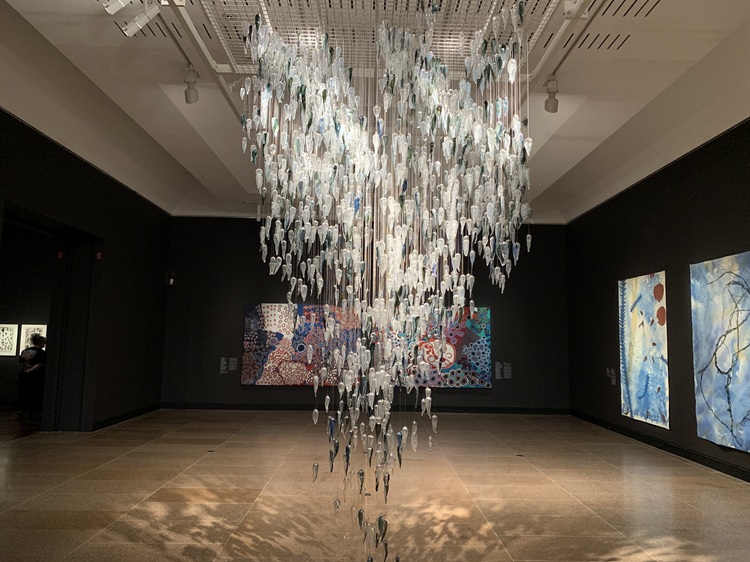
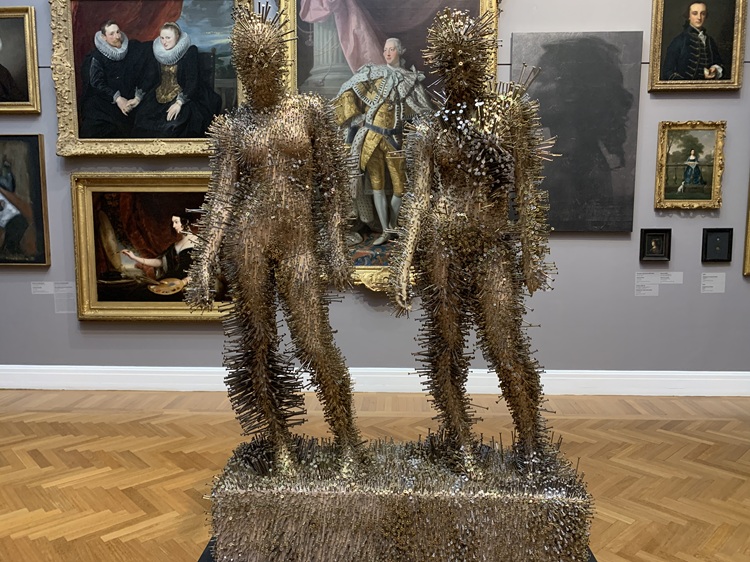
There were several curious and disturbing works on display. But then, art is not supposed to be pretty all the time. Sometimes its purpose is to convey an unpleasant message or prompt you to think.
We assumed this was a diorama depicting a Nazi concentration camp or POW camp.
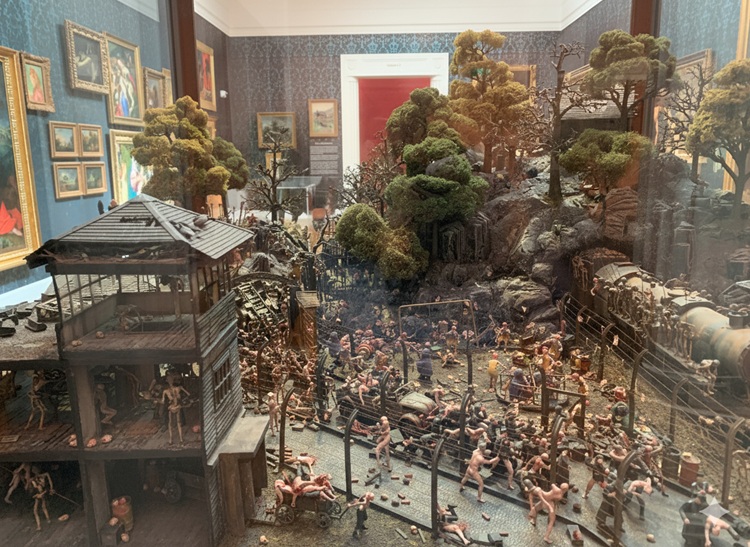
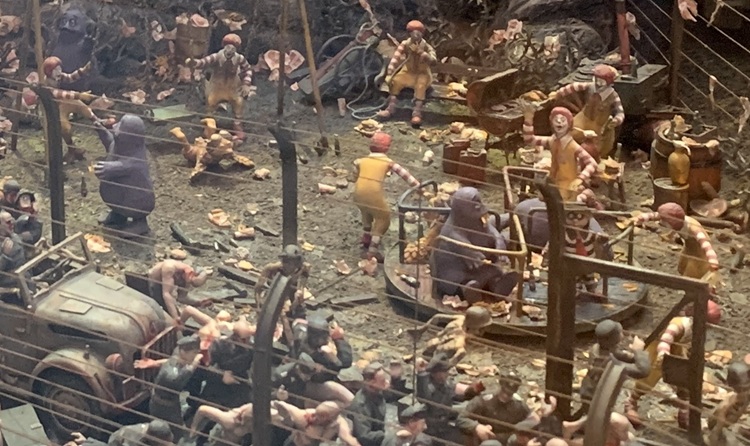
Interesting side note on this one. Our original photo showed a lot of reflection in the glass. When Jeff tried to use ChatGPT to remove the reflection, it named the picture a “hellish diorama in a museum setting.” Unfortunately, it would not complete the job because the picture violated its “community standards” for nudity. Jeff then tried Nano Banana, a Google/Gemini tool, and it rendered this photo. There’s a little bit of reflection remaining, but most of it is gone. Impressive!
If you look closely at the enclosure in the center, you’ll see some yellow Ronald McDonald figures with the Hamburglar and a couple of Grimaces. Hmmm…
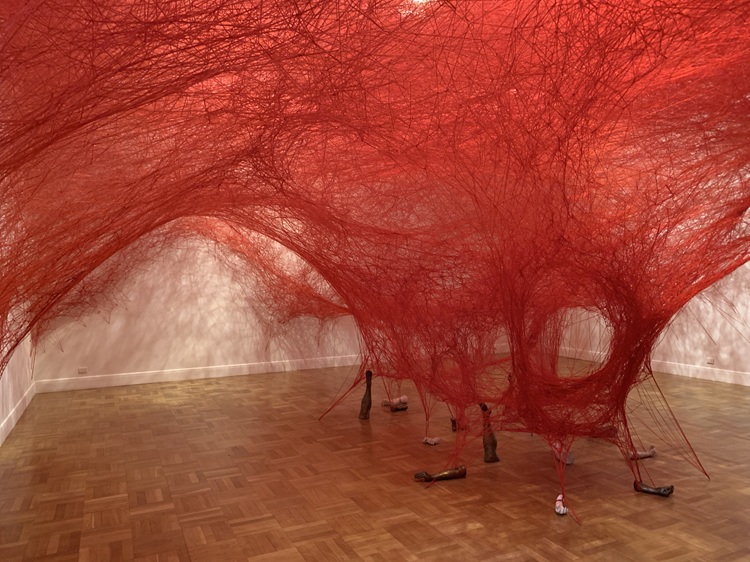
This installation is titled “Absence Embodied,” by Japanese artist Chiharu Shiota. Yes, those are body parts on the floor. We have no idea what this means, but it was different.
Despite the perplexing and disturbing pieces, our visit to the Art Gallery of South Australia was interesting, enjoyable, and memorable. We highly recommend it if you’re ever in Adelaide. Best of all, it was free, demonstrating that their government values and funds art as an important part of the area’s culture.