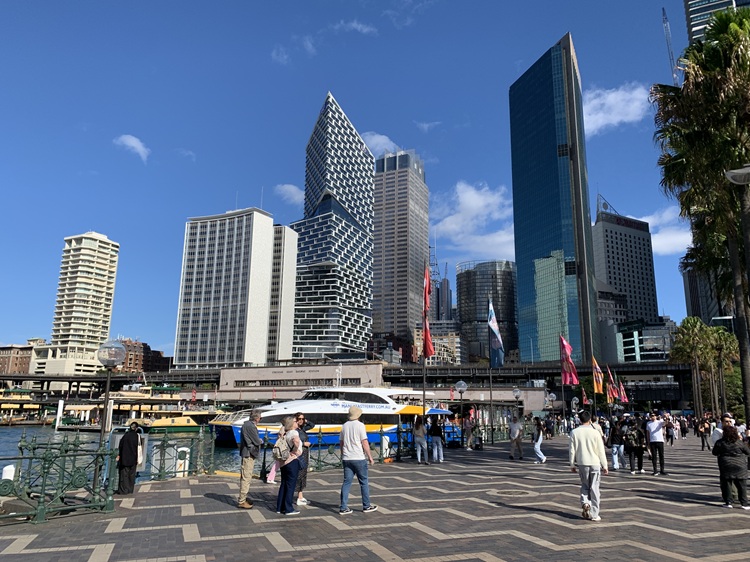
We concluded our seven-week trip to New Zealand and Australia with a five-night, four-day stay in Sydney. We toured the iconic Opera House, strolled through the Royal Botanic Garden, and visited three museums. One day, we took a tour to the Blue Mountains National Park and the Featherdale Wildlife Park, which we cover in this post.
In December, 2025, we visited Perth and Adelaide after taking a cruise from Hong Kong to Singapore. On this trip, we visited Hobart, Melbourne, Brisbane, and Sydney to complete our tour of Australia’s six state capitals. All of these cities were interesting, enjoyable, and livable, with plenty of things to see and do.
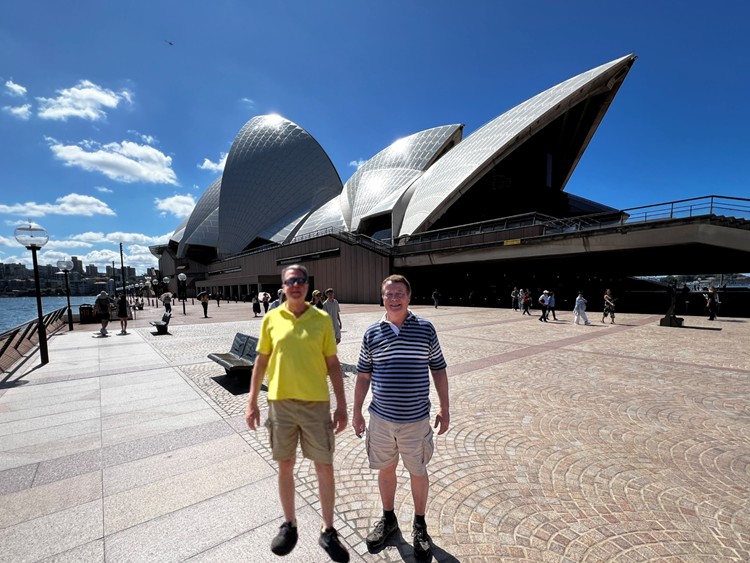
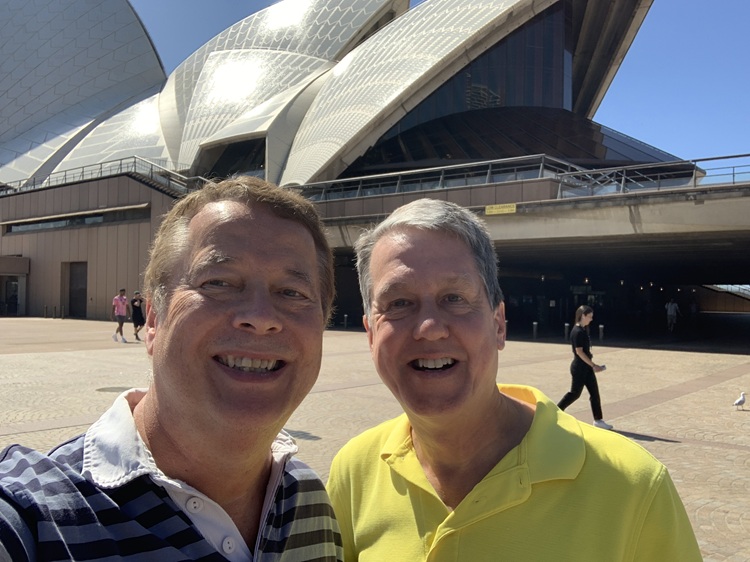
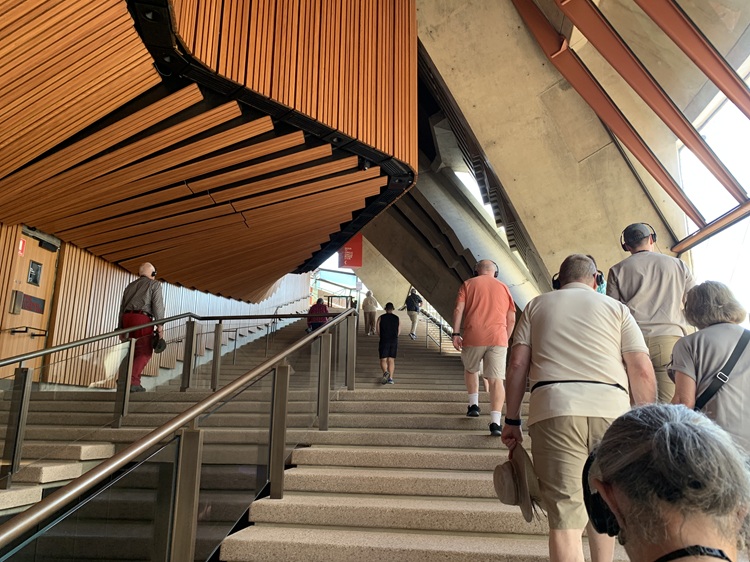
We enjoyed a one-hour guided tour of Sydney’s Opera House. It is truly an architectural marvel as well as being visually impressive.
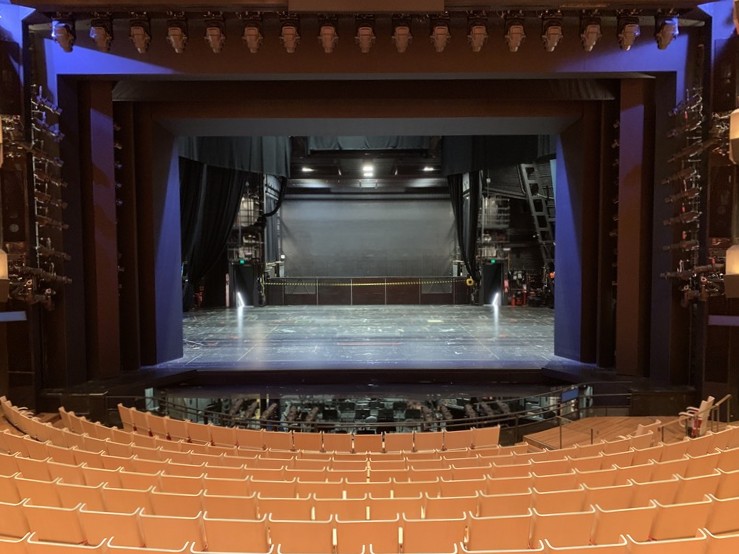
This is the smaller of the two main auditoriums, where the opera and ballet companies perform. We were surprised to see the stage empty at 11:00 AM. Our guide said the crew would begin setting the stage for the evening’s performance at 3:00. As it turns out, their schedule rotates through several works to give the opera singers several days to rest between shows. They sing unamplified. So the set changes every day.
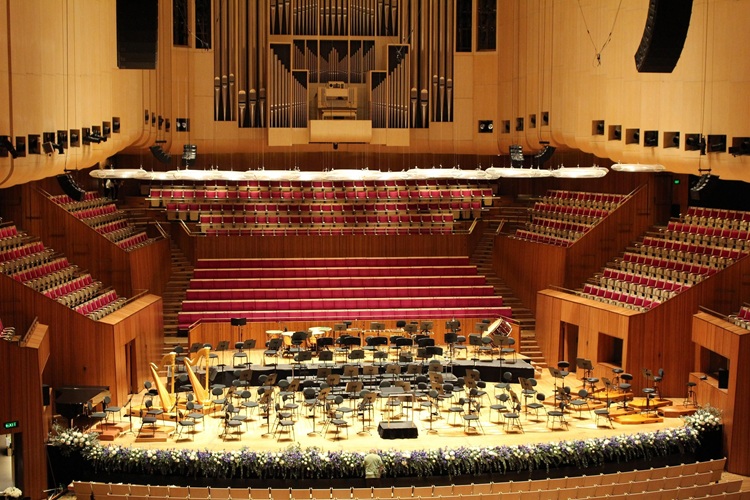
This is the stage of the main concert hall, where the symphony orchestra performs. The orchestra was rehearsing when we visited, so we were instructed to remain very quiet and not take pictures or videos. This is a free-use photo found on Pixabay.
Note that there is audience seating beside and behind the stage. Also, the pipe organ is massive! Only a small portion of the pipes can be seen here.
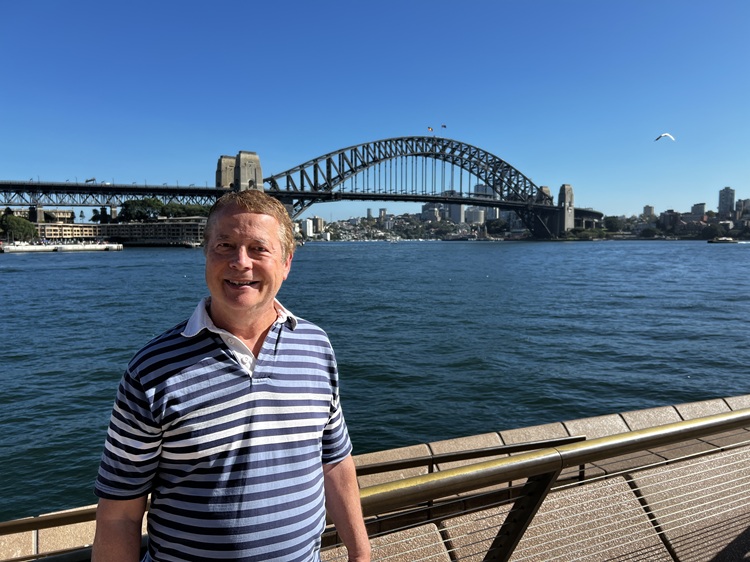
The Harbour Bridge, as seen from the plaza outside the Opera House. You can’t see it in this picture, but there were people at the top of the bridge, near the flags. No thanks!
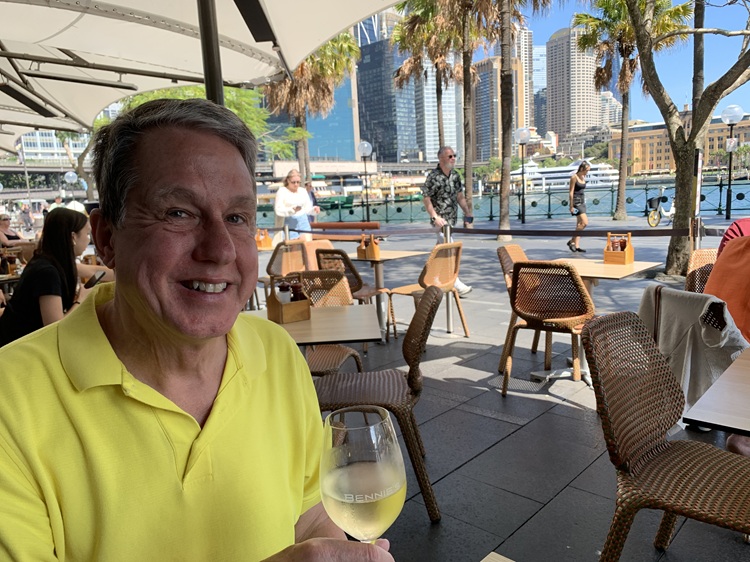
We enjoyed lunch after the tour at a sidewalk cafe on the waterfront, in front of the Opera House. It was a perfect day for people-watching, especially the joggers!
After lunch, we visited the Royal Botanic Garden, which is right next to the Opera House on the opposite side from the Harbour Bridge. It was more of a large city park than a display of interesting plants, but it was lovely.
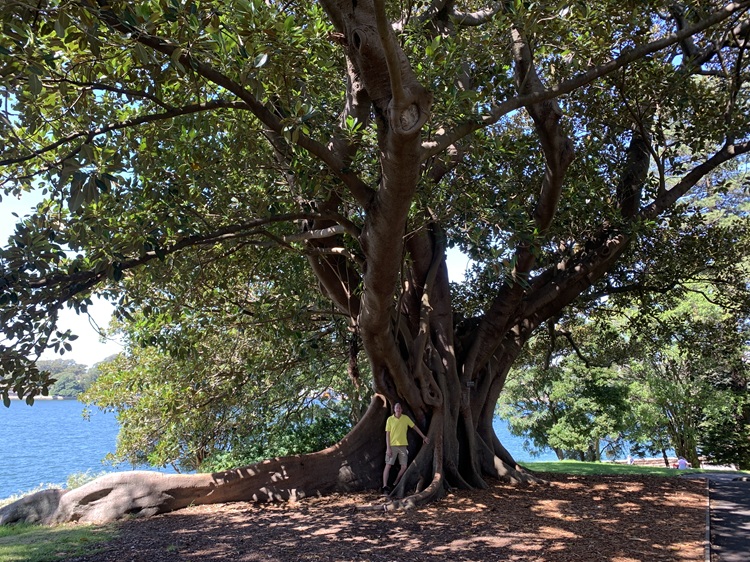
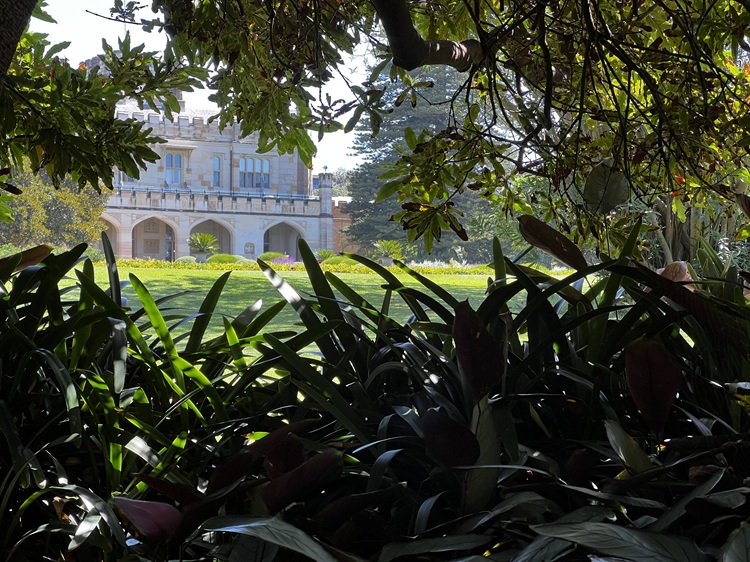
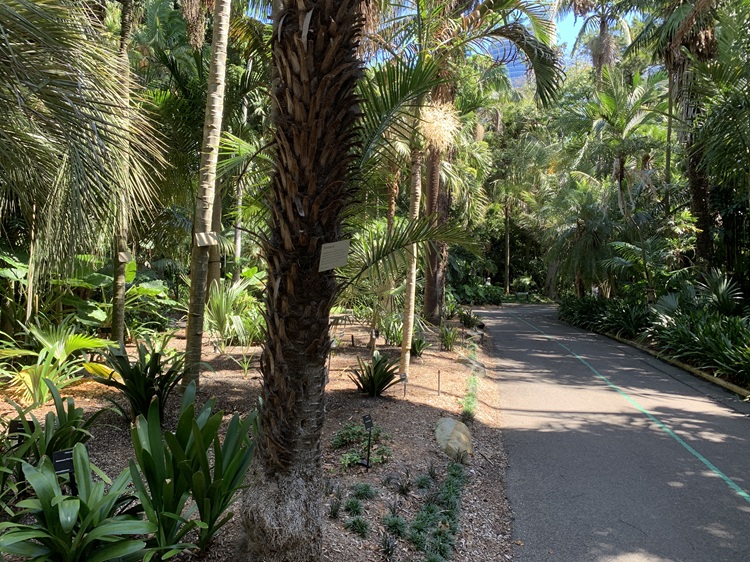
A view of the city from the park.
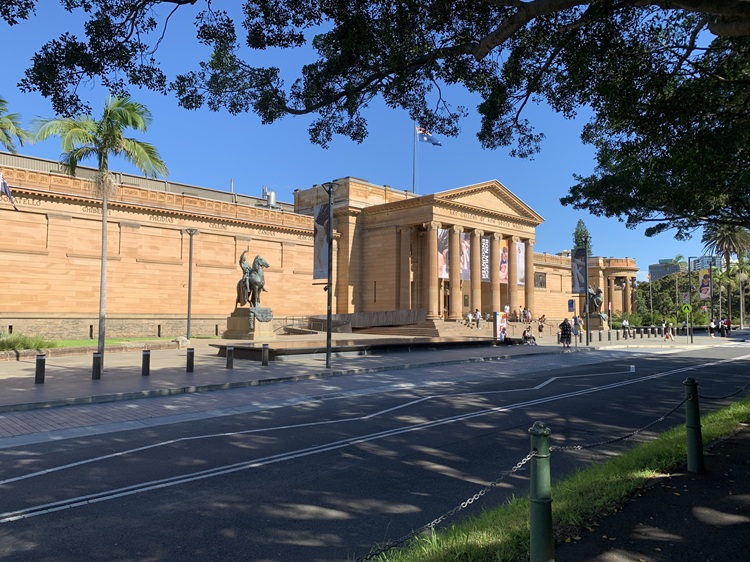
The Art Gallery of New South Wales was just on the other side of the Royal Botanic Garden. In addition to this large, handsome building, there was a newer, more modern expansion to the left.
One of the things that impressed us the most about every city we visited in Australia was the size and quality of its museums, which presented a wide range of art across many disciplines and centuries. And they were free, which demonstrates the government’s commitment to the arts.
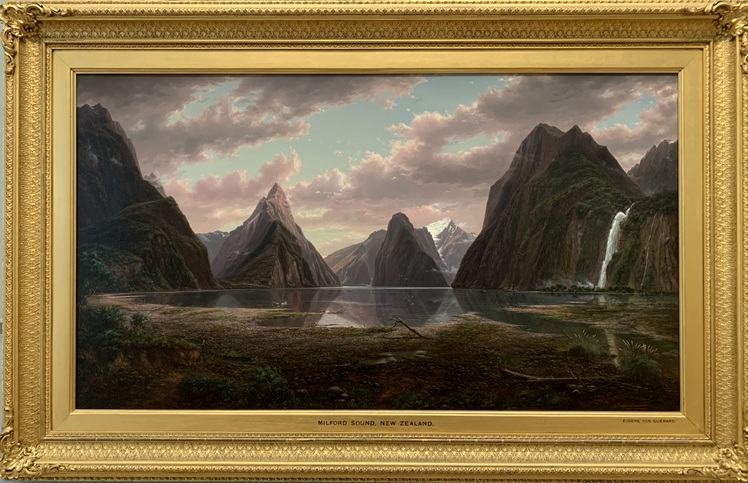
Since we had visited Milford Sound earlier on our trip, we enjoyed seeing this painting of it.
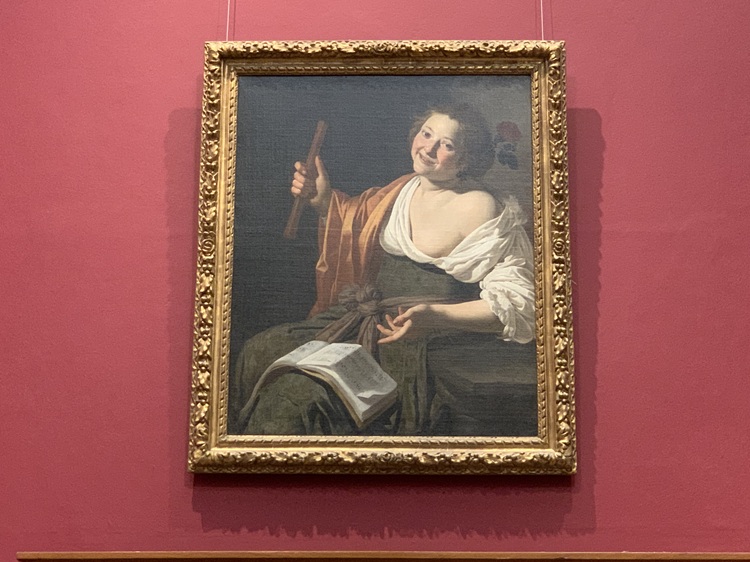
When Jeff spotted this painting, titled “Girl with a Flute” by Jan van Bijlert (Netherlands, c. 1630), he immediately recognized it from an art history book that was used in a Humanities class he took in college.
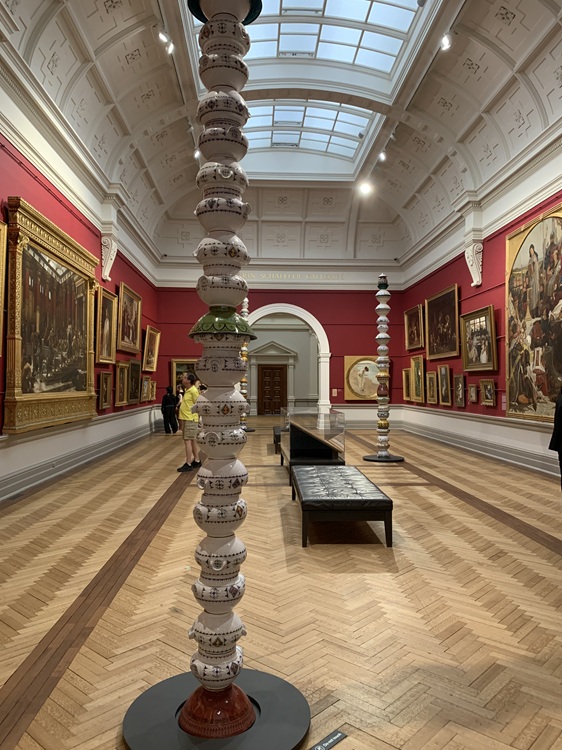
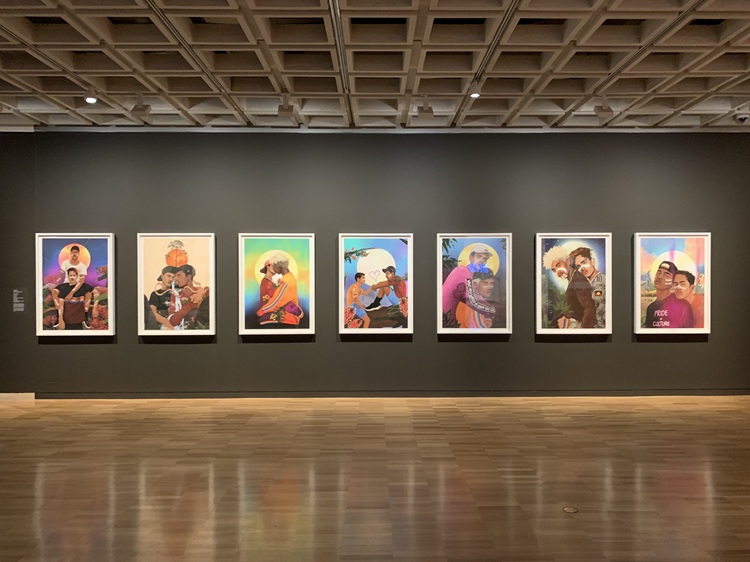
This collection of digital prints from Aboriginal artist Dylan Mooney celebrates same-sex love between Aboriginal young men. We also saw the third work at a museum in Brisbane.
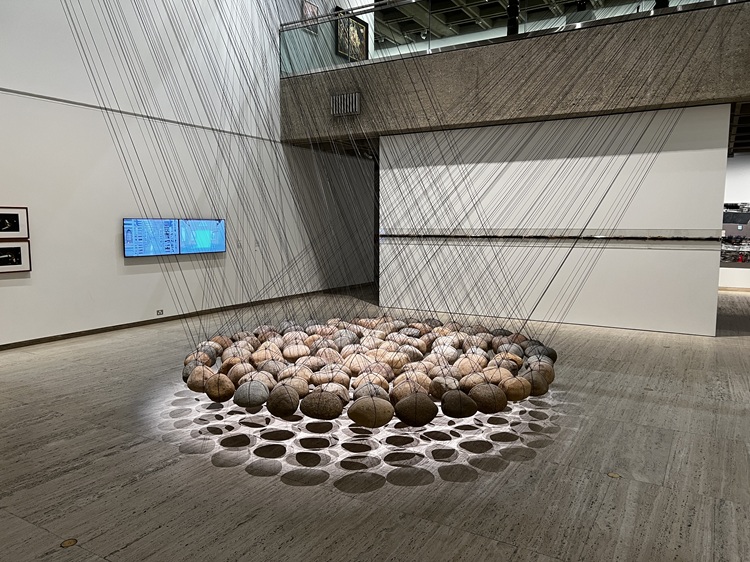
This work was displayed in the new addition. The rocks are all suspended. For whatever reason, it impressed us.
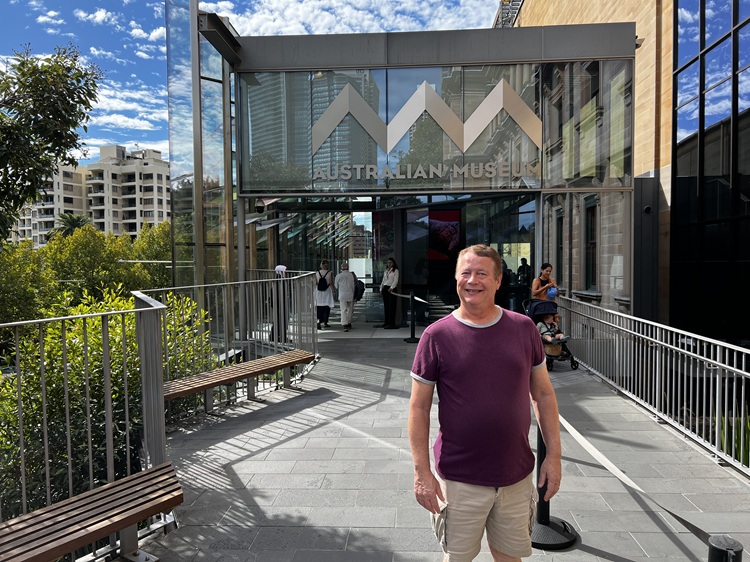
The Australian Museum was a short walk from our apartment. It was more focused on Australia’s history and wildlife (lots of taxidermied animals).
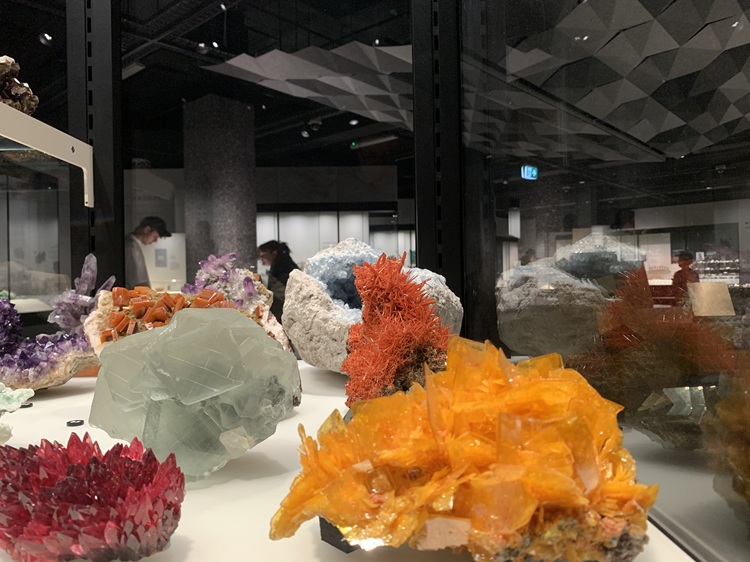
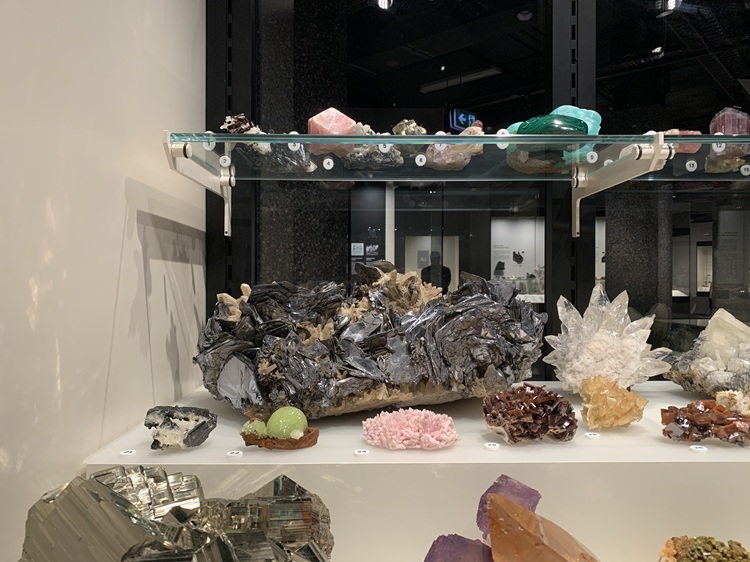
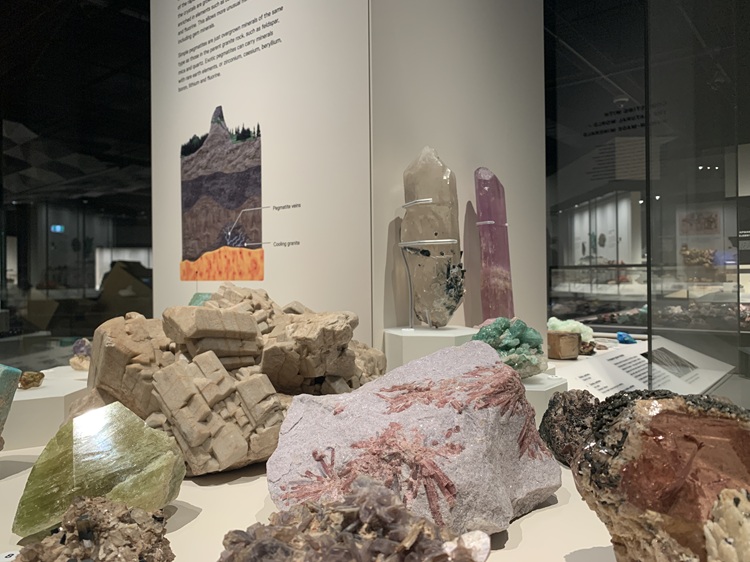
One section of the museum contained a large, colorful, and interesting collection of minerals from all over the world. It was the largest such collection we could recall ever seeing. There were some specimens from Arizona.
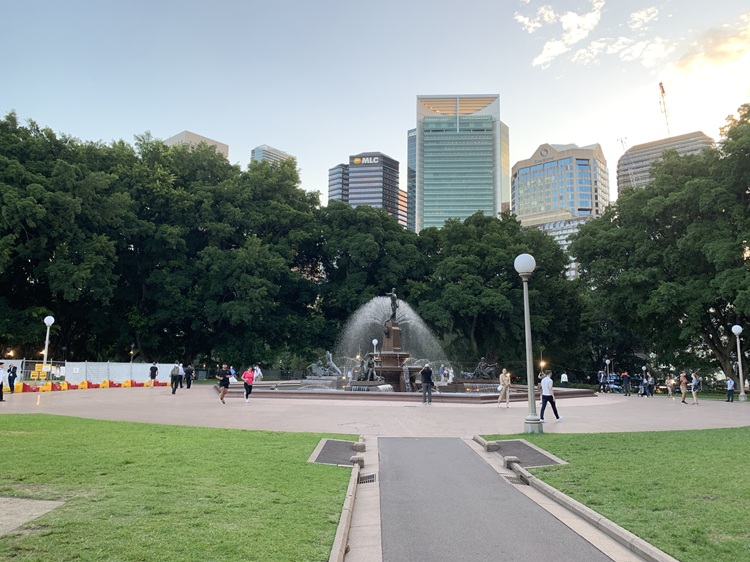
Hyde Park was near the Australian Museum and our hotel. It contained an ANZAC Memorial (not in this picture) to remember veterans from Australia and New Zealand. They have a memorial service at 11:00 AM every day.
Our flight home left in the evening of our last day in Sydney, so we checked out of our apartment hotel and left our luggage with the front desk. Then we visited the Museum of Contemporary Art, located in a neighborhood called The Rocks near Sydney Harbour, across the wharf from the Opera House. Similar to the Art Museum of New South Wales, above, it consisted of an older building and a newer expansion.
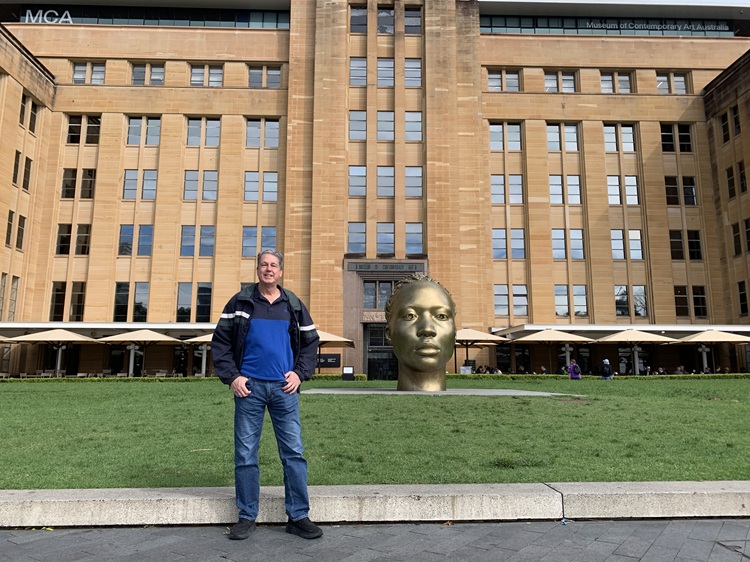
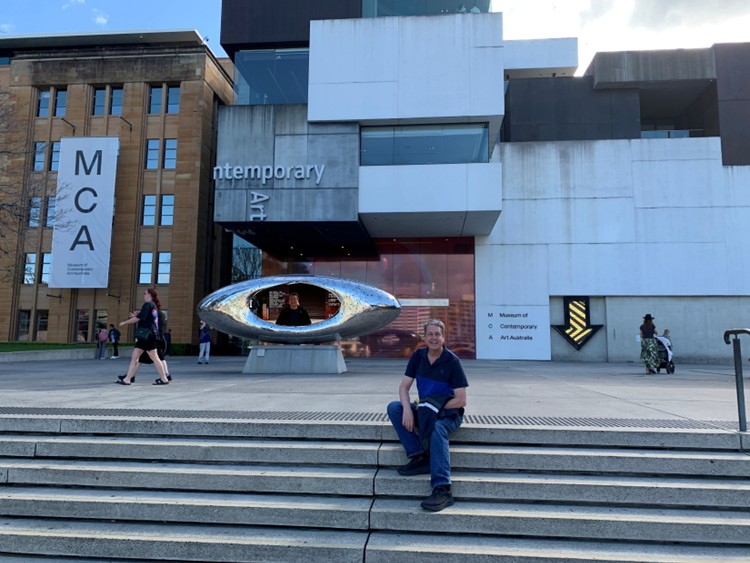
The exhibits were hit-or-miss, as is often the case at contemporary art museums, but we’re glad we went.
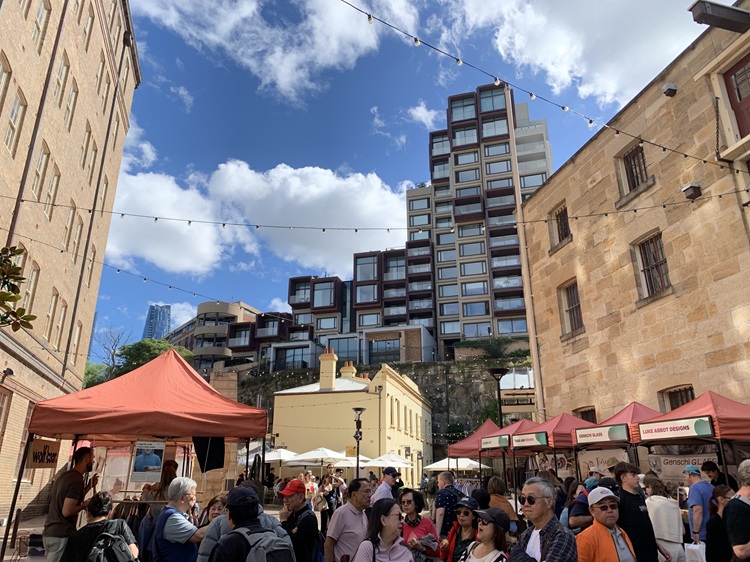
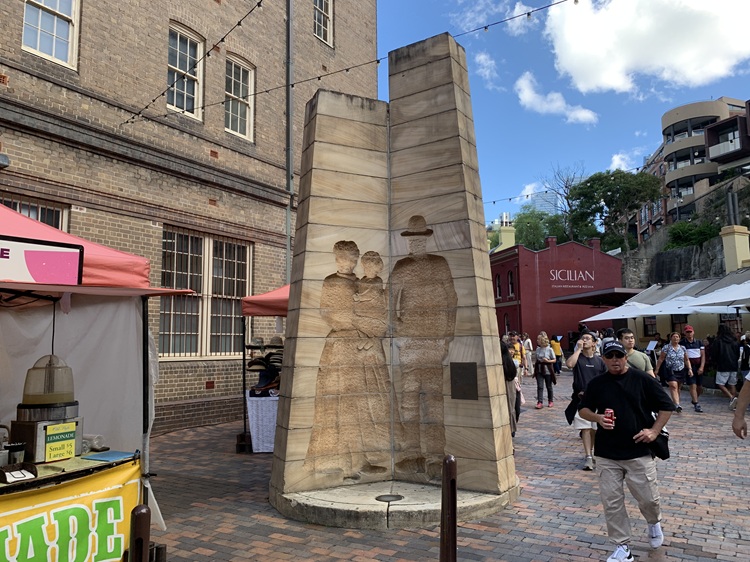
Afterwards, we ate lunch in The Rocks and wandered the streets. This neighborhood was originally a slum where arriving convicts landed, and once contained bars and brothels catering to sailors.
Many of the original buildings were demolished in the early 1900s, as they were already falling into disrepair and decay. In February 1971, a group of residents formed the Rocks Residents Group to oppose plans to demolish the remaining buildings and preserve the remaining neighborhood. It’s now a tourist destination. On the day we visited, a street market with local vendors was taking place.
One day, we visited DigiPark Sydney, an “immersive entertainment” venue. We most enjoyed its “Time and Space Cube,” where we stood inside a tunnel with a constantly changing video projected on all surfaces surrounding us.
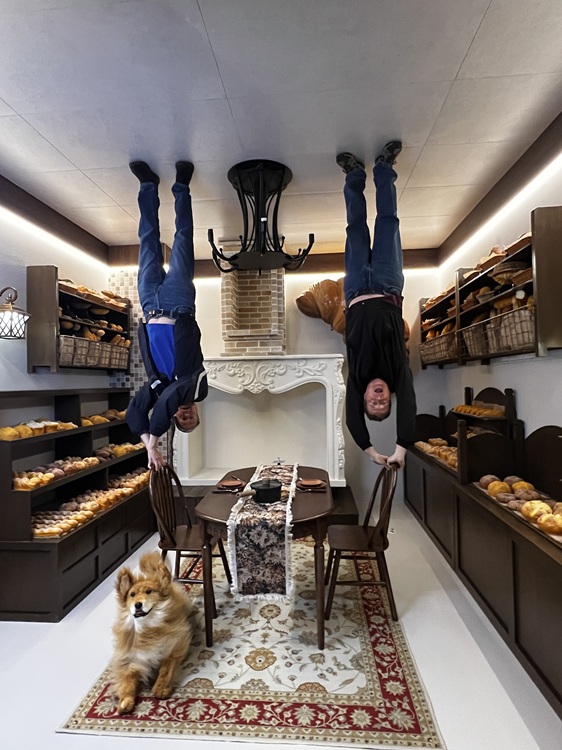
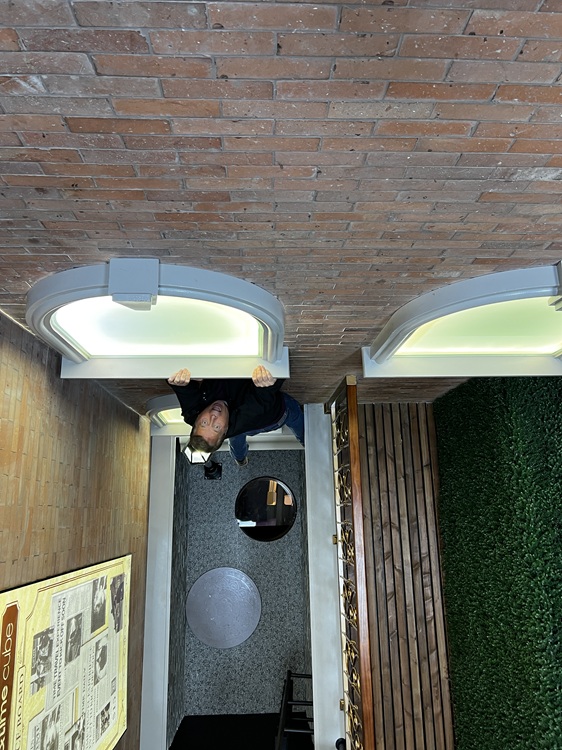
Here are a couple of fun photos from another part of the complex.
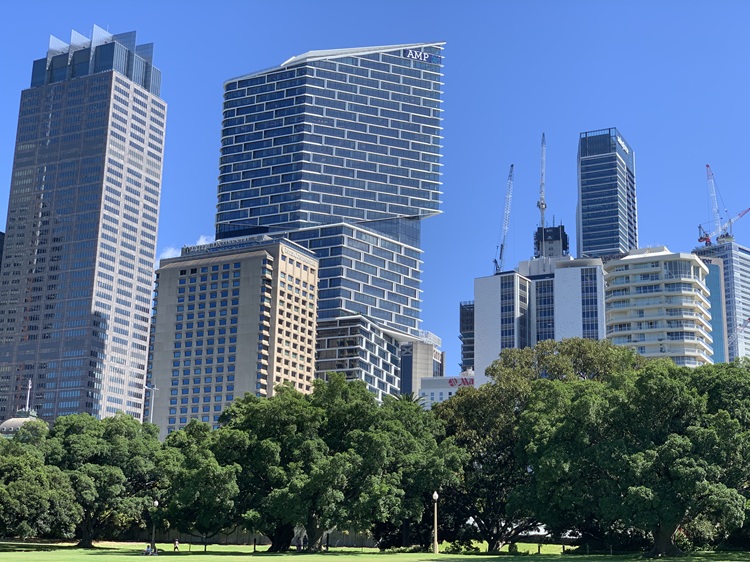
This was our last view of downtown Sydney, as we walked back from The Rocks. From here, we picked up our luggage from the hotel and rode the metro to the airport.