
After covering a fair amount of New Zealand’s South Island, we flew from Christchurch to Wellington to explore the North Island.
Wellington, at the southern tip of the North Island, is officially the windiest city in the world, with an average wind speed of 27 miles per hour. The Cook Strait, which separates the North and South Islands, serves as a wind funnel for air blowing from the Tasman Sea to the Pacific Ocean. We felt it!
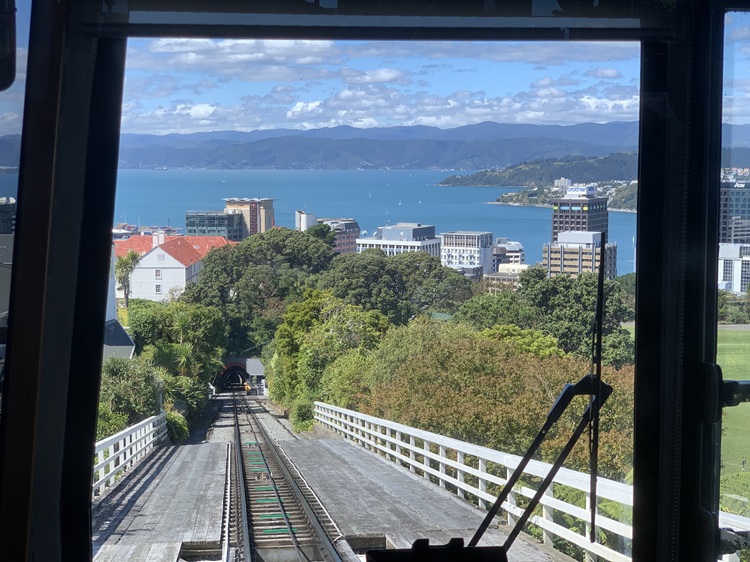
But aside from that, Wellington is a lovely city, as you’ll see in the photos below. This is a view of the city from a vantage point at the top of the city’s famed cable car.

Riding the cable car from Lambton Quay, one of the main streets running through downtown, up to the Wellington Botanical Garden and the Cable Car Museum at the top is one of the must-do activities in Wellington.
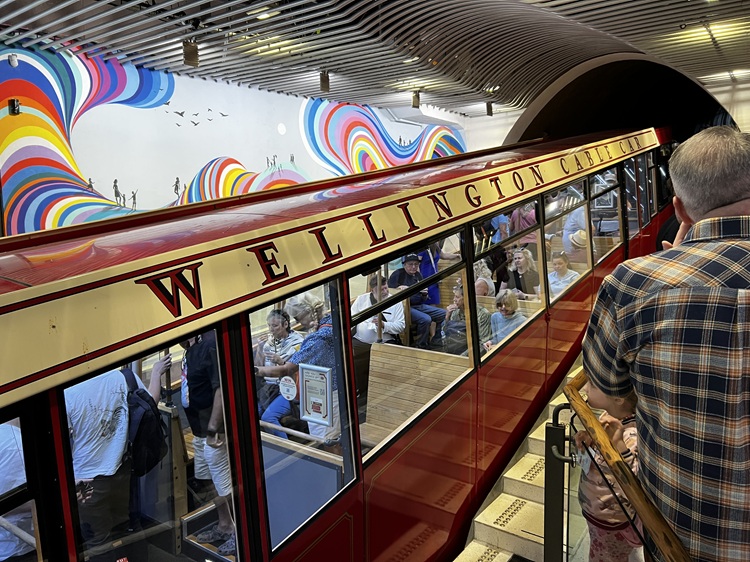
The view from the cable car:
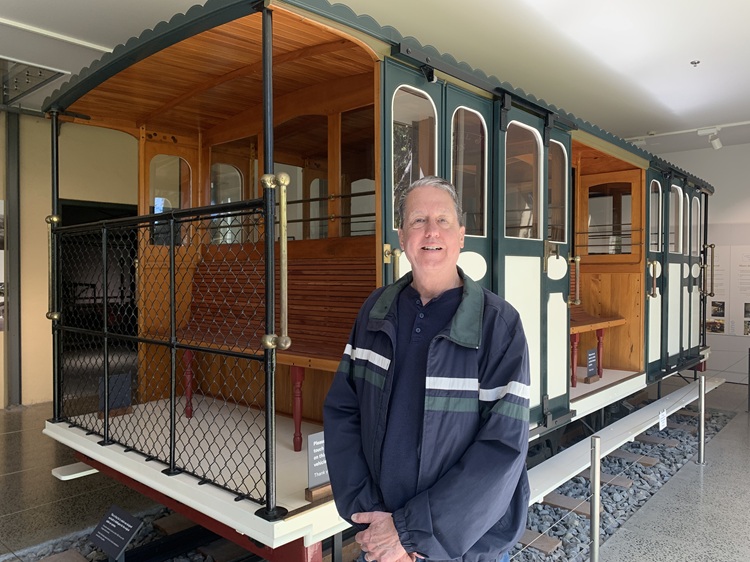
The free Cable Car Museum offers a quick but enlightening overview of the history of both the incline cable car that operates today, as well as the cable cars that once ran along the streets of Wellington, such as the one below.
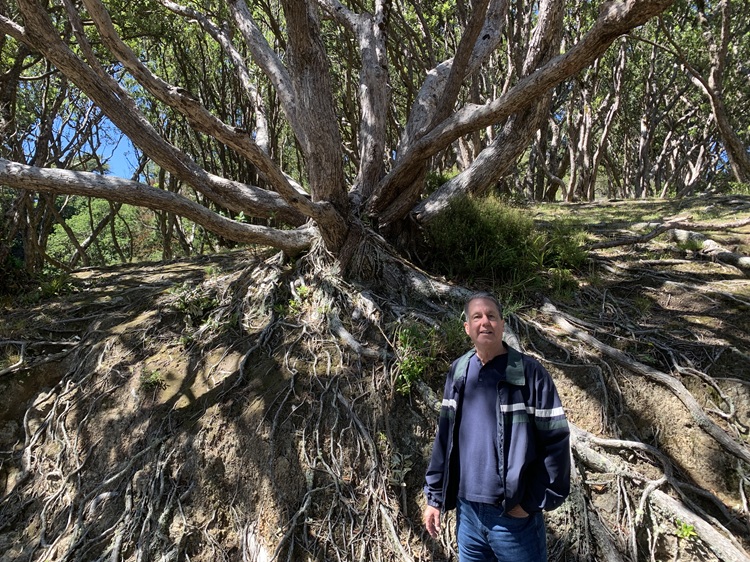
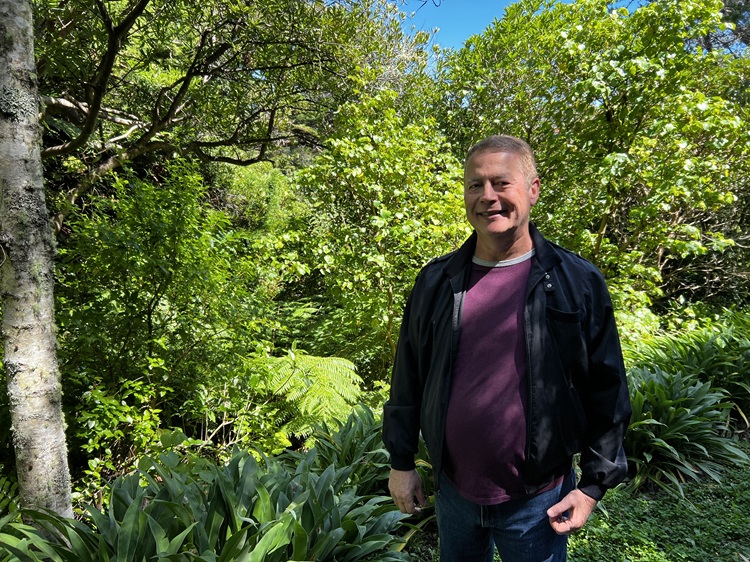
The Wellington Botanic Garden, while not one of the more impressive botanic gardens we’ve visited, was still a lovely, albeit hilly, walk through nature.
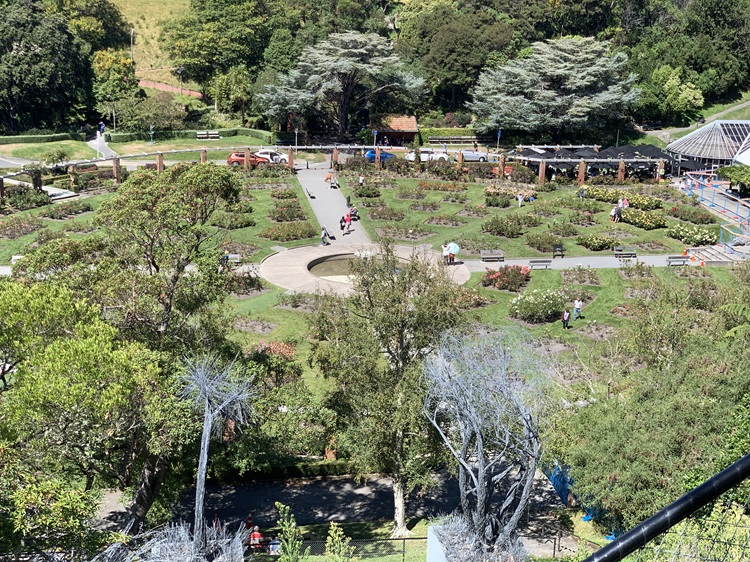
Here’s a high-level view of the Lady Norwood Rose Garden. Like the botanical garden itself, it wasn’t particularly impressive. Perhaps February, which is late summer here, isn’t the best time of year for the roses. But it was an enjoyable visit, nonetheless.
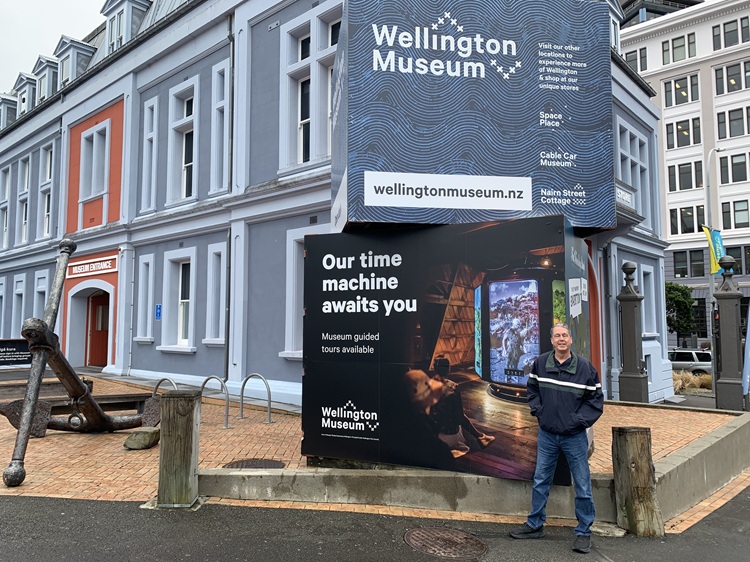
The Wellington Museum is housed in a 1892 building that was originally a bonded cargo warehouse, where goods awaiting payment of customs duty were stored. It became the Wellington Harbour Board Maritime Museum in 1972, before being repurposed as the Wellington Museum in 1999. The city’s history as a shipping port is one of the museum’s focus areas.
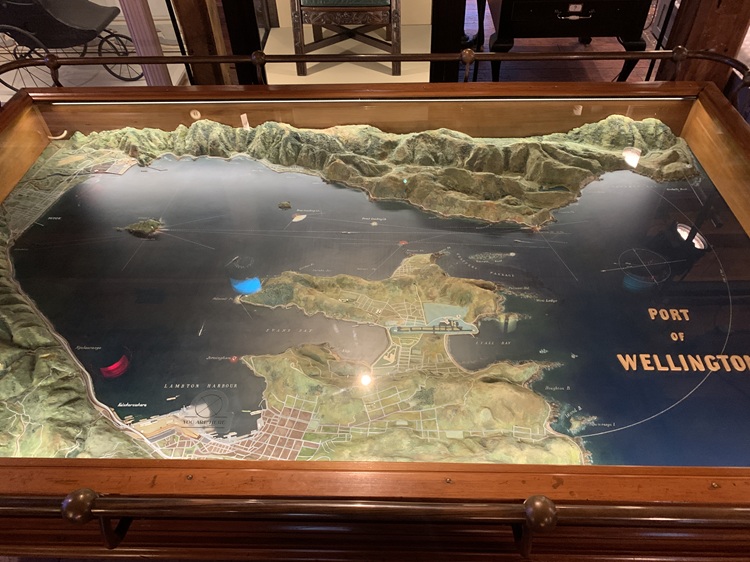
In one room, the carpet depicted an aerial view of the area surrounding the harbor.
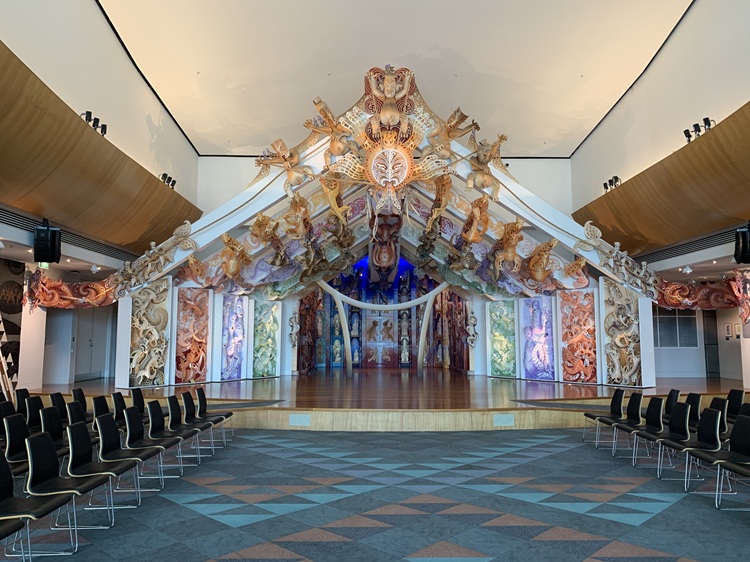
Wellington is also home to the Museum of New Zealand, or Te Papa Tongarewa. Many buildings and locations throughout New Zealand were titled both in English and Maori.
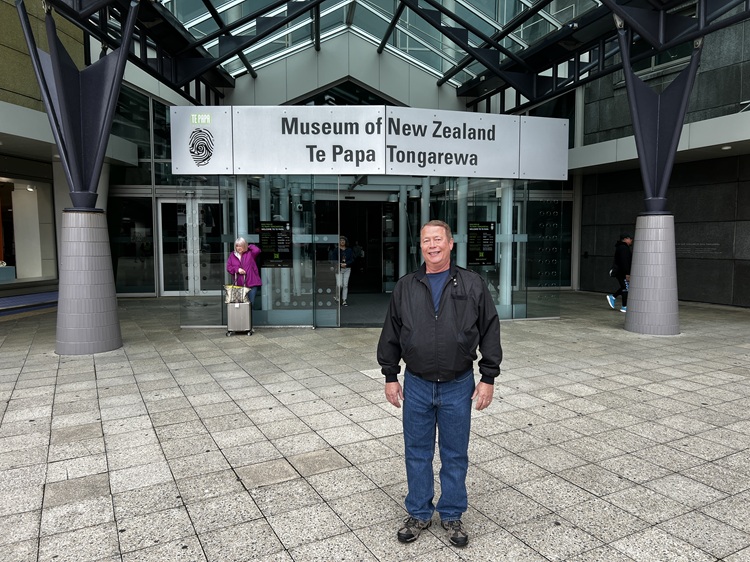
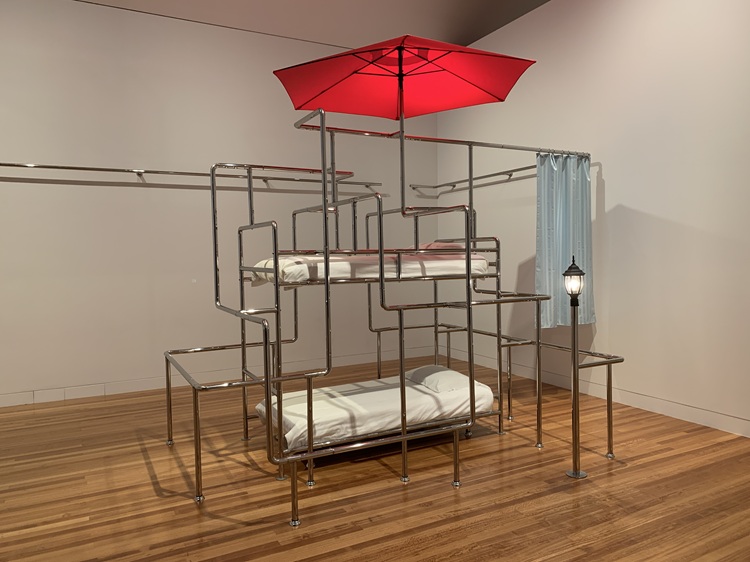
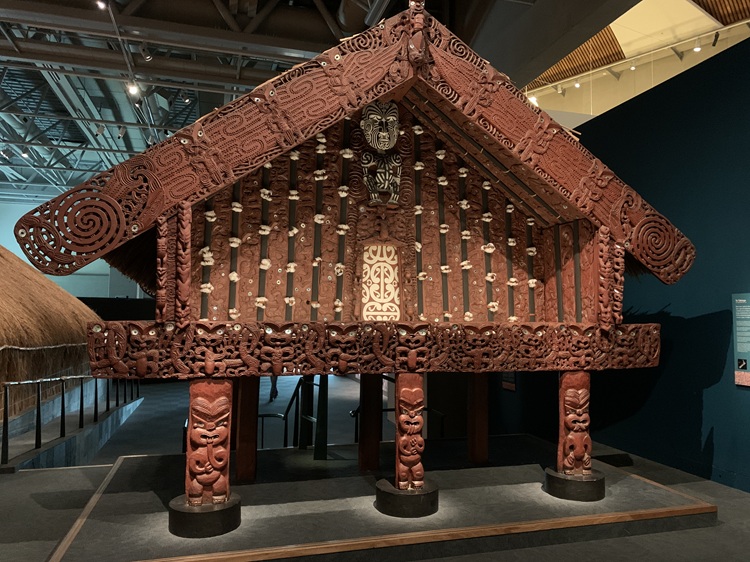
This museum is New Zealand’s equivalent of the Smithsonian in the US. There was modern art on the top two floors, while the lower floors contained exhibits relating to Maori heritage, immigration, sea life, and other aspects of New Zealand’s history.
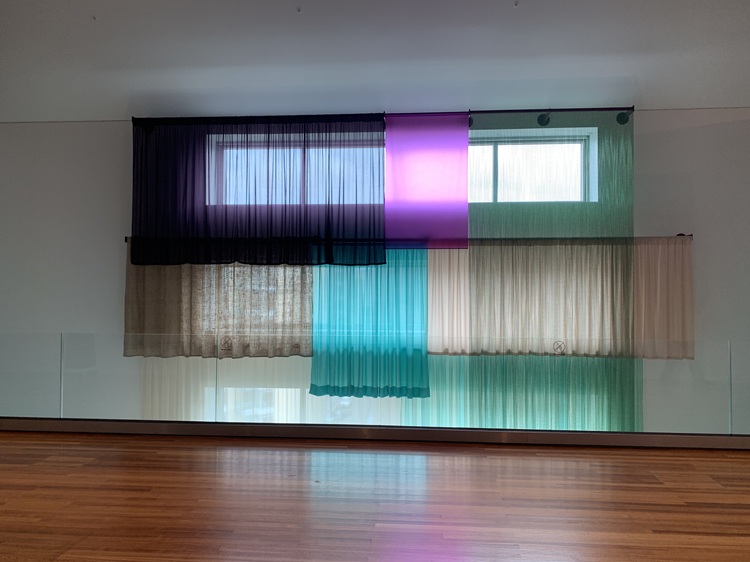
The next time you are considering new window treatments for your home, here’s some inspiration.
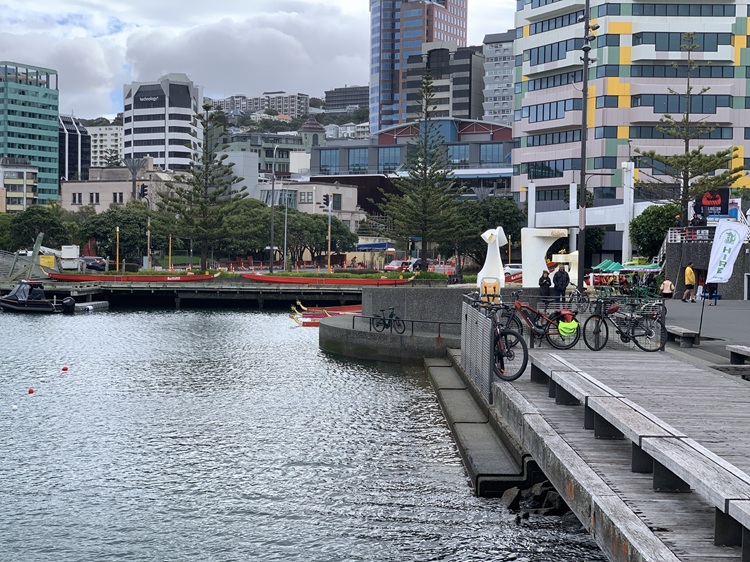
Here’s a 360° view of the waterfront outside the Museum of New Zealand.
A view of the city from the waterfront:
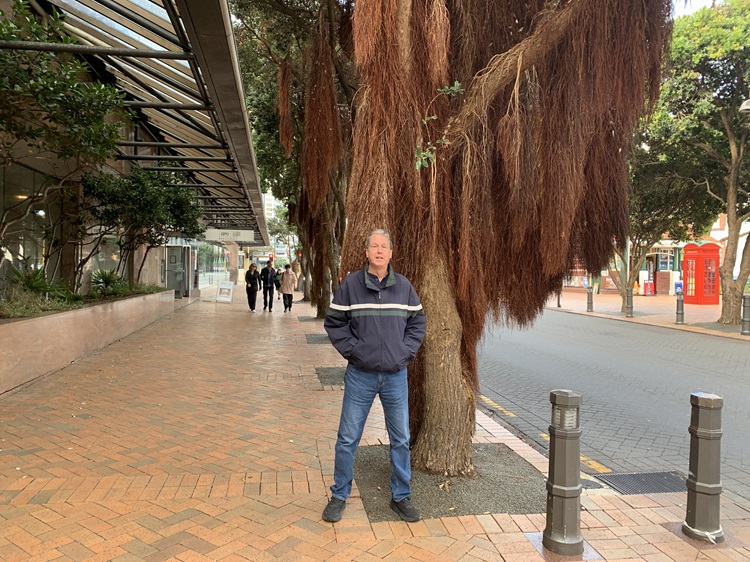
We encountered this unusual “hairy” tree on the way to dinner one evening. We don’t know what it is.
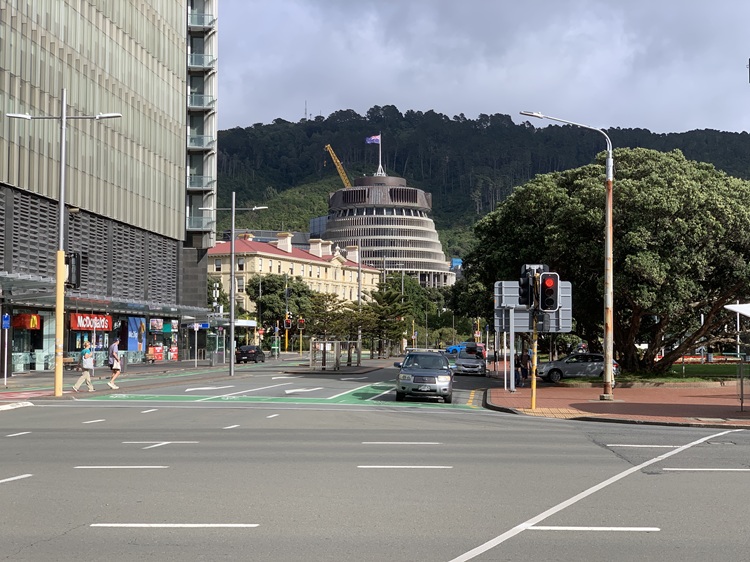
This is New Zealand’s capital building. Not surprisingly, it’s called “The Beehive.”
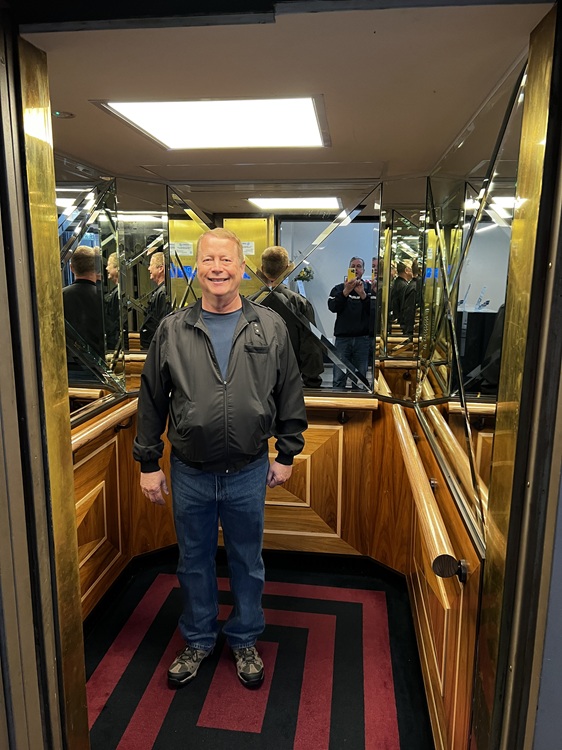
We stayed at the Quest apartment hotel, a chain with 120 locations across New Zealand, Australia, and Fiji. It was located in an older repurposed building. The elevators featured a classy Art Deco look with beveled glass and glossy-finished wood.
We liked Wellington’s ambiance and personality, but its windy and frequently rainy weather makes it the proverbial “nice place to visit, but we wouldn’t want to live there.”