
If you’ve been following our travels, you know that we have done a lot of traveling over the past year! Since we began our “Two Years of Travel” in May 2025 and including our upcoming trip to Spain, we have taken 30 airplane flights (counting itineraries with connections as one), 28 train or metro rides (counting only the trips with luggage), 33 bus rides, and 5 cab rides. These statistics cover two one-week trips, four four-week trips, and one epic seven-week trip, for a total of 25 weeks.
We have learned some good packing tips along the way, which we would like to share with you in this post. Our single biggest recommendation is…
Pack Light!
At first, Jeff was skeptical that we could take four-week trips with only carry-on luggage. But after our first trip, he was bought in!
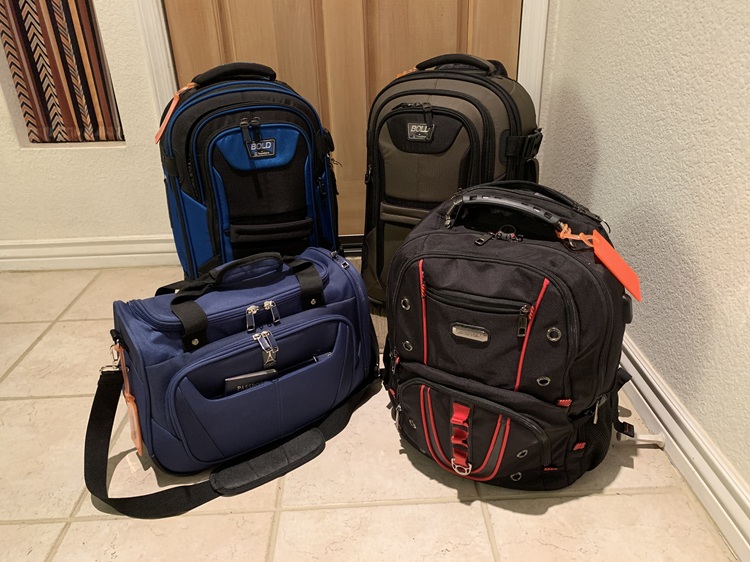
We travel with one rolling carry-on bag that will fit in the overhead compartment on almost all planes, and one “personal item” that fits under the seat in front of us. This allows us the luxury of carrying our bags on the plane to avoid lost luggage. Sometimes, if it’s a direct flight and we arrive at the airport early (which we almost always do), and the airline offers one checked bag for free, we might check our carry-on suitcases. Or if we’re carrying a wine bottle or two, we’ll check them. But otherwise, we always have the option of carrying our luggage onto the plane, and we often do. Plus, we don’t risk damage from rough baggage handling and we don’t have to wait at the baggage carousel.
Fun fact: In Australia and New Zealand, you can carry unopened bottles of wine in your carry-on bag on domestic flights!
You might be thinking, “Oh, no! I could never travel with just a carry-on and a personal item!” Trust us, you can! It makes traveling so much easier. It’s easier to ride shuttle vans, buses, trains, and metros when you only have two small, light items. Our apartment in Strasbourg, France, was on the third floor with no lift! In some destinations, our accommodations are a 10 to 15-minute walk from the train or bus station, and sometimes the sidewalks are narrow, bumpy, and hilly. It’s so much easier with small, lighter luggage!
Before we continue, none of the product links in this article are “affiliate links,” meaning we won’t make any money if you buy any of these products. Nor have we received any form of compensation for promoting them. We’re simply sharing products we’re very pleased with and can wholeheartedly recommend. There are many similar products.
Our Bags
We both use the Travelpro Bold Softside Expandable Carry on Rollaboard 22” suitcase, and we highly recommend it! They’re well-made and durable. After all the trips mentioned above, they are still in like-new condition.
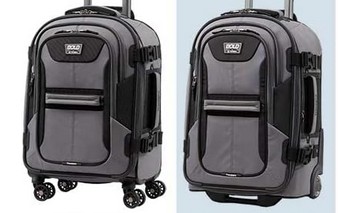 Note that this suitcase has two inline wheels that are firmly attached and recessed into the corners (see the suitcase on the right). Many people now travel with “spinner” suitcases with four swiveling wheels. We recommend against these for several reasons:
- The spinning wheel mounts are more susceptible to breakage. We’ve pulled our suitcases along some pretty rough, uneven sidewalks, especially the cobblestone sidewalks in Europe, and we’re much more confident that our solid-mounted wheels will withstand the shocks and bounces. We would be much less confident with the spinner wheels, and they wouldn’t roll very well on all four wheels on these surfaces. Plus, there’s the rough baggage handling at the airport.
- They detract from the interior space in the suitcase. The suitcase still has to fit the overall dimensions, but the spinner suitcases sit 1.5 to 2 inches higher off the ground, resulting in less interior space. Every cubic inch counts!
- They roll, even when you don’t want them to. We have ridden on many buses to and from airports with other passengers who had spinner suitcases. Every time the bus stopped, started, or turned a corner, the suitcases would start rolling down the aisle!
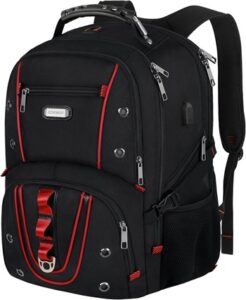 For our “personal item,” as the airlines call them, Dave prefers a backpack. He has used this 17.3-inch Travel Laptop Bag since the beginning of our travels, and, like our suitcases, it has held up well and is still in perfect condition. It has plenty of interior pockets and slots, so everything stays neat and organized. There’s sufficient padding around the slot designated for a laptop or tablet, so it travels safely. The specific model Dave bought is no longer available, but this slightly larger model from the same company is essentially the same.
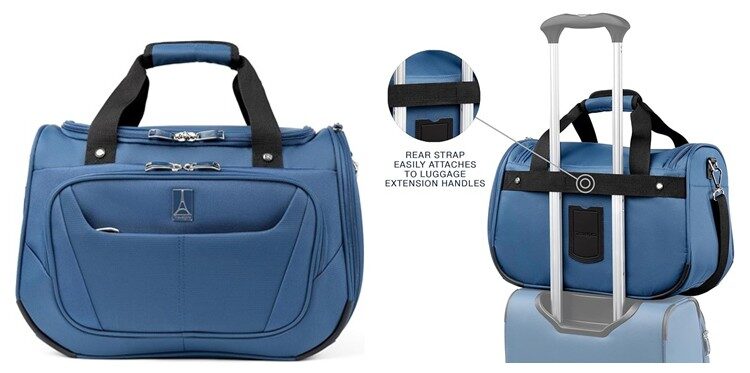
Jeff prefers this Travelpro underseat tote. It comes with a removable shoulder strap and a strap across the back that allows him to carry it on top of his rolling suitcase by passing the suitcase’s telescoping handle through the strap.
Fifteen Helpful Items We Pack
We have learned many tips for what to pack to make our longer trips go more smoothly. Of course, one of the main criteria is that these items occupy as little space as possible. They must earn their precious luggage space!
1. Laundry Sheets
You might be wondering how we get by for four or even seven weeks with only the clothing we can pack into these small suitcases. The answer: in most destinations, we stay in places that have a washer and dryer, or at least a drying rack. This greatly reduces the amount of clothing we need to take.
However, not all hosts provide laundry detergent. If they don’t, it’s impractical to buy a large bottle of detergent in a local store.
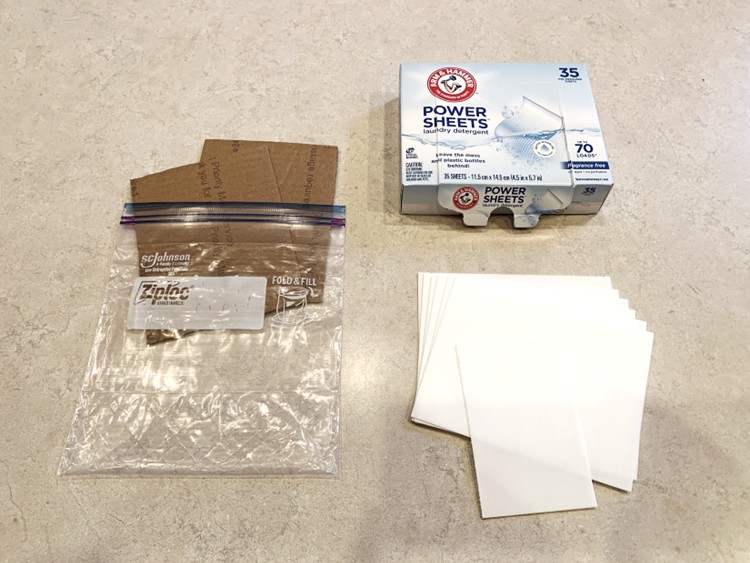
The solution is Arm & Hammer laundry sheets. Each sheet is perforated down the middle, and a half-sheet is all we need for a load of laundry, especially since most of the washers we encounter have a smaller capacity than we’re accustomed to at home. The sheet should be added to the washer first, underneath the laundry, not on top of it.
We put six to ten sheets in a quart Ziplock bag, and it takes up practically no space. We cut cardboard pieces to provide additional support. You can probably find laundry sheets in your local grocery store, but here’s the Amazon link.
2. Packing Cubes
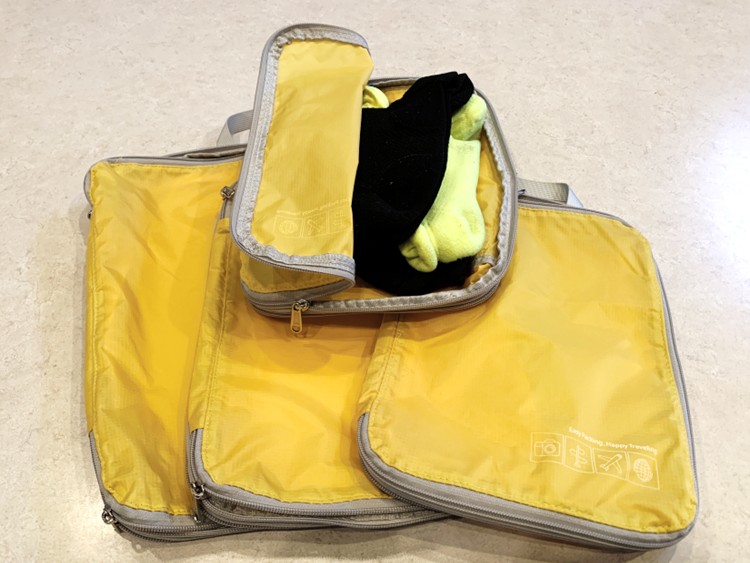
Packing cubes don’t really save space, but we find them very helpful for keeping clothes organized inside our suitcases. Our socks, shirts, and underwear no longer slosh all over the place as the suitcase is turned upright or sideways or laid on its back. It’s easier to find what you want quickly, and easier to remove the cubes rather than loose items when you need to retrieve something from the bottom of the suitcase.
Some people use vacuum devices and suction bags to remove excess air from the bags so they take up less room. We don’t, although maybe we could save more space if we did. We’ve read mixed reviews about how well they work. Plus, you would have to take the vacuum device with you.
3. A Day Pack
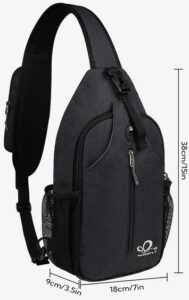
Dave brings a Waterfly crossbody sling daypack, which is useful for day tours. It holds a water bottle, sunglasses, a phone charging block, an umbrella, a small pack of tissues, and whatever else we might need during the day. If we’re in a situation where pickpockets might be present, we can put our phones, credit cards, and money in this, too. It should be worn with the compartment in front, against your chest, for better security. When empty, it fits nicely into the front pocket of his suitcase.
 4. Adapter/Converter
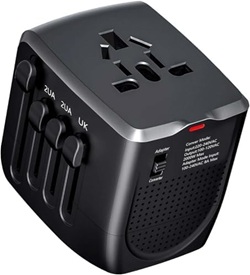
This is essential if you’re traveling overseas. We recommend this device, although there are many others.
Make sure you buy an adapter that converts 220 volts to 110. Dave made the mistake of buying a model that was only an adapter, not a converter, and it ruined his WaterPik on the first night of our second European trip by sending 220 volts into a 110-volt appliance. Thankfully, he brought floss along.
5. Water flosser that handles both 110 and 220 volts
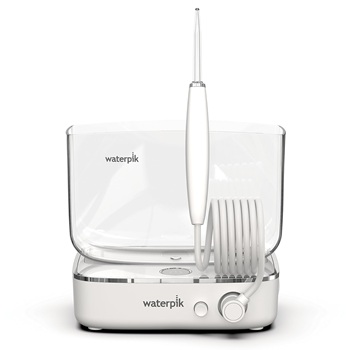 After we got home, Jeff found a WaterPik model that works on either 220 or 110 volts, without needing a converter. It still needs an adapter, of course. So the adapter Dave used (above) could be used with this water flosser.
That model has been discontinued, but this model, which is a little smaller and comes with a travel case, is available (as of this writing). Sadly, it’s twice as expensive, so you might not feel it’s worth it.
6. Medicine Cooler
Both of us take medications that need to be refrigerated. We always rent accommodations with refrigerators, but there are still the long flights, bus rides, and train rides between destinations to deal with. So Dave found this medicine cooler that filled this need. The gel ice pack keeps the contents cool for up to 72 hours. If we have to go longer, there’s a USB-powered cooling unit that screws onto the top in place of the regular lid.
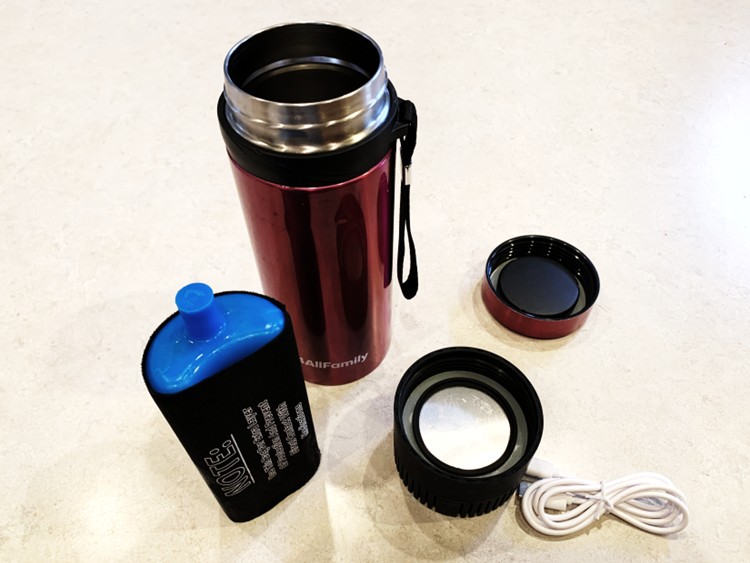
Pro tip: Keep the used syringes or bottles and transport them in the cooler as if they were new. These coolers often attract the attention of the security screeners in airports. If the gel pack is cooling medications, it’s allowed even though it’s over 3.4 ounces. If it’s inside an empty container, it’s not. That seems stupid, but those are the rules.
7. Reusable Shopping Bags
Grocery stores outside the US have moved on from “paper or plastic.” People are expected to bring their own reusable bags. Some stores don’t have plastic bags at all. Others might, but they charge anywhere between 10 and 25 cents for them to incentivize people to switch to reusable bags. While paying 10 to 25 cents for a plastic bag won’t break your vacation budget, why not be part of the solution for reducing plastic waste?
We use reusable cloth bags when we shop in the US now, so we bring two with us. They fit easily in one of the outside pockets on the front of the suitcase.
8. Rick Steves Money Belt
If you’re visiting any major tourist destination (especially in Europe), you need to be mindful of pickpockets. They are especially prevalent in Paris, Rome, Barcelona, Madrid, Bangkok, Istanbul, New York City, and Milan, as well as in crowded markets, buses, subways, and trams. Bags hanging on the backs of chairs in cafes are easy targets, too, as well as phones set out on the table.
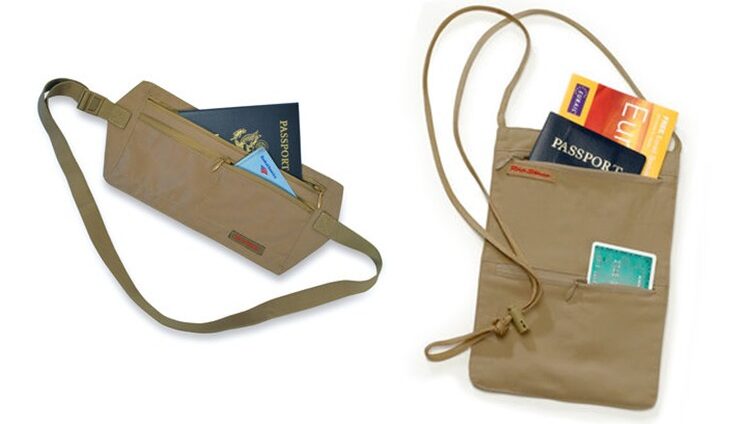
Whenever we’re in a potentially risky area, we wear a money belt. Rick Steves offers a good one that you strap around your waist and tuck in between your pants and your underwear. He also offers a “neck wallet” that you hang around your neck and tuck inside your shirt. In hindsight, we might have preferred the neck wallet.
 9. Rick Steves Toiletry Kit
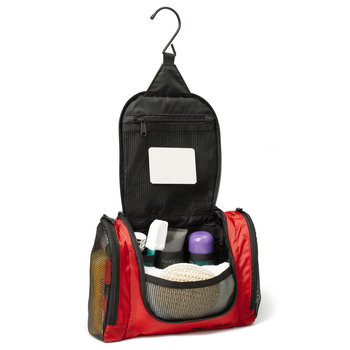
When Dave decided to replace the toiletry bag he had been using since 2011, he looked in the product catalog on Rick Steves’ website and found this one. He’s been very happy with it. It has several compartments to keep things organized. Since he doesn’t need to fill it full, it will easily compress down when it’s packed.
The best feature is the hanging hook. Many bathrooms we encounter don’t have much counter space around the sink, so having the option to hang it from a towel rack or hook has come in handy.
10. Inflatable Neck Pillow
On Dave’s first flight to Europe in 2003, the passenger sitting next to him had an inflatable neck pillow. He hasn’t seen one before or since; all the neck pillows people bring on board are filled with a bean-bag type of filling. They take up too much space to be worthwhile, in our opinion.
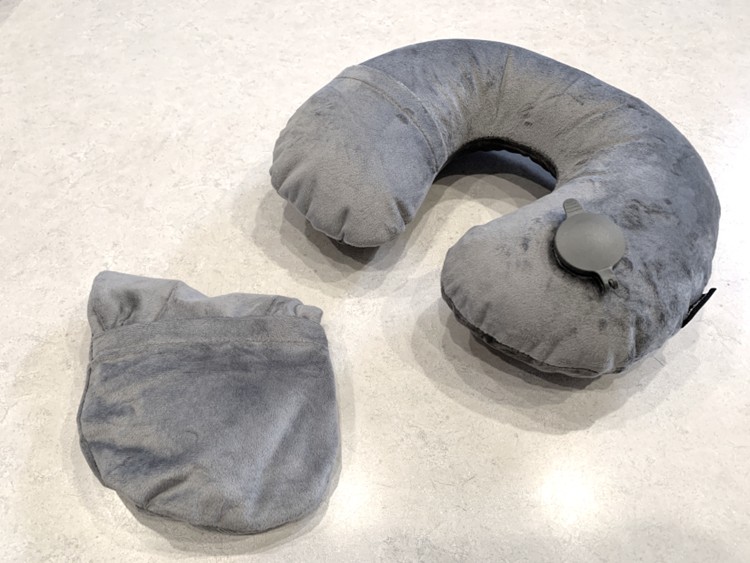
Once again, Rick Steves to the rescue! He offers an inflatable neck pillow with a soft, velvety surface that folds into a manageable size and inflates in only three or four puffs. Plus, we can alter the thickness of the pillow to suit our tastes by adding or releasing air. We now take these on long flights.
 11. Shaving Stick
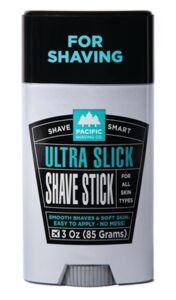
Due to the 100ml/3.4-ounce rule for carrying liquids on a plane, we’ve had to buy small travel-size cans of shaving cream. For longer trips, we might need two or three. Obviously, this takes up valuable space in our quart-size Ziplock bag.
Jeff found an excellent solution: shave sticks! They are very similar to deodorant sticks. The look and feel of the slick, creamy film is markedly different from shaving cream, but it works quite well.
12. Night Light
When we’re staying in a hotel room or apartment, we used to leave a light on in the bathroom and leave the door cracked open so we could find our way in the middle of the night. But that seemed wasteful, and it also let out a lot of light when we opened and closed the door.
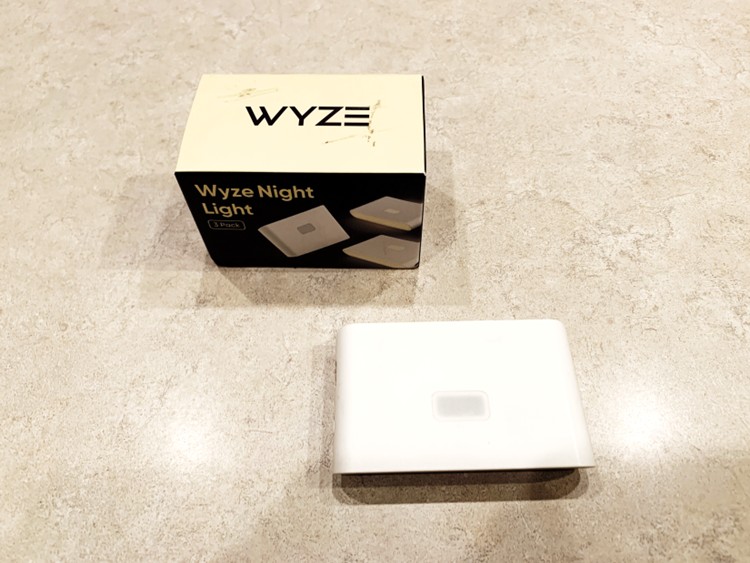
Jeff discovered an excellent solution: motion-sensing, magnetic, rechargeable night lights! The only drawback is that sometimes there is no metal surface anywhere in the bathroom for the light to attach to. But we can still find someplace to either set it down on its flat edge or lean it against something. We use them at home now, too!
13. USB-C Cable
If you’re going to rent a car, having a USB-C cable will come in handy to connect your phone or tablet to the car’s display screen. That way, you can use your map app (Apple Maps, Google Maps, or whatever you prefer) to display the map and directions on the car’s screen and hear your app’s voice over the car’s speakers. While devices are supposed to pair wirelessly, in our experience, they sometimes don’t. Connecting with a cable has the added benefit of charging your device.
There are many, many products on the market. Make sure you buy a cable with the appropriate plug for your device on one end and USB-C on the other. For use in a car, you don’t need anything longer than 3 feet. Oddly, it’s often cheaper to buy a 2-pack than a single cable.
 14. Sturdy Water Bottle
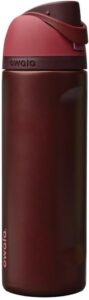
We’ve learned that water fountains are often not readily available in public places, and it’s important to stay hydrated when we’re out for long days, especially in hot weather. It’s expensive and wasteful to buy bottled water in shops, so we bring a solid water bottle that fits in our day pack (mentioned above). There are many good ones, but we like this Owala product. It’s well insulated, practically indestructible, and has an internal straw so we don’t have to tilt the bottle up to drink from it.
15. Paper Towels
More often than not, the apartments where we stay do not provide paper towels or napkins. It’s wasteful to buy rolls of paper towels at a grocery store, since we won’t be able to take what we don’t use with us to the next destination. Plus, they usually come only in multi-packs.
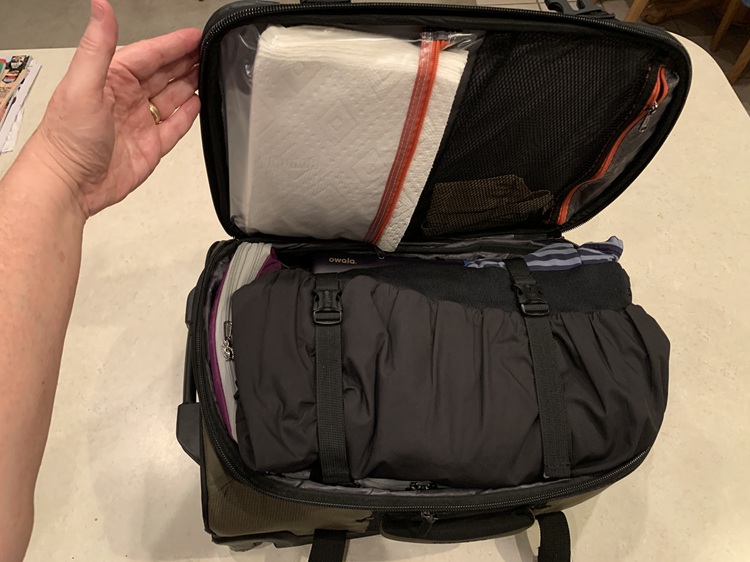
So, we bring our own. We unwind them from the roll and fan-fold them. They fit nicely into one of the pockets on the inside of the suitcase lid.
There you have it – how we travel light and what we pack to help us travel well. If you have tips you’d like to share or questions, please feel welcome to leave them in the comments below.
Happy (and efficient) travels!
All of these items and tips are so sensible!
I used to wonder how much luggage you travelled with, but seeing the same tee shirts, shorts, jeans in many of the photos, now I understand.
I’m so looking forward to your first Spain report!
Safe travels!
Hi Nancy,
Yes, being seen in the same few shirts in all of our pictures is a drawback. But it’s one we’re willing to live with!
Great article guys, thanks for the tips. As I’m now a travel advisor pretty much full-time, lots of great ideas I can share with my clients too (if you don’t mind).
By all means, please share!
Excellent ideas! Thanks so much for sharing and for the facebook travel updates! ❤️
Thanks, Jan! We’re glad you found them helpful.
I have to say that your list is valuable!
For me, I pack plastic forks, spoons, etc. with the paper towels. I have needed them when I stopped at a “rest stop” and bought REAL food from a vending machine and had NO utensils to eat. ANOTHER valuable item is the power converter. It’s REALLY a must have item along with the USB cable for the car. I also pack two (2) small power packs in case you need to call for help and your phone is dead.
I love your idea of packing cubes for your clothes. I will now add a couple of reusable shopping bags too. I already pack a day bag. I could go on and on, but I won’t today.
Thank you for sharing your travel experience. I’m sure it is appreciated by many. Please keep it
coming. Maybe share some experiences with money transfers, Credit cards, phone packages? I know that there are many different charges with all of them.
Ms. D
Hi Danita!
I’m glad you found this article helpful. Yes, we plan to write another post soon with financial tips.
Cheers,
Dave & Jeff