
In May 2026, we spent a month exploring Spain. Our first stop was Gran Canaria, the third-largest and second-most-populous of the Canary Islands. Last year, at the end of our Portugal trip, we visited Tenerife, the largest and most populous Canary Island. We loved it! After hearing about Gran Canaria for many years (especially the gay vacation hotspot, Maspalomas), we were eager to check it out.
We stayed in the capital, Las Palmas. We decided we’d rather stay there to experience a more authentic view of what Gran Canaria is like for the people who live there, rather than stay in Maspalomas or one of the other beach resort towns on the south coast. As it turns out, we made the right choice.
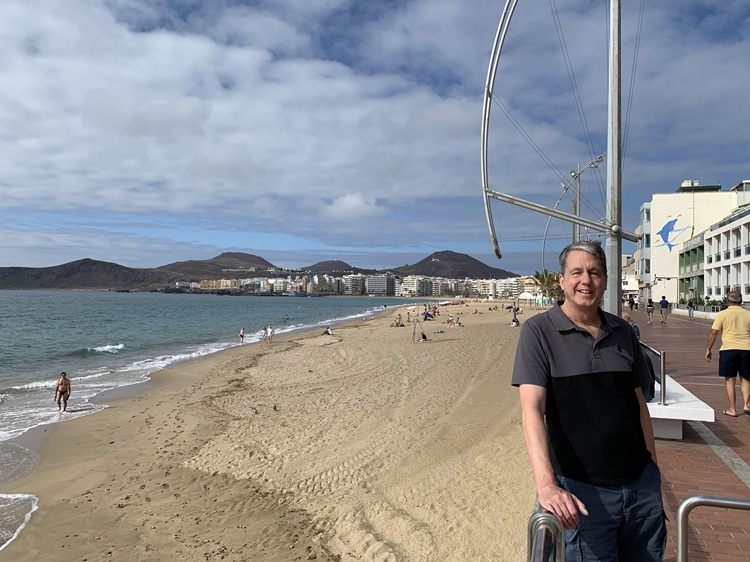
Our rental apartment was only two blocks from Playa de las Conteras, the beach that runs along the north shore of Las Palmas. While there were some tourists, we got the impression that at least half of the people we saw were locals. Here’s Jeff next to the beach.
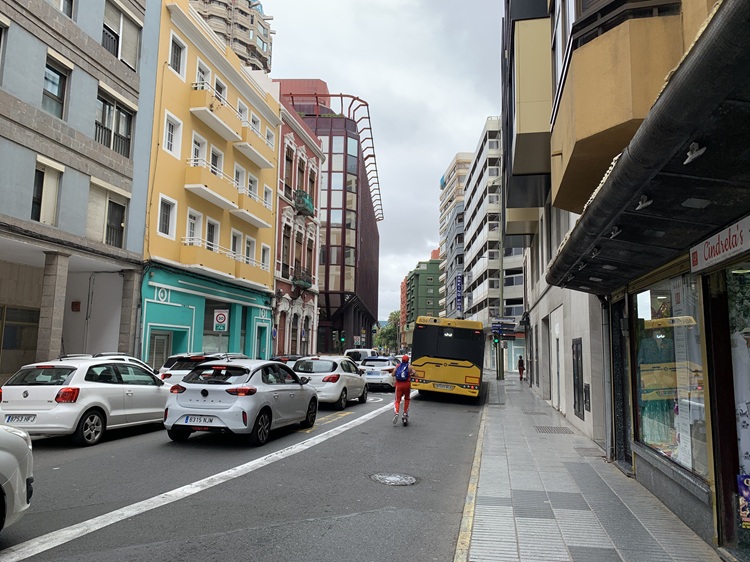
This photo was taken just outside the door to our apartment. This was wider than most streets, which were only one lane wide. There was graffiti here and there, and most shops lowered roll-down metal shutters when they were closed, which made the neighborhood seem foreboding at night. But we never felt unsafe, and the interior of the apartment was nice.
On our first day, we drove up winding, narrow roads to Mirador Altavista for a birds-eye view of Las Palmas. (Mirador is Spanish for viewpoint.) As you will see, the shipping docks and the cruise ship and ferry terminals are to the right (east), and Playa de las Canteras is in the distance at the halfway point (north).
We stayed in town on the first day, then visited other parts of the island on the second, third, and fourth days.
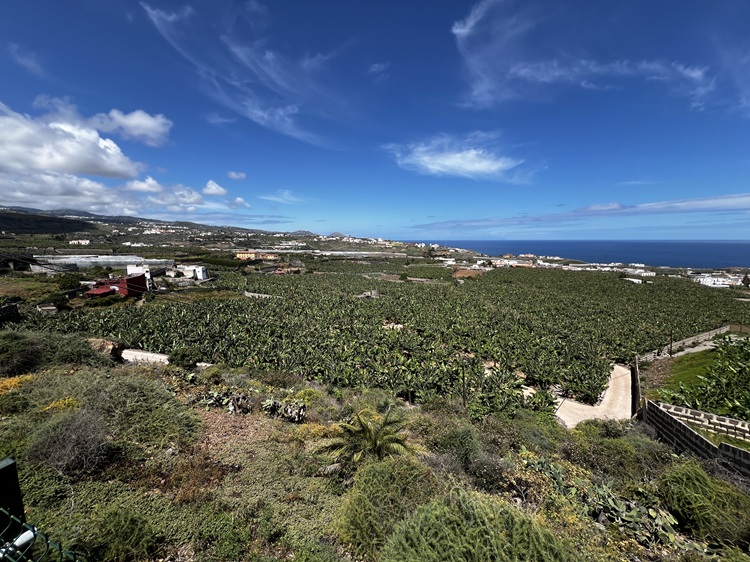
On our second day, our first stop was Mundo de Platana, a banana plantation on the north side of the island. We took an informative tour of the plantation and learned about the different types of bananas grown around the world, and how bananas are cultivated and harvested. The tour concluded with tastings of several banana spreads and three banana-infused adult beverages.
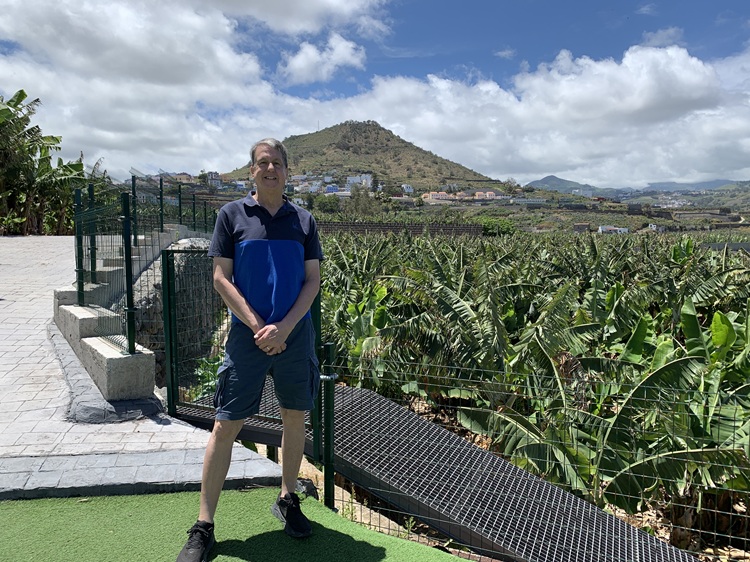
Here’s a view of the banana plantation looking inland.
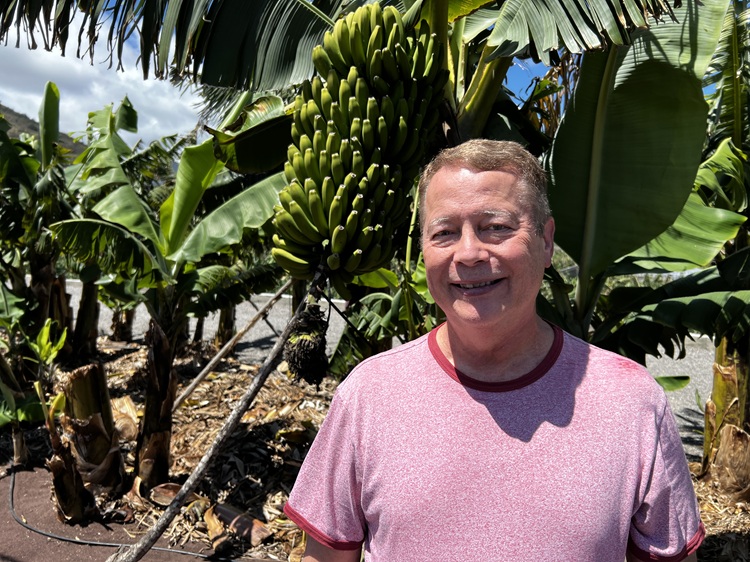
Another view of the plantation, looking north toward the Atlantic Ocean.
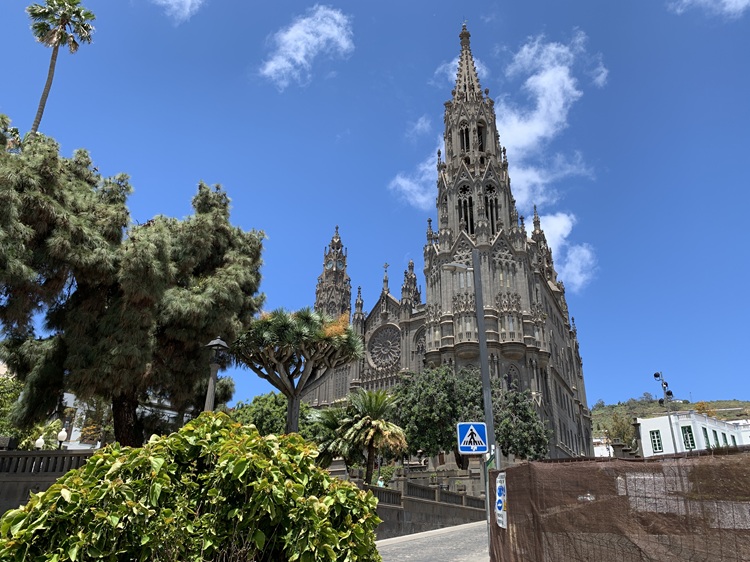
Next, we visited Arucas, a charming town of almost 37,000 people. It seems that every town in Europe has a cathedral, and Arucas was no exception. (We didn’t go in.)
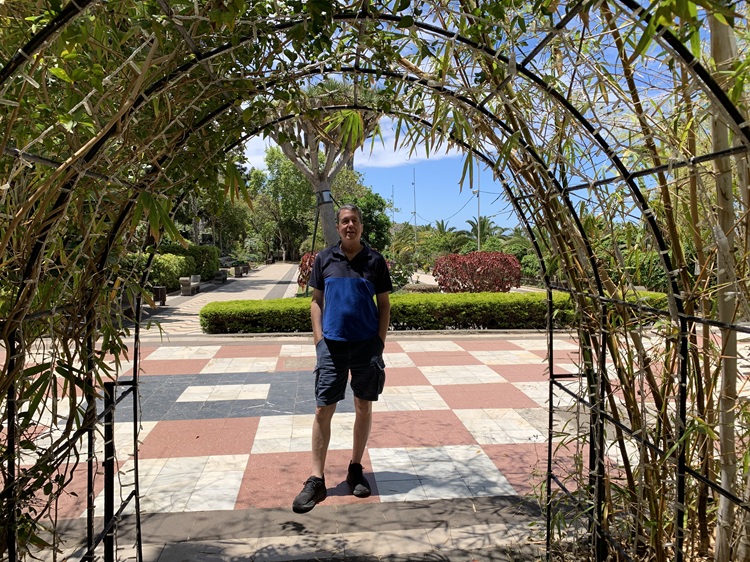
Parque Municipal de Arucas was a nice city park/garden a couple of blocks west of the Cathedral.
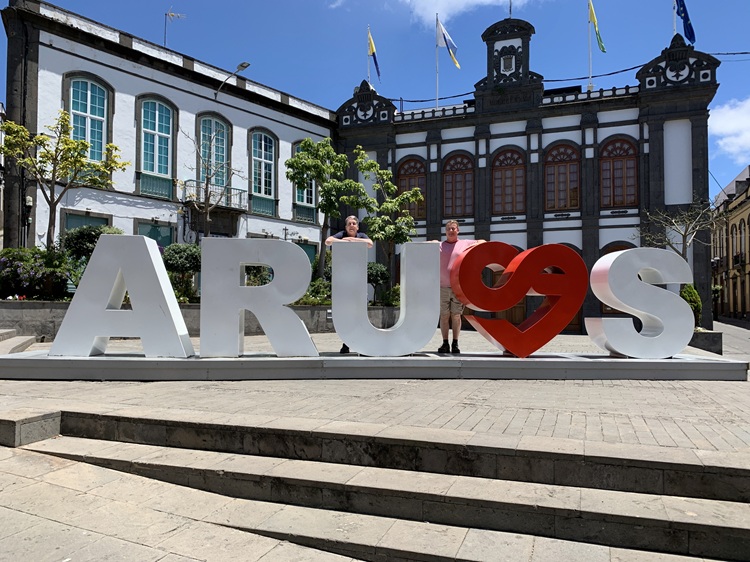
It seems like every city in the world has one of these, too.
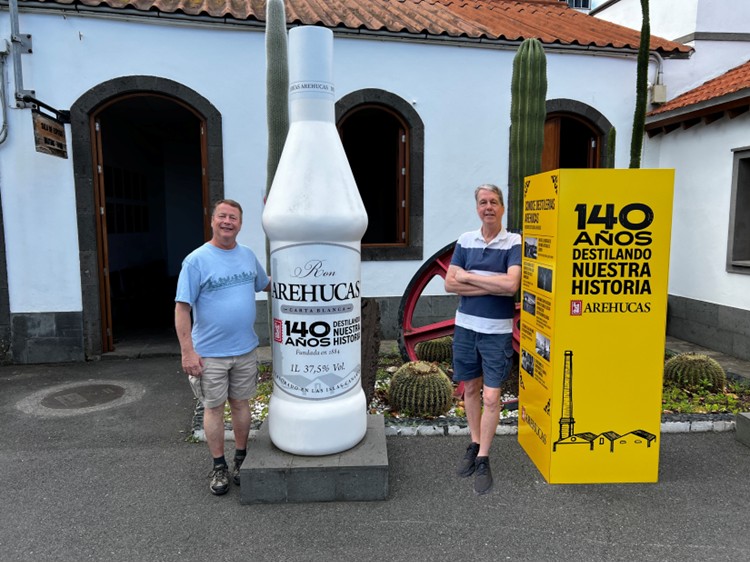
We toured the Arehucas rum distillery on the edge of town. This distillery has been operating since 1884, and it was impressive. At the end of the tour, we each received four tastings. Since we were free to share each other’s samples, that meant we got to taste eight of their products, including a banana cream rum made with bananas from Mundo de Platana.
Next, we drove up a narrow, winding road to Mirador de la Montaña de Arucas, just north of Arucas, for a high-level view of the surrounding area. In this video, you can see Las Palmas and Playa de las Canteras on the peninsula in the distance, and the cathedral in Arucas near the end. (It looks black in the video.)
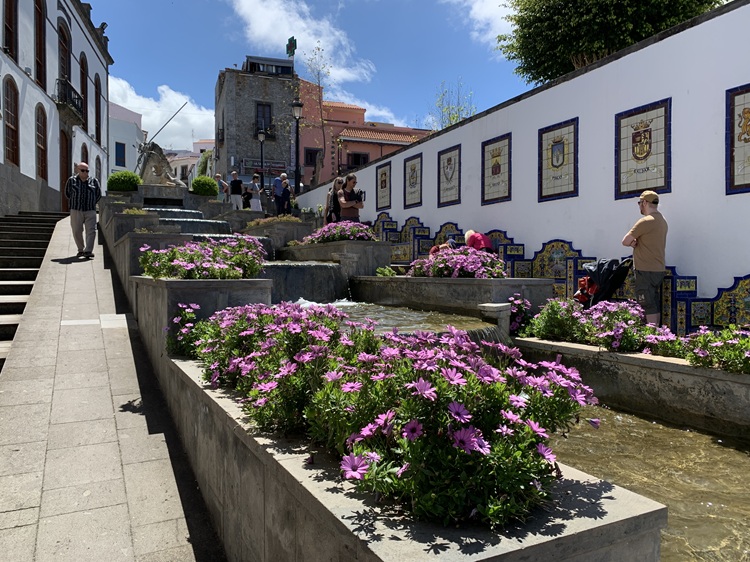
From there, we drove southwest to the small town of Firgas, a town of 7,628 founded in 1488. Its unique feature is Paseo de Canarias, a pedestrian street. For one block, the street contains a stair-step cascading stream with beautiful flowers on both sides. Along the wall on one side are tiled panels commemorating many of the larger cities and towns on Gran Canaria.
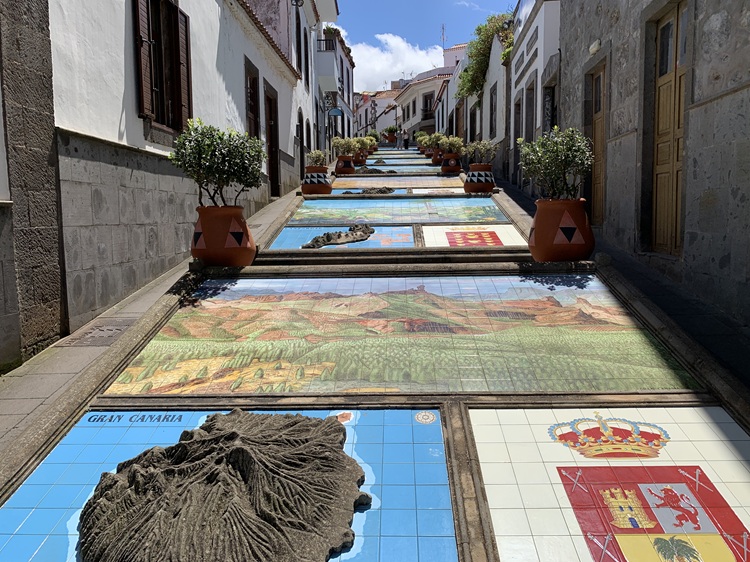
In the next block, there is a tile display for each of the seven Canary Islands, with a topographic model of the island, its crest, and an image of a scene from that island. It’s quite remarkable.
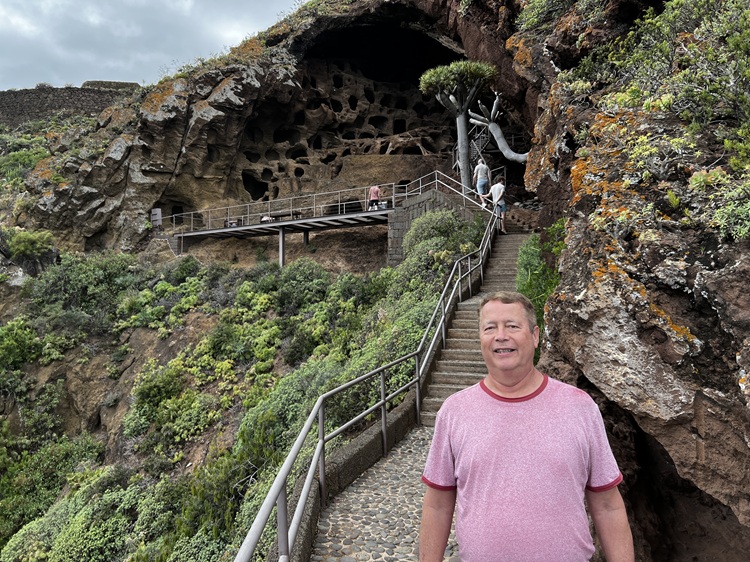
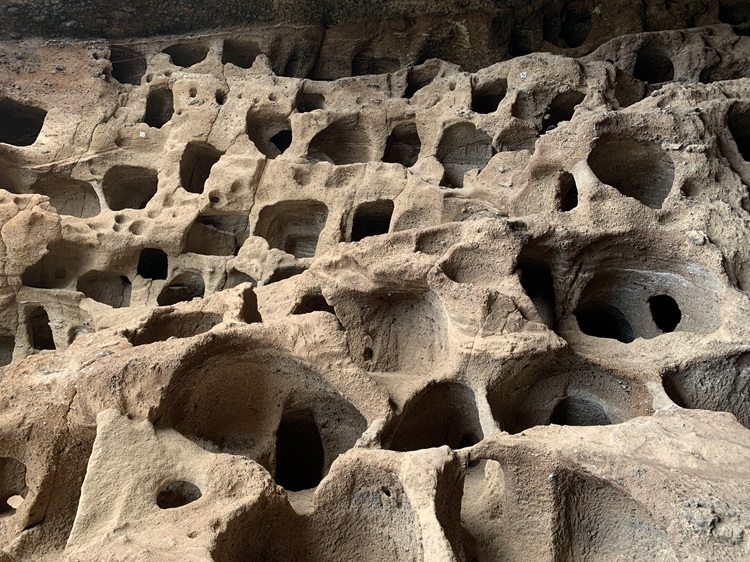
We made a brief stop at Cenobio de Valerón (Caves of Valerón). It is a complex of 298 hand-carved compartments distributed on 8 levels that was used as a granary until the end of the 15th century. We were unclear why people would go to the trouble of digging caves just to store grain, but that’s the story. In any case, it was a fascinating and enigmatic relic from the past.
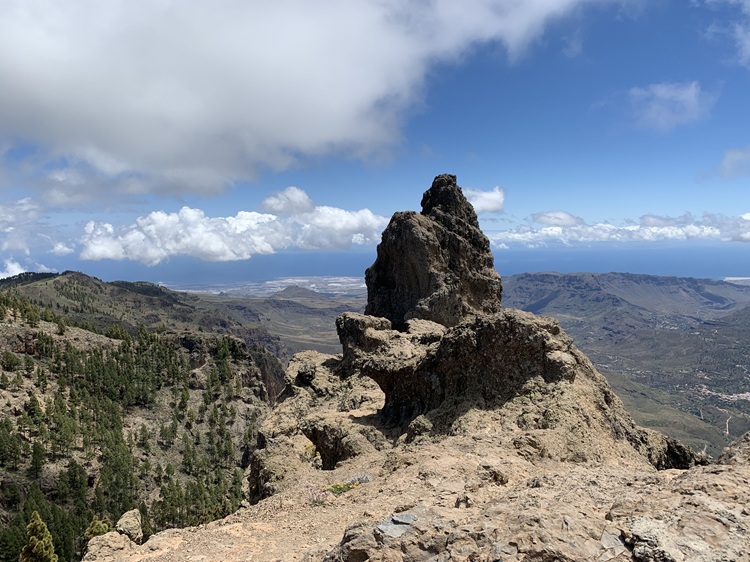
Apart from the coastal areas on the north, east, and south sides of the island, most of Gran Canaria is mountainous. The mountain peaks and the valleys and canyons between them are spectacular! The narrow, winding roads through the mountains are challenging to drive, but the numerous miradors offer stunning views. We hope the next several videos convey the grandeur and beauty of Gran Canaria’s mountainous interior.
The most notable rock formation is Roque Nublo. Here’s a zoomed-in, close-up view. You can hike to Roque Nublo, but it’s a 30-minute journey each way. We were content to admire it from a couple of the miradors we visited.
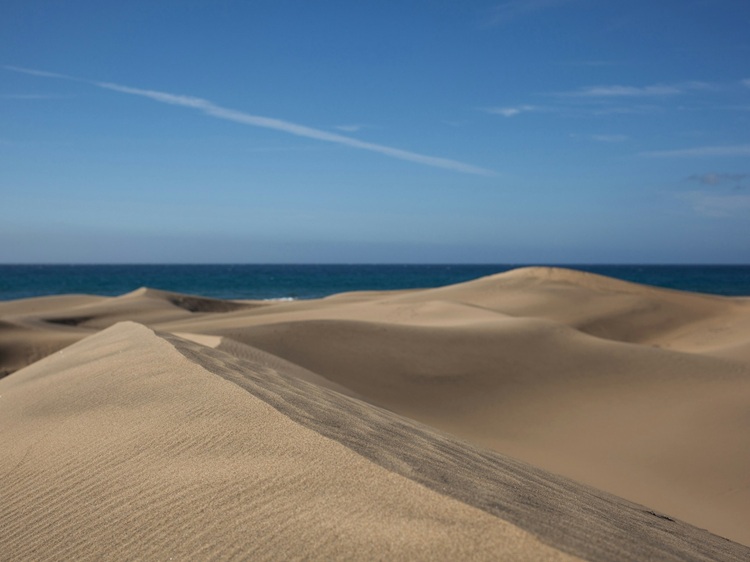
Gran Canaria’s beautiful mountains notwithstanding, its best-known geological feature is the Maspalomas Dunes on the south coast. This public-domain photo shows the dunes in all their unspoiled glory. (Most photos show the sand with a brighter orange color.) Naturally, visiting Maspalomas Dunes was high on Dave’s list. Hiking is permitted on designated trails.
But alas, it was not to be. While planning this trip, Dave identified a parking lot near an entrance to the dunes. But when we arrived, we discovered that Maspalomas was an overcrowded resort town, dense with hotels, vacation rentals, tourist shops, restaurants, and bars. It’s hard to describe how overcrowded it was. There was no parking place to be found anywhere. One street was blocked off as a staging ground for some parade floats. When Jeff asked Google Gemini what was going on, we learned that this was Gay Pride weekend, which had attracted an estimated 100,000 people.
After driving around downtown Maspalomas for 20 minutes, we gave up hope of finding a parking spot there. We finally found a spot near the western end of the dunes. Even then, we had to walk half a mile to get to the dunes. What we found was not quite like the pure, unadulterated sand pictured above.
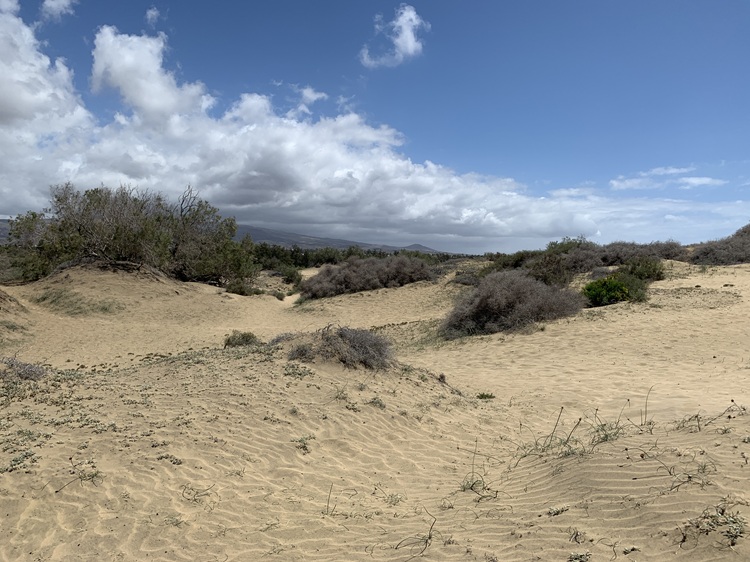
We hiked around this part of the dunes for about 15 minutes. It was sunny and hot, and we didn’t feel up to hiking an unknown distance to hopefully reach the area pictured above. So we called it good enough and walked the half-mile back to our car.
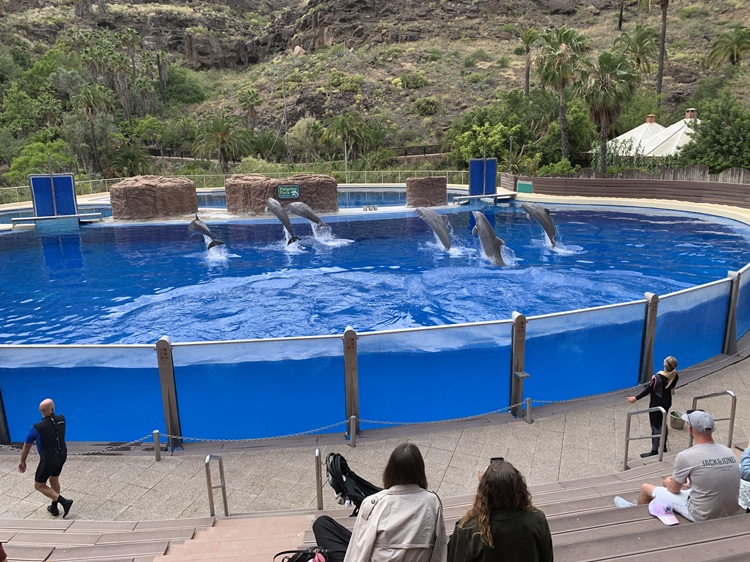
Then we drove to Palmitos Park, a zoo/botanical garden located several miles into a wooded canyon. It was well worth the trip! It had an impressive array of exotic birds, exotic fish, butterflies, monkeys, lemurs, tortoises, and many other animals. And… dolphins! While we have mixed feelings about keeping dolphins in captivity, these dolphins seemed happy and well cared for.
In addition to the animals, the park was a botanical garden. The grounds were lush with trees and tropical plants, creating an almost jungle-like atmosphere that lowered the temperature and added to the ambiance.
We took so many pictures at Palmitos Park that we decided to present them in their own post here. This post also includes some videos from the dolphin show.
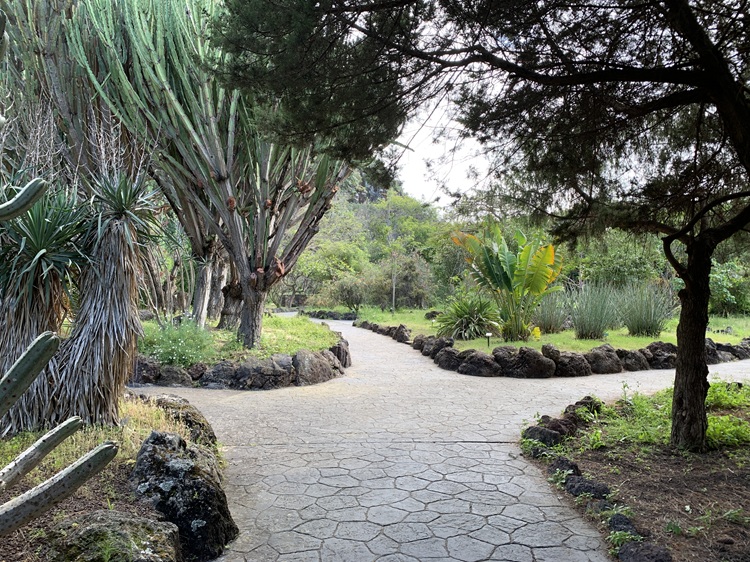
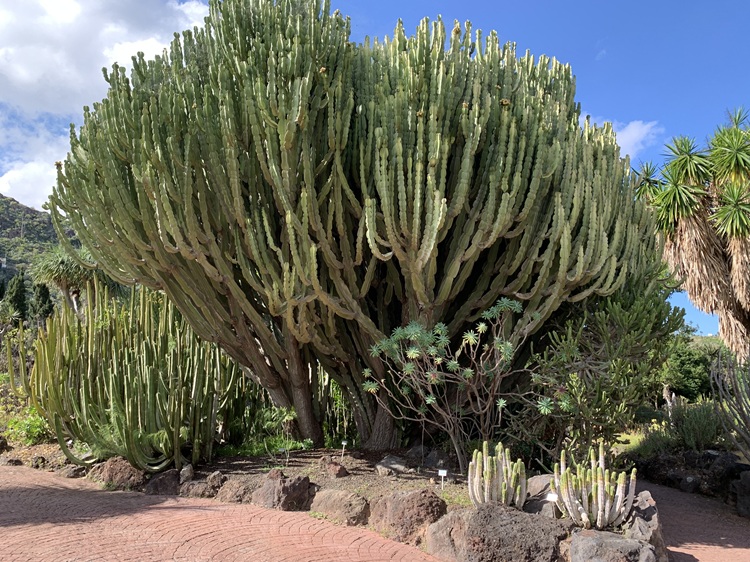
Our last stop was Jardín Botánico Canario Viera y Clavijo, 7 km south of Las Palmas. It features approximately 500 plant species endemic to the Canary Islands. While it wasn’t one of the more memorable gardens we have visited, it was nice and was well worth our visit. And it was free!
Back in Las Palmas, here’s Dave on Playa de las Canteras at sunset.

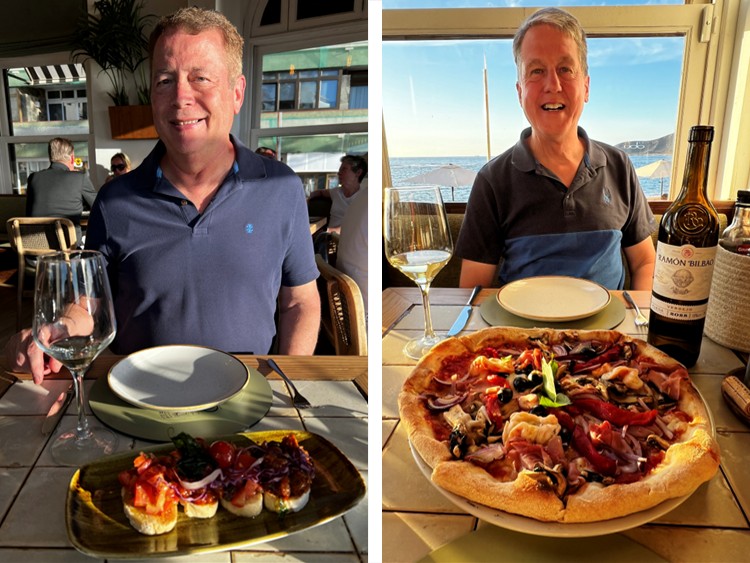
We ate dinner in restaurants facing the beach each night we were there. We enjoyed bruschetta and pizza (and wine!) at Ristorante O’sole Mío, obviously an Italian restaurant.
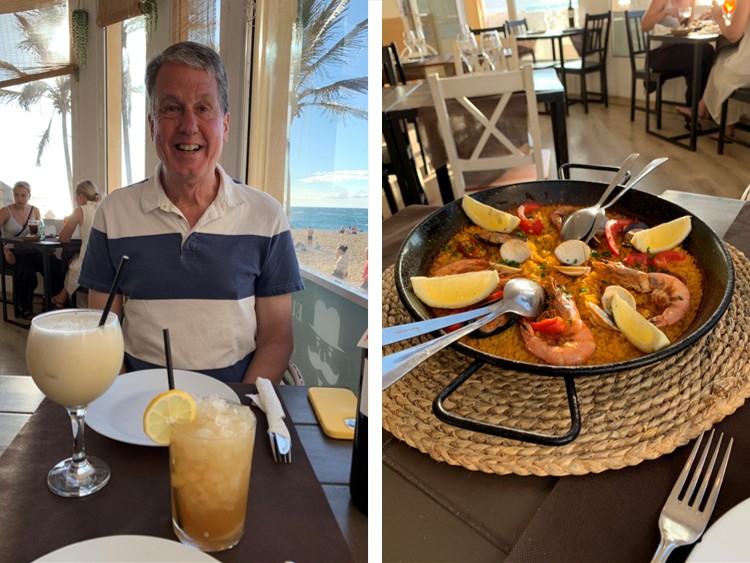
Our favorite venue was El Campesino. Food and drink prices on Gran Canaria are quite inexpensive. El Camepesino offered cocktails for only 6,50€ (about $7.50), so Dave ordered a Caipirinha and Jeff ordered a Pina Colada. Although it was unusual for a Caipirinha not to contain muddled lime wedges, this drink was delicious! So was the Pina Colada. We ordered seafood paella for the main course.
The sangria was also remarkably delicious. We asked our waiter about the ingredients, and he said that, in addition to red wine, it contained brandy, triple sec, and banana liqueur. The banana liqueur was the “secret sauce.” It gave the sangria a rich, smooth taste. We’ll try it at home!
For dessert, Jeff ordered the Mousse de Gofio con Platano, a toasted corn mousse with banana, rum, and chocolate. It was amazing! (And yes, Dave ate a few bites.)
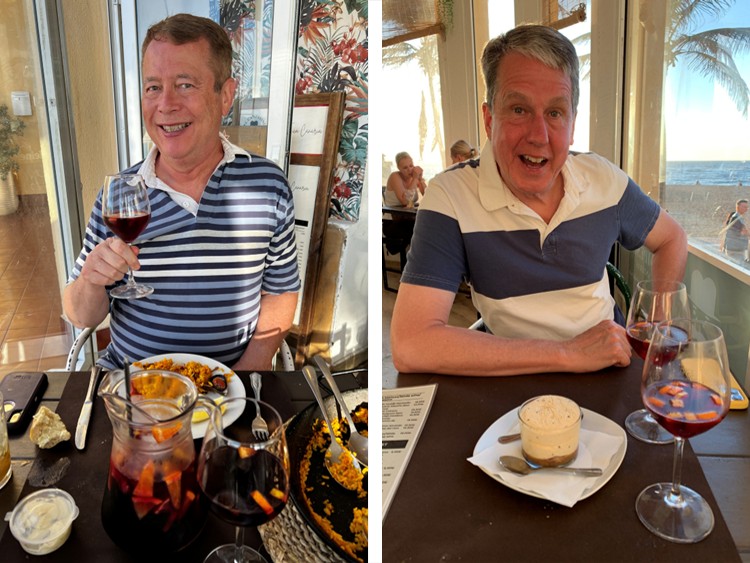
El Campesino was so satisfying that we returned the next night.
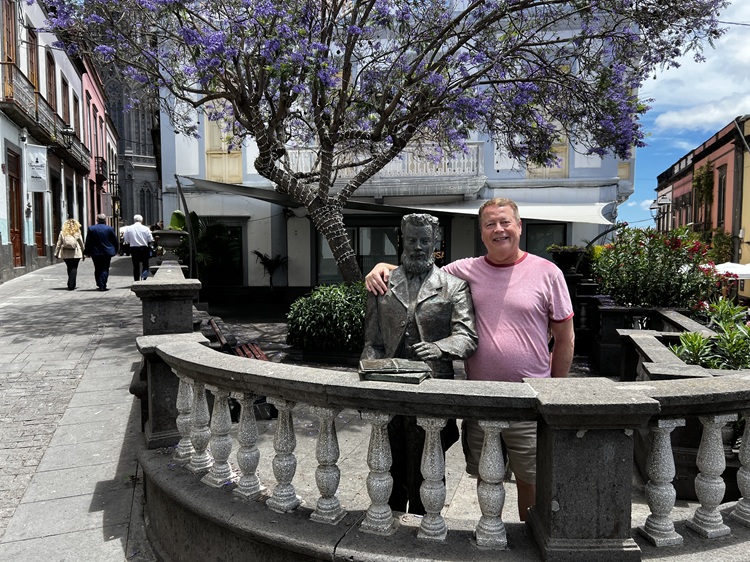
Finally, here are a couple of fun pictures. Here’s Dave with a new friend in Arucas.
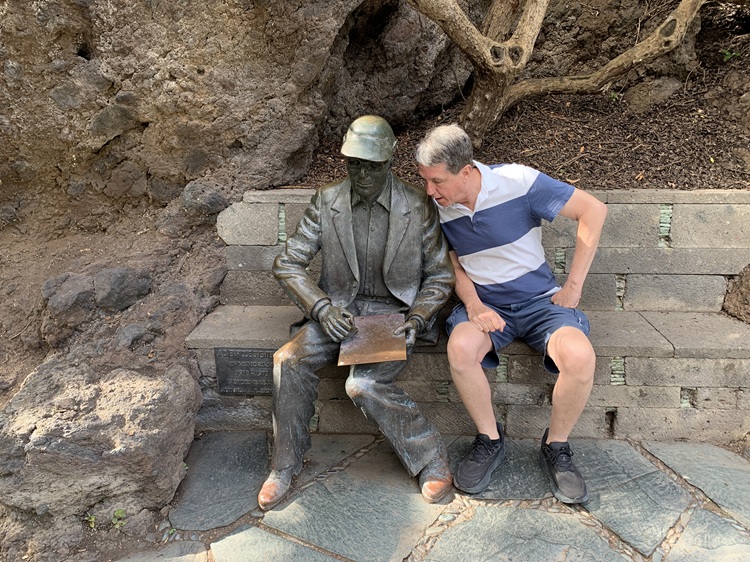
Jeff met this guy in Jardín Botánico Canario Viera y Clavijo.
So, how did Gran Canaria compare to Tenerife?
Honestly, we liked Tenerife better. Gran Canaria’s interior offered more spectacular natural beauty than Tenerife, although our trip to Tenerife’s Mount Teide was remarkable too. But Tenerife had more culture and seemed less gritty – at least when comparing Santa Cruz de la Tenerife to Las Palmas de Gran Canaria. We connected with the vibe of Tenerife much more than Gran Canaria. But Gran Canaria was definitely worth visiting.
Visit our post on Palmitos Park to see photos and videos of the beautiful animals we encountered there.
This post was amazing, so many pictures and videos! And you didn’t forget to show food and drinks, my favorite! Who knew this Canary Island was so beautiful and had so much to offer. So glad this was your first stop and you shared so much.
Americans love to go to Europe on vacation, yet these islands (and the Azores and Madeira) seem to be off most people’s radar. I think most of their tourists come from mainland Spain and the UK.
On the other hand, I wouldn’t want them to get over-touristed either. The south coast of Gran Canaria (the beach resorts) have too many tourists already!