
During our travels, we’ve learned that the most enjoyable places to visit are often local spots off the tourist radar. These are the attractions that don’t show up in travel blogs and videos touting the top 10 must-see sights in a given city. Besides being free from the large tourist crowds, these places offer a unique, interesting sample of local culture.
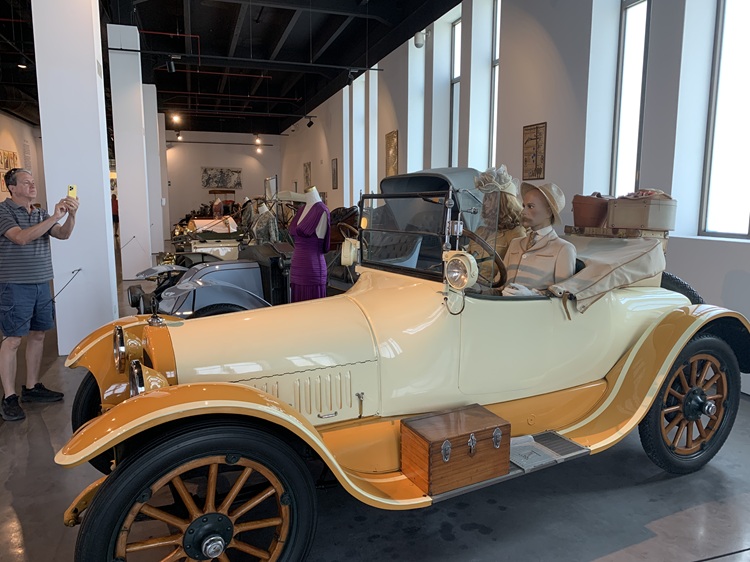
Such was the case with Málaga’s Museo Automovilistico (Automobile Museum). It’s located a kilometer or so outside of the city center/tourist zone, but it’s easily accessible by bus. There were only a few other visitors near us at any given time, so we could snap plenty of photos, read the description placards, and enjoy the museum at our own pace. And we did, indeed, snap plenty of photos! There were so many interesting automobiles from across the decades that we felt this museum should have a dedicated post.
This is a 1937 Mercedes, one of the most expensive cars of its time. It became a standard for elegance in automobiles.
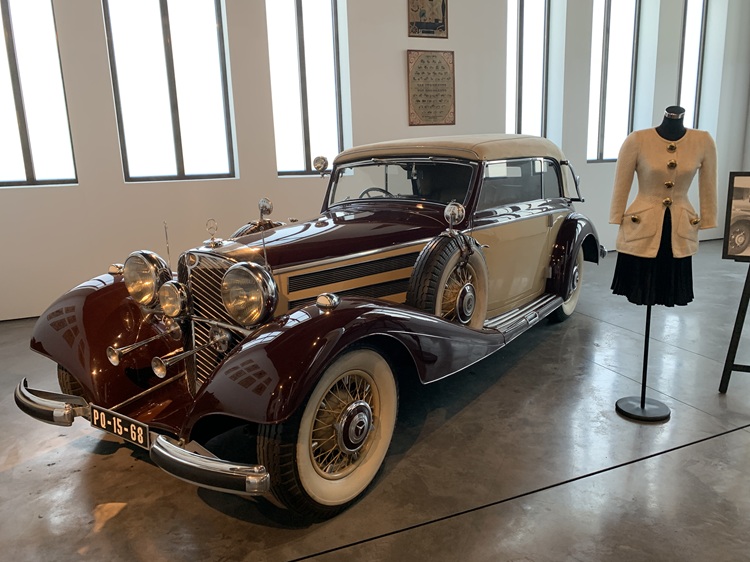
While we haven’t been to that many auto museums, it’s difficult for us to imagine a museum more complete, well-curated, and well-presented than this.
This colorful sculpture outside the museum gave us a hint of the fun, often whimsical nature of the museum we were about to enter.
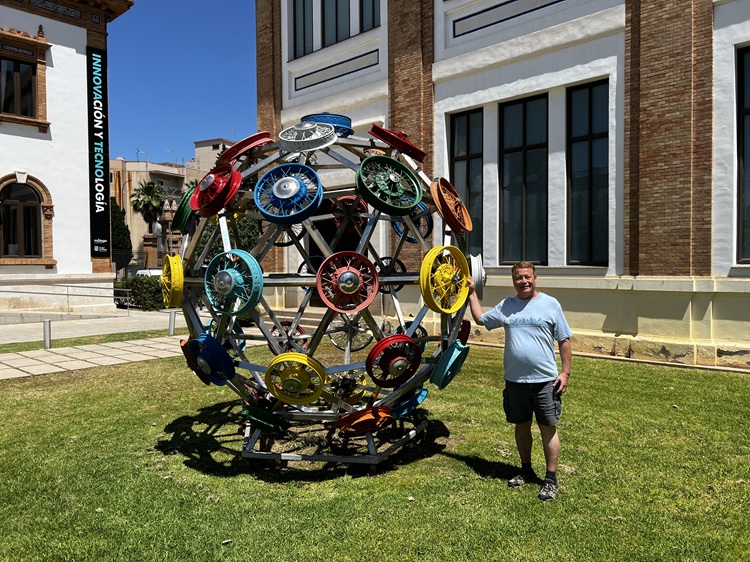
Another creative use of automobile parts.
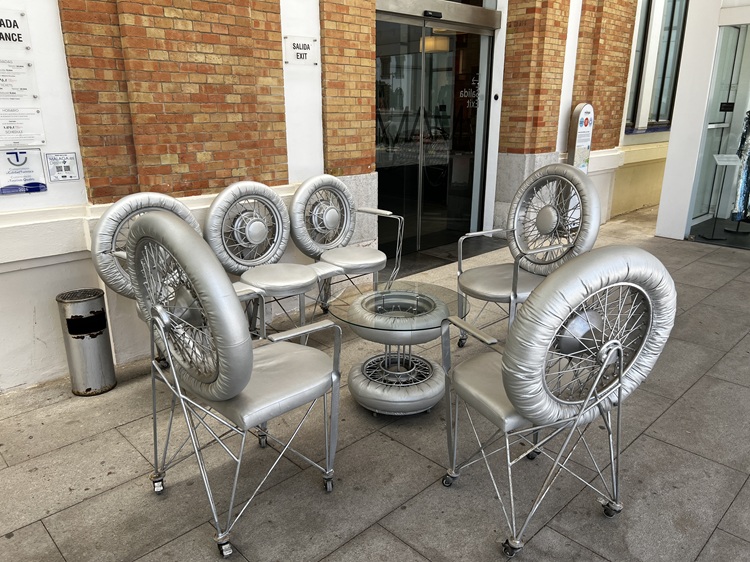
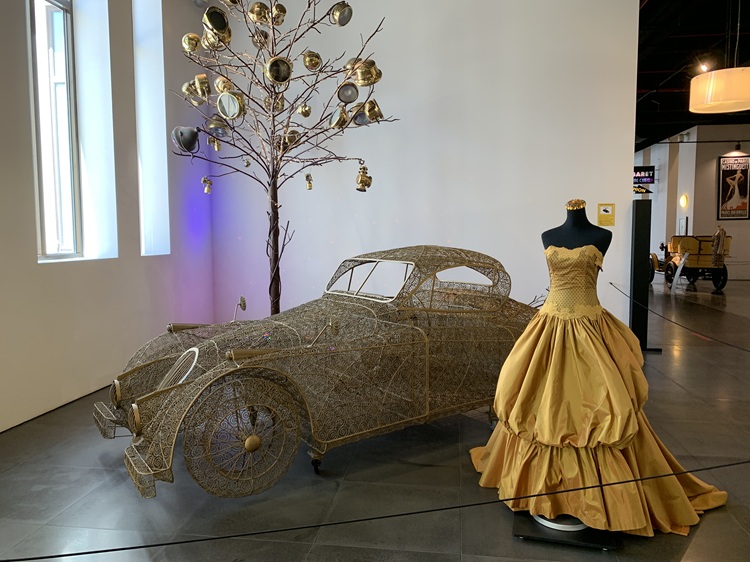
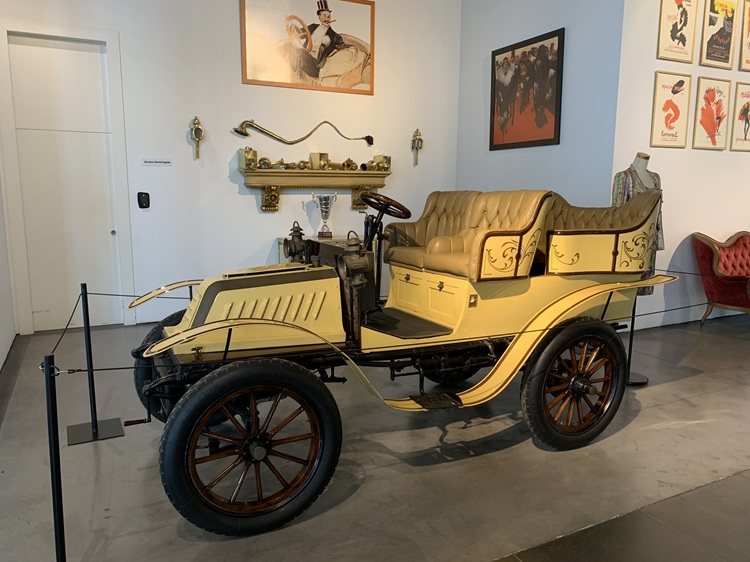
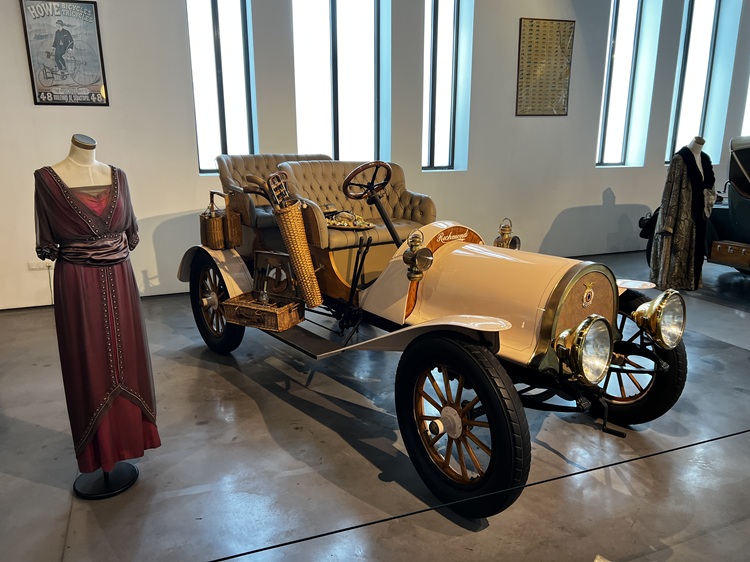
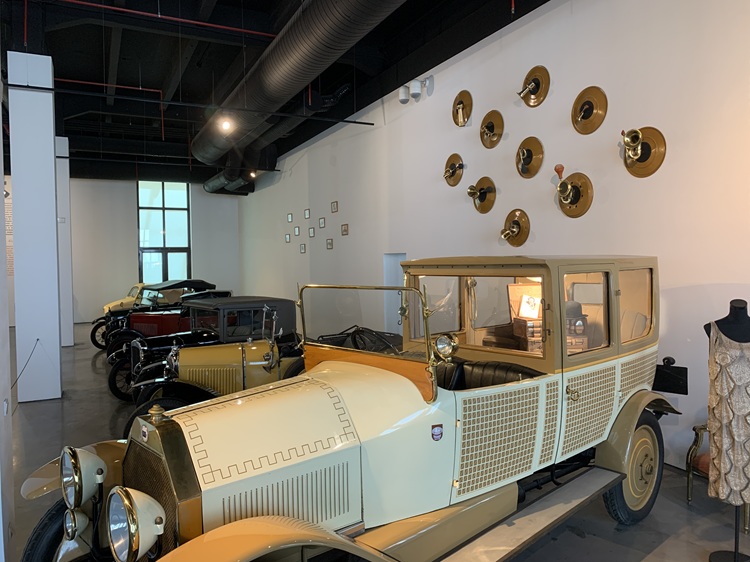
This museum created a unique presentation concept by displaying dresses from the same era as the cars. This created an experience that could have a broader appeal to everyone visiting the museum.
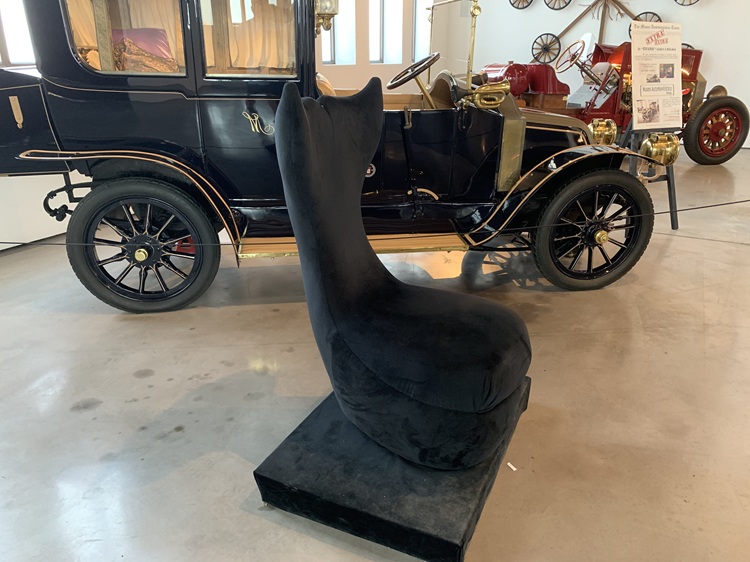
Occasionally, interesting furniture was displayed among the cars.
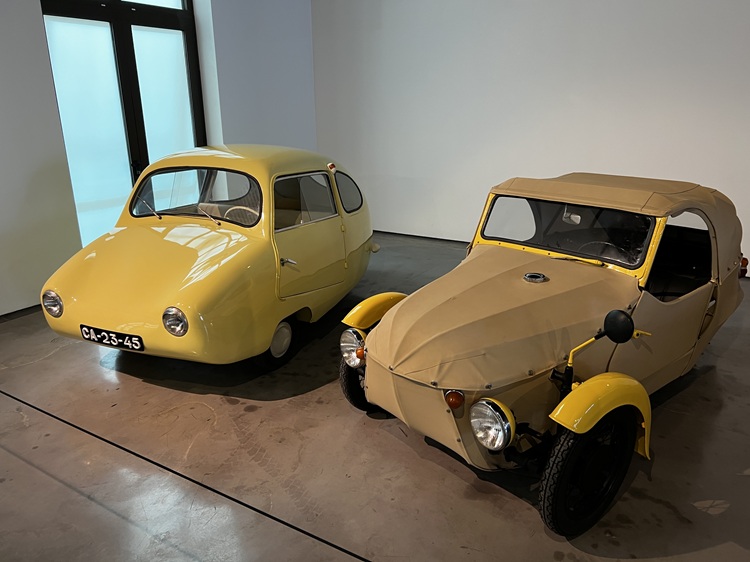
On the left, a car commonly referred to as “The Egg.” It was manufactured in 1955 by Fuldamobil in Germany, Greece, Chile, India, and England. It got very good gas mileage.
On the right, the “Baby Car.” It was popular in Eastern European countries, and is unique both for its three-wheel design and its canvas body. It was manufactured in the Czech Republic.
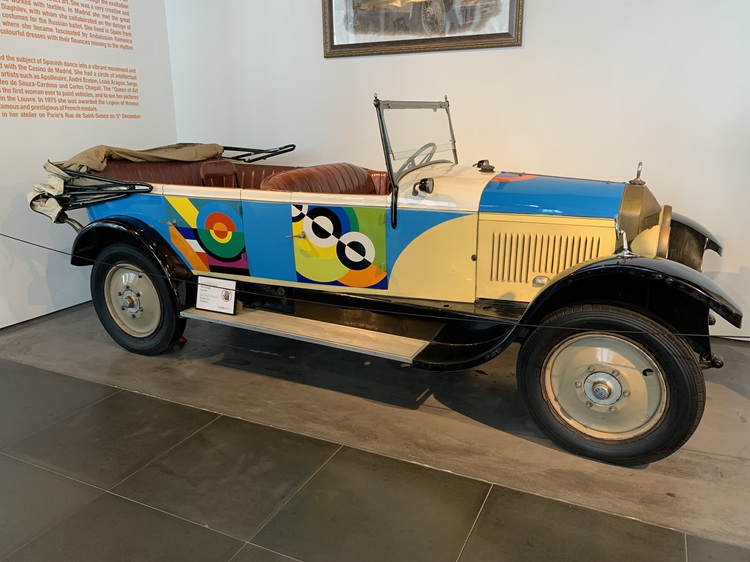
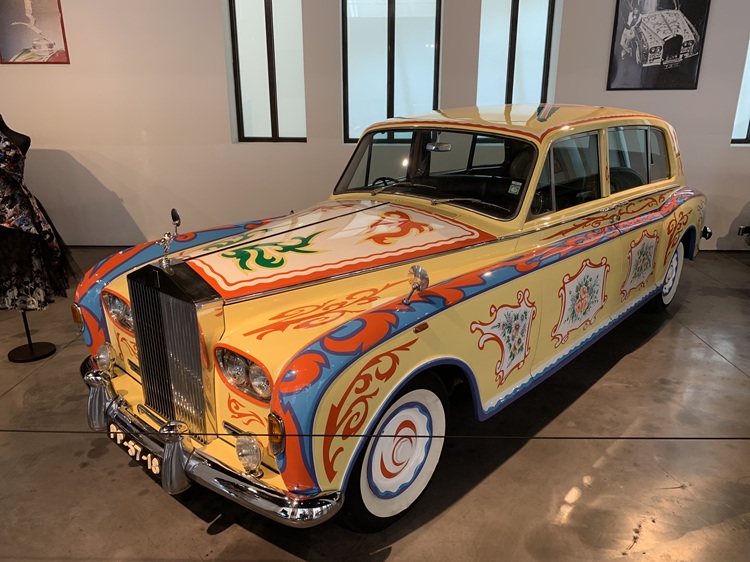
This Unic, made in France in 1920, was painted by Sonia Delaney, the first painter to decorate automobiles.
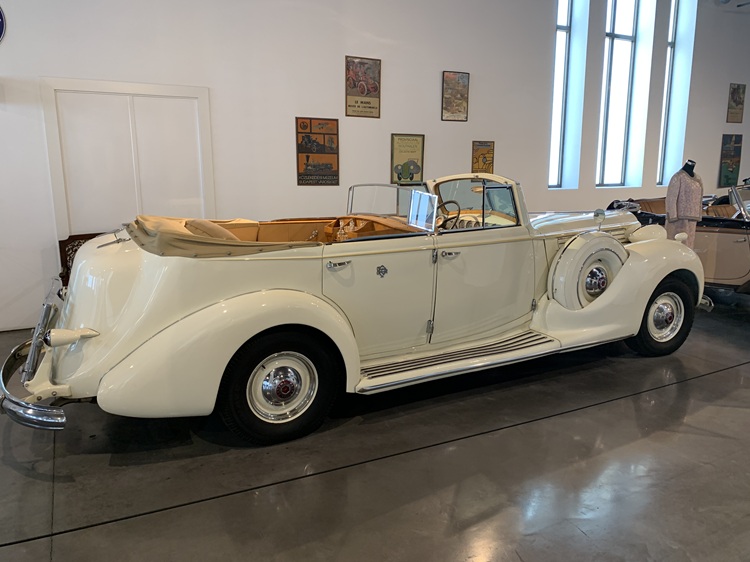
This 1939 Packard with 12 cylinders was dubbed “The Car of the White House,” since it was the vehicle of choice for President Franklin D. Roosevelt.
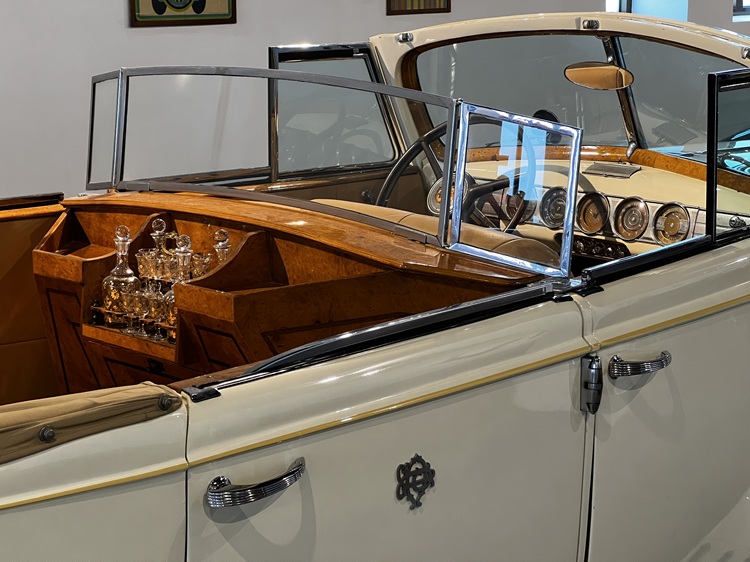
The bar in the car.
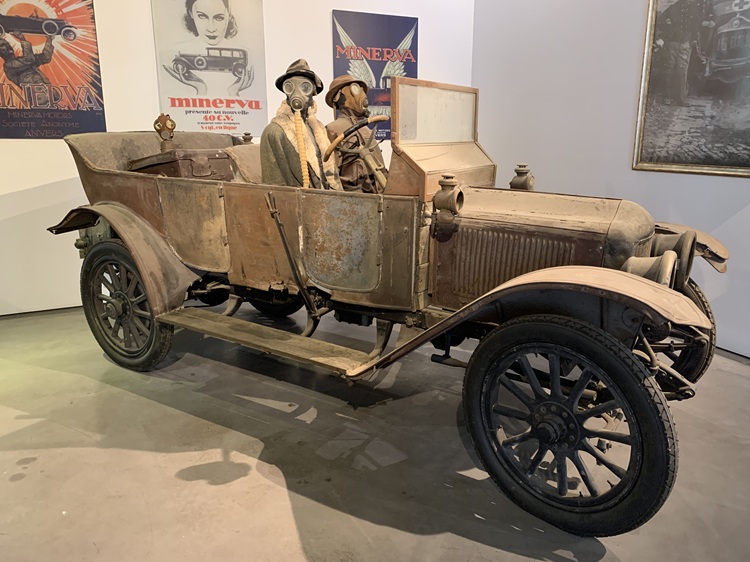
This 1916 Minerva was bombed during World War I. There are bullet holes in the rear seat.
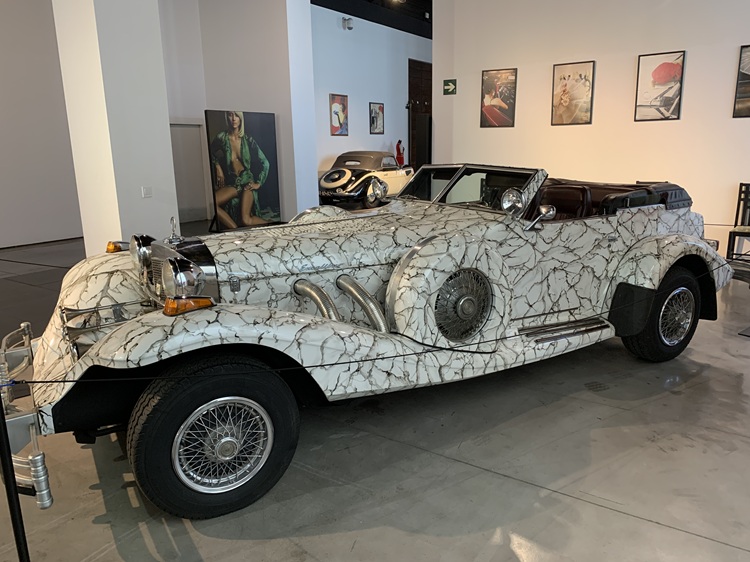
The 1983 Excalibur was a luxury car with a large engine capacity. Only 115 were produced. Arnold Schwartznegger owned one.
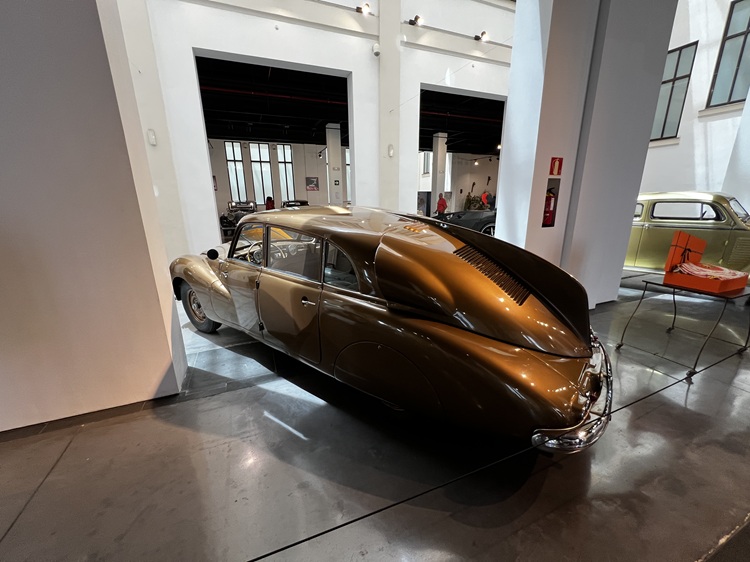
The 1947 Tatra was made in Czechoslovakia. It was popular with Hitler and other Nazi leaders. According to wartime rumors, seven Nazi Army officials were killed in accidents involving these cars, prompting Hitler to ban their production.
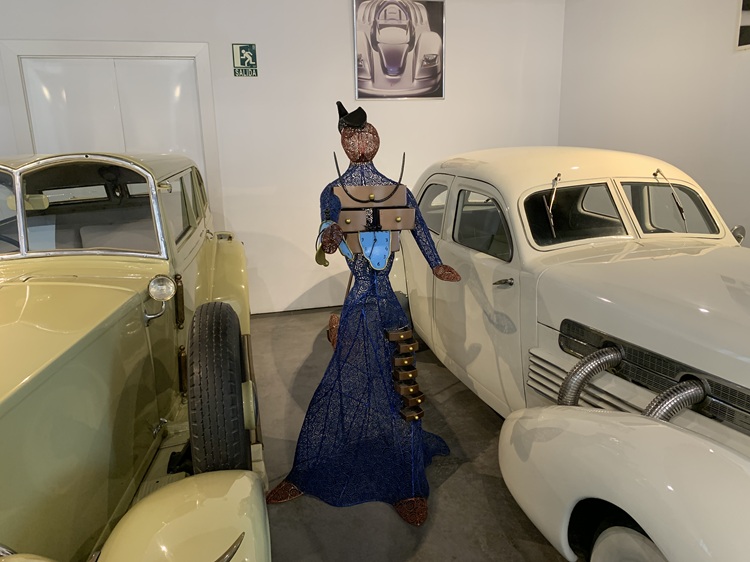
A curious Salvador Dali piece among the autos.
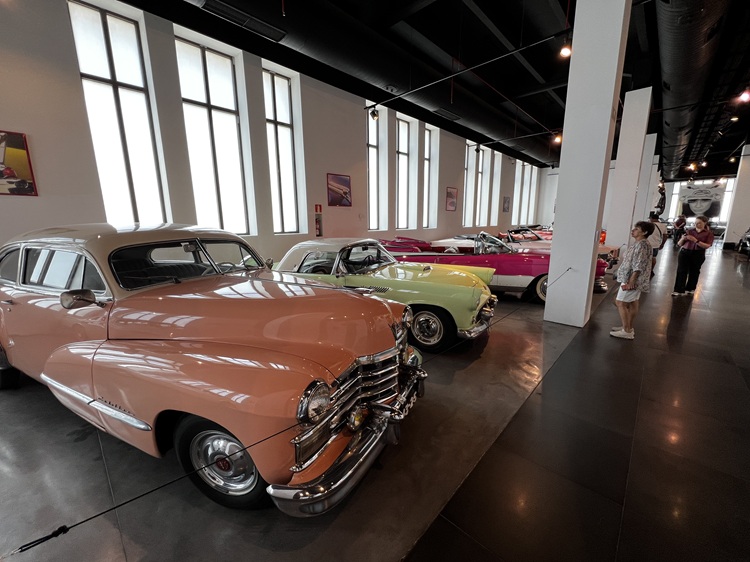
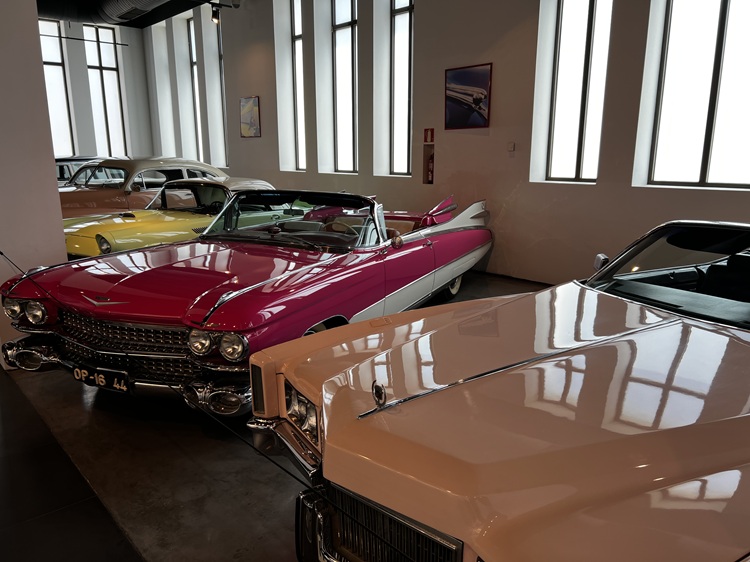
Classic American cars from the 50s and 60s were represented, too.
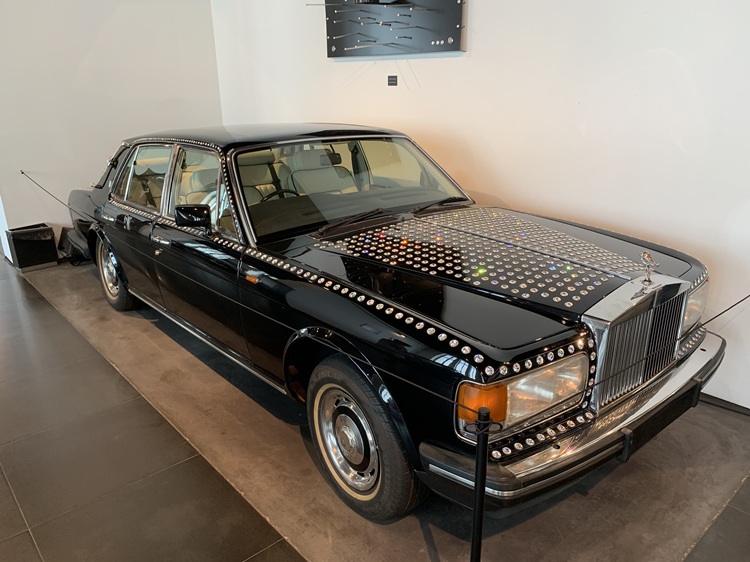
This 1989 Rolls-Royce is decorated with crystals by Susana Martins.
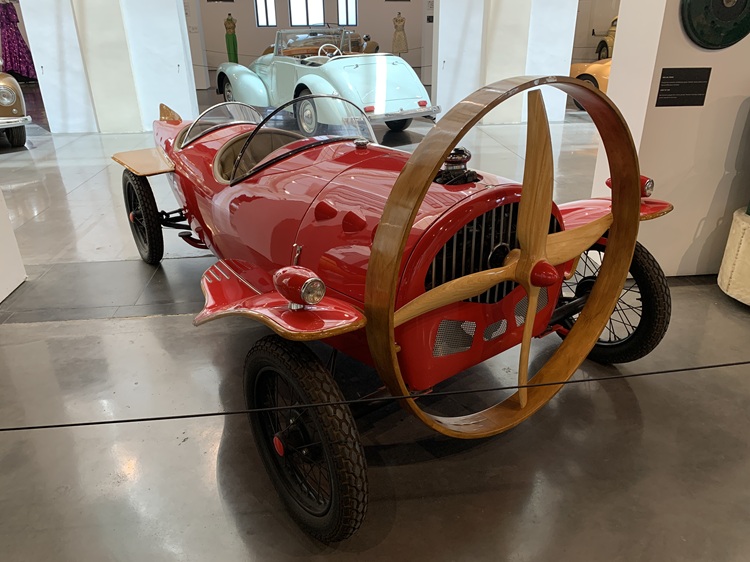
This Helicron 2 is a propeller-driven prototype built by Marcel Leyat in France between 1913 and 1927. This is one of only two known to exist today. The other is in the Nashville Motor Museum.
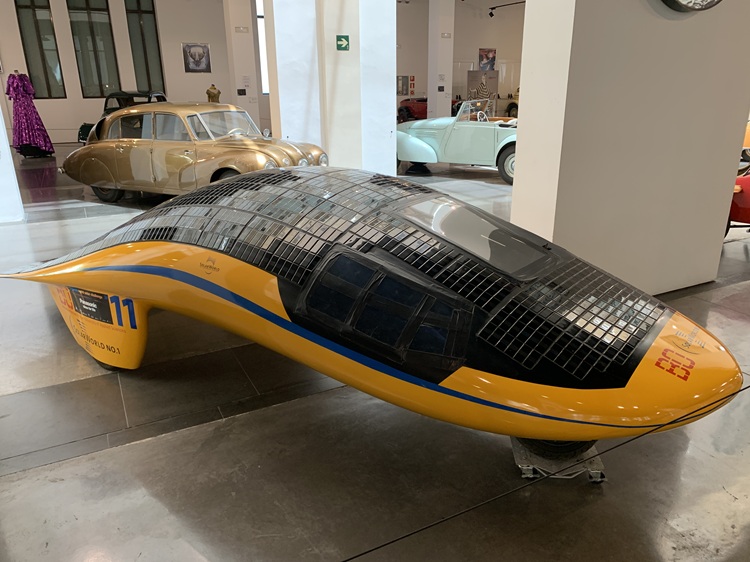
This 2009 Solar was manufactured in Bochum, Germany. It’s covered with solar panels that charge the car’s battery.
The 2011 Aire Comprimido is a prototype vehicle powered by compressed air. Could this be the next Batmobile?
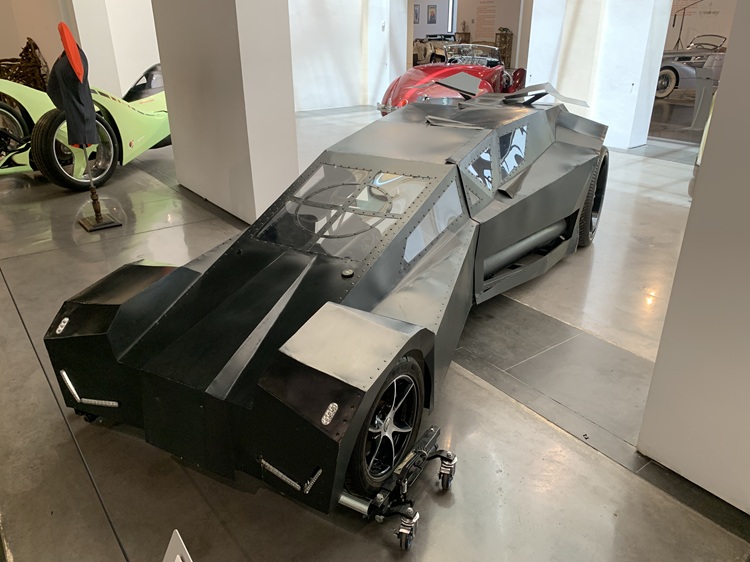
This 2010 Hidrogeno was created exclusively for the Automobile and Fashion Museum in Germany. It’s powered by water. It decomposes water and converts it into electrical energy.
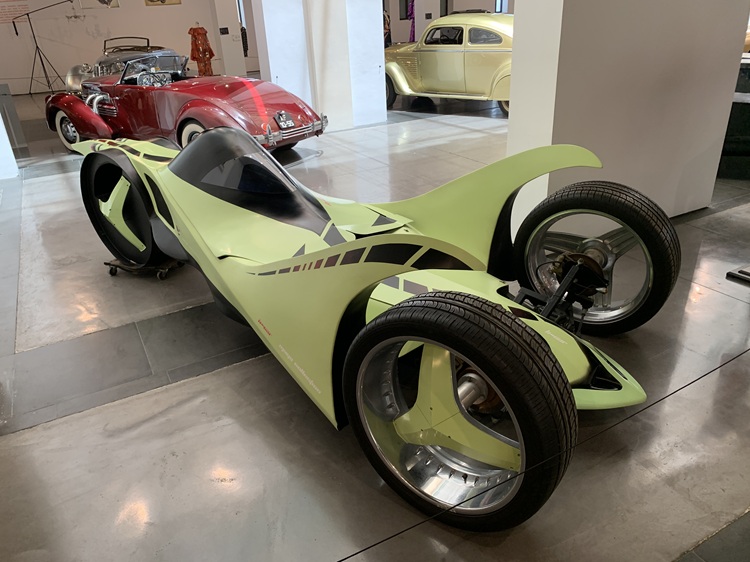
A third-generation Corvette Stingray, manufactured between 1967 and 1982.
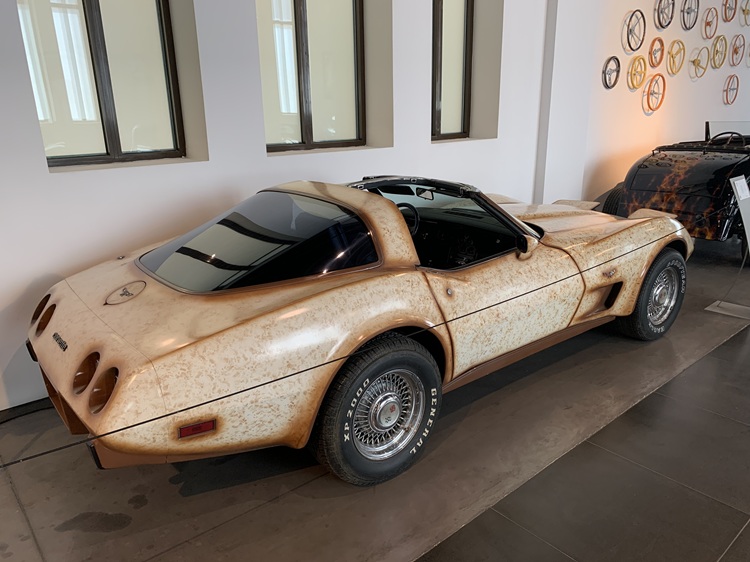
We hope you enjoyed this virtual tour of Málaga’s Museo Automovilistico! You can see the other sites in Málaga in this post.
Wow!!! So many cool cars! Love this post!!!
Thanks, Nancy! It was a remarkable experience. This is the kind of local gem we really enjoy discovering!