
Our first stop on Spain’s mainland was Seville (Sevilla). We visited Seville once before on a one-day cruise stop, so we had seen the cathedral and several other points of interest before. We budgeted four nights and three days, which proved to be about right.
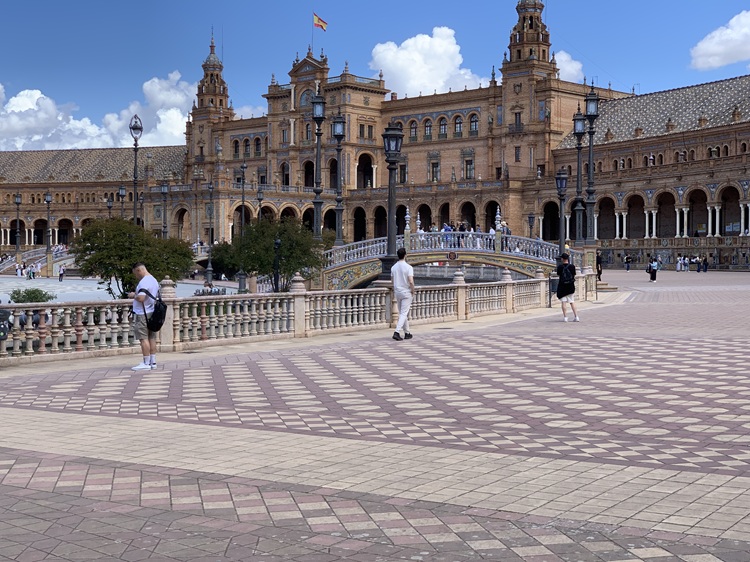
We visited the Plaza de España on our previous trip, but since we were nearby, we stopped again and took a few pictures and a video (below). It was worth a repeat!
The Palacio de las Dueñas was constructed in the late 15th century. The palace’s most recent resident was Cayetana Fitz-James Stuart, best known simply as “Cayetana,” who lived there until she passed in 2014. She was a socialite who, during her life, was the most titled aristocrat in the world with approximately 50 titles.
Today, the palace is open to the public. We took a guided tour and ended up being the only two people on the tour. Our guide was very friendly and knowledgeable, which really brought the history of the palace and all the items on display to life.
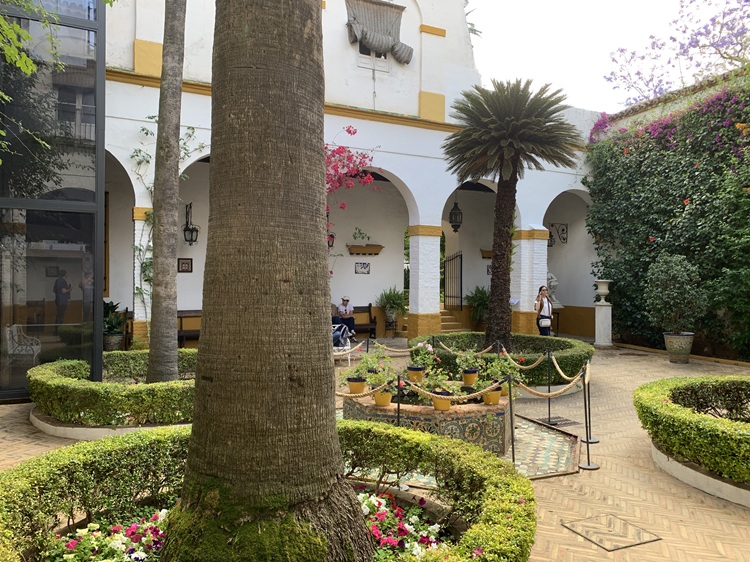
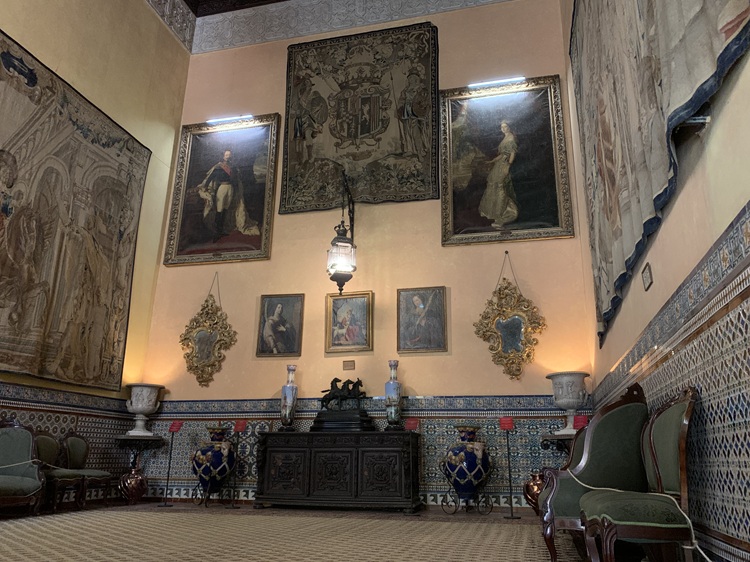
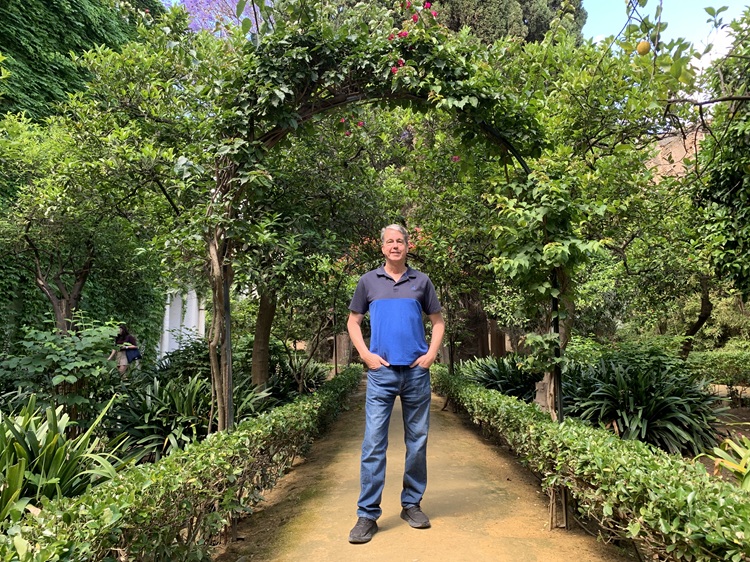
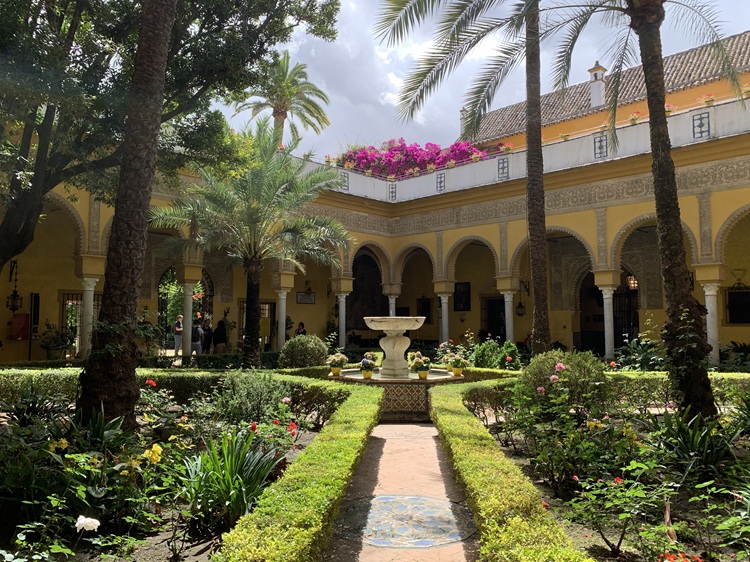
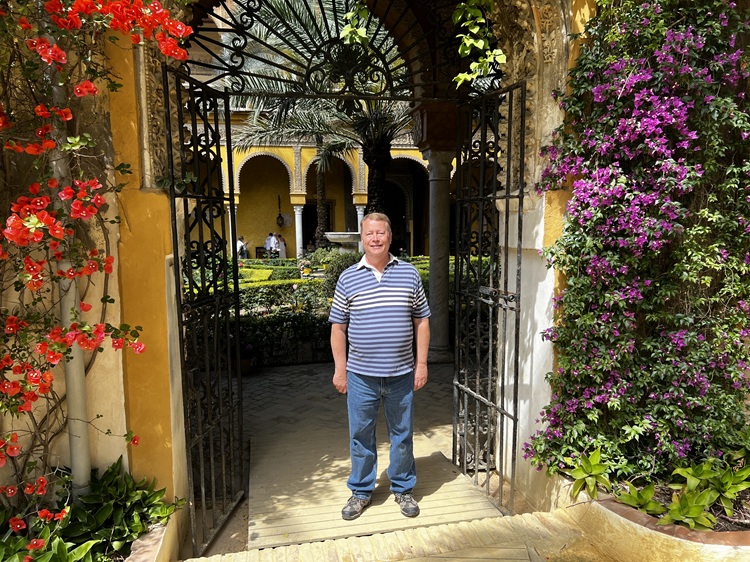
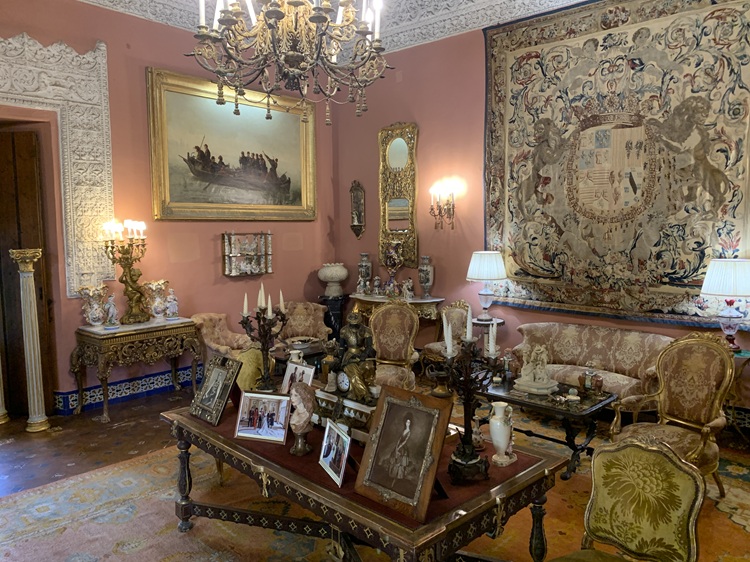
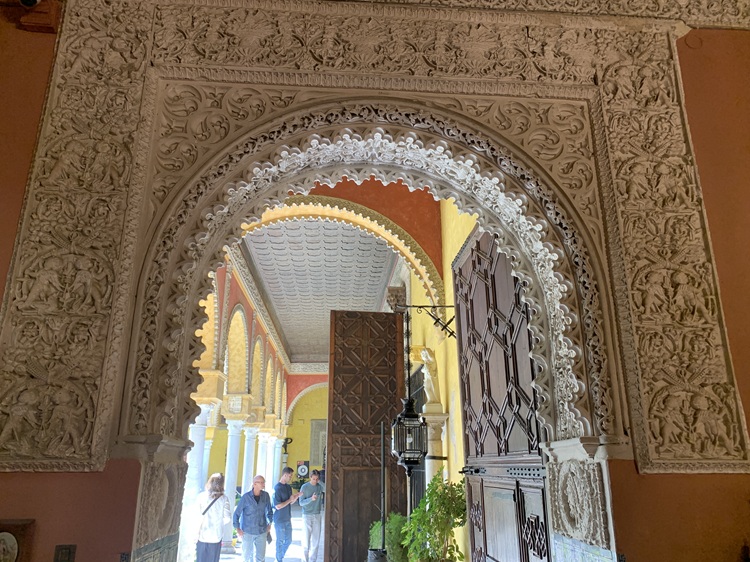
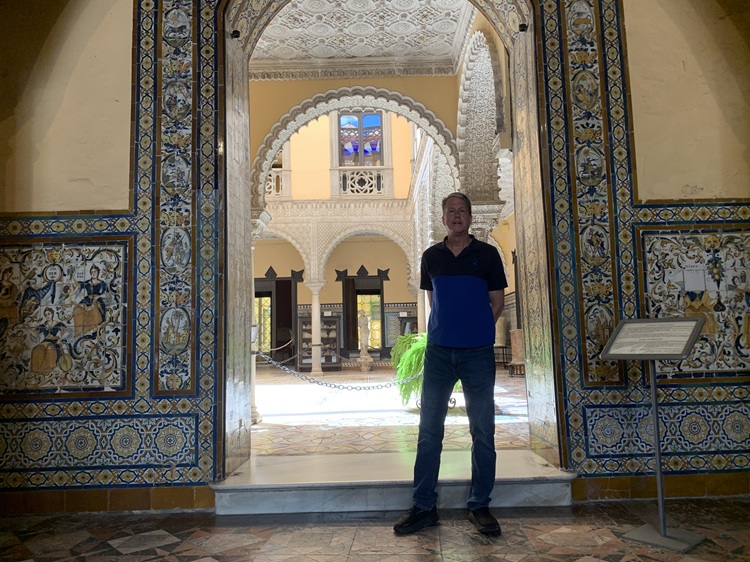
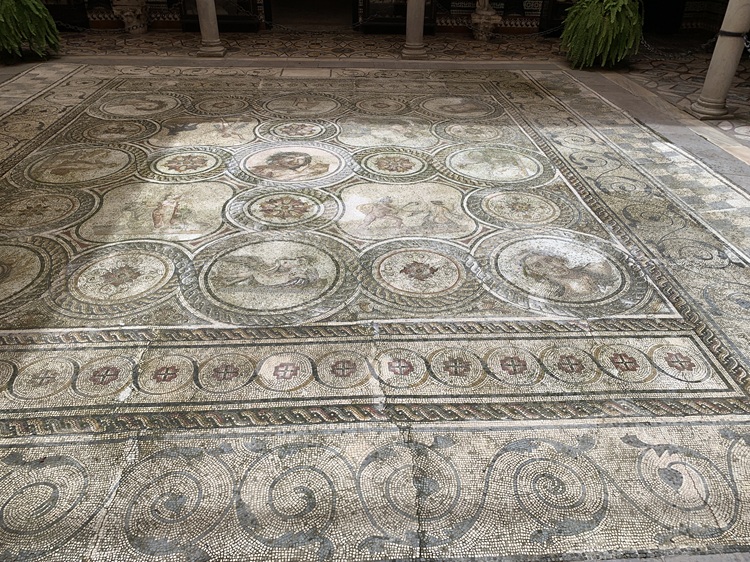
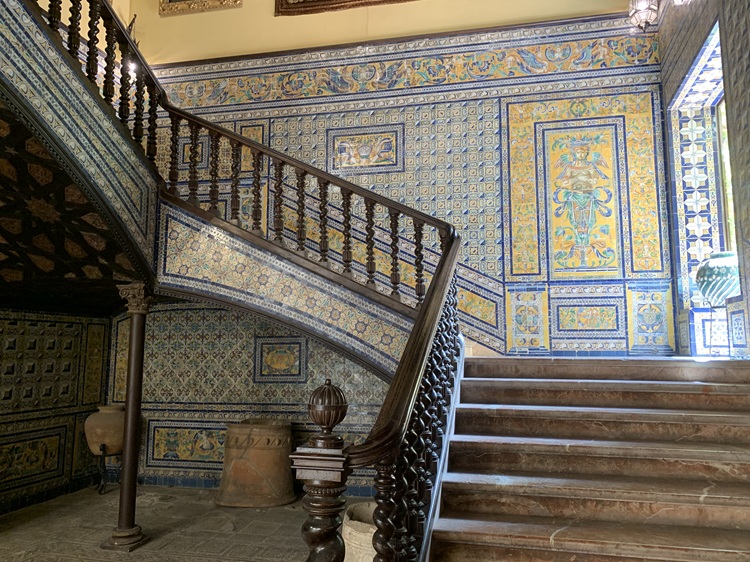
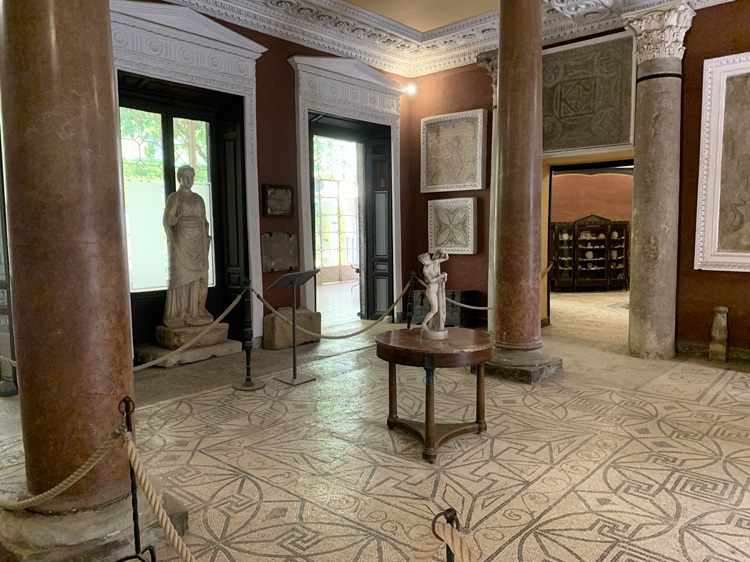
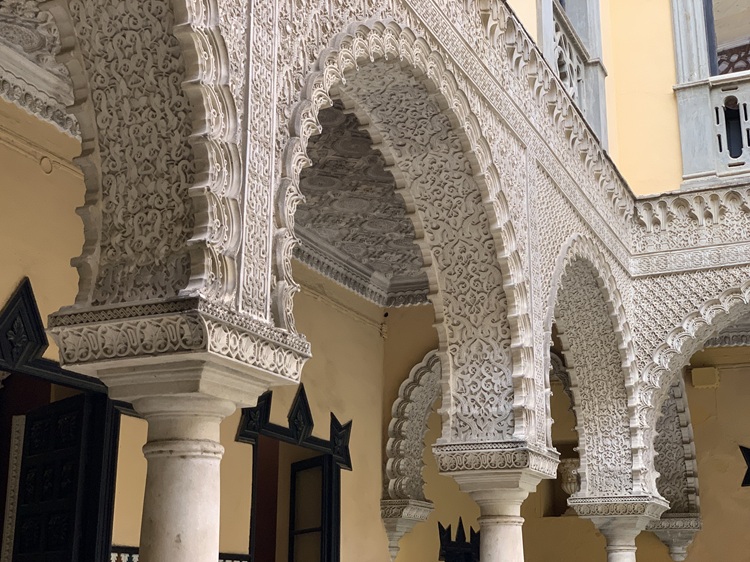
Next, we visited the palace of the Countess of Lebrija. Dating to the 16th century and remodelled between the 18th and 20th centuries, the palace is characterised by its collection of art, including Roman mosaics and other antiquities, as well as Asian art, paintings by European masters, and European decorative arts.
In 1901, it was bought by Regla Manjón Mergelina, Countess of Lebrija, who restored and reconstructed the palace to house her valuable collection of antiquities. She had a passion for archaeology and adorned the palace with artefacts found during her excavations, as well as those bought from other archaeologists.
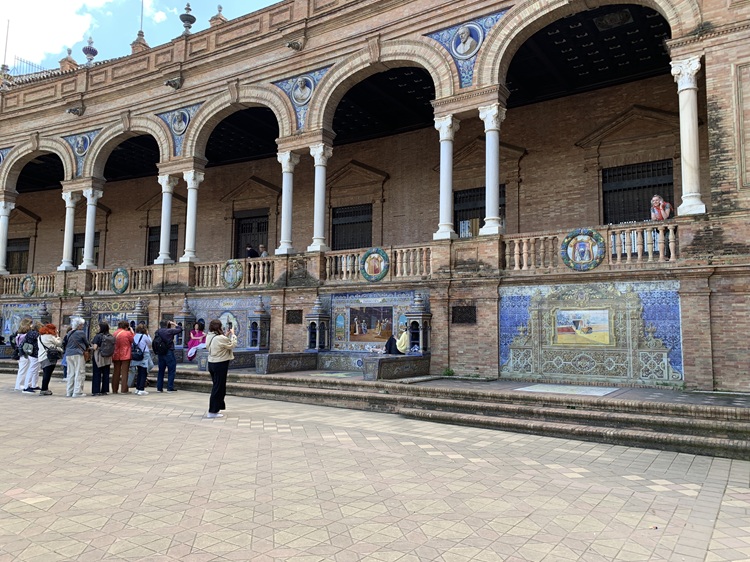
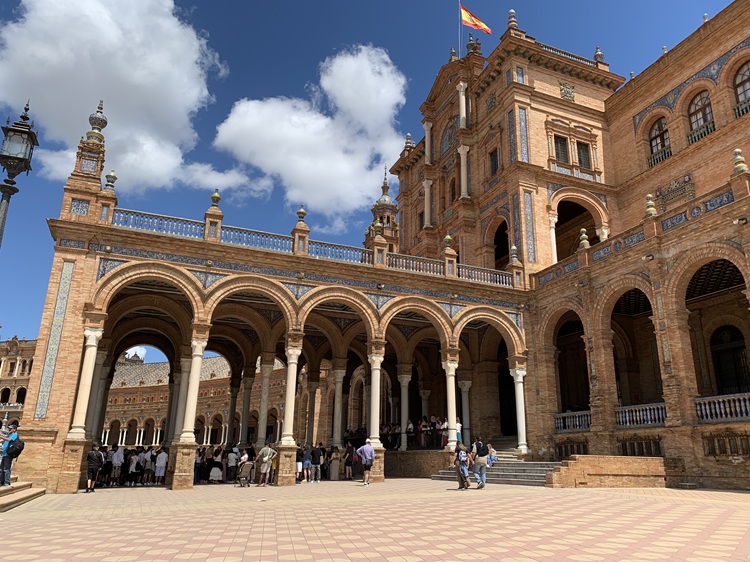
Here is a video and several more pictures from the Plaza de España. It was built in 1928 for the Ibero-American Exposition of 1929.
Along the length of the plaza are tiled mosaics commemorating provinces throughout Spain.
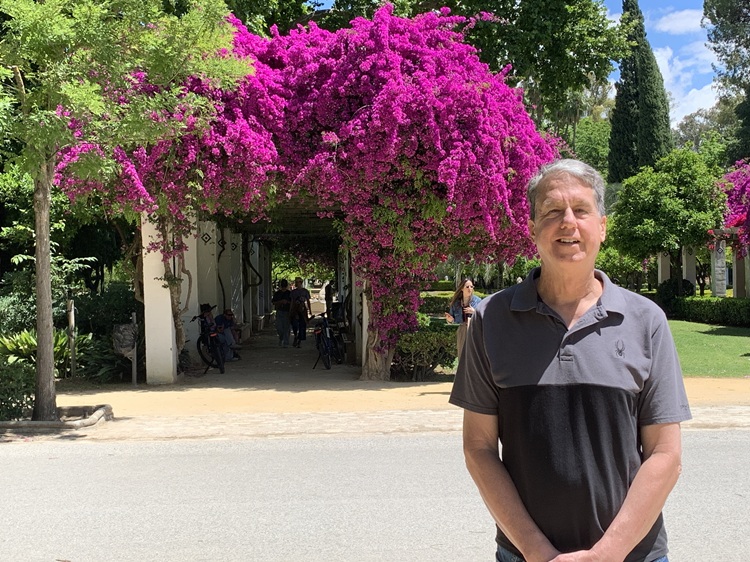
Parque de María Luisa is directly across from Plaza de España. It was significantly upgraded for the Ibero-American Exposition of 1929. It is home to a wide variety of plant and bird species, and makes for a very pleasant stroll.
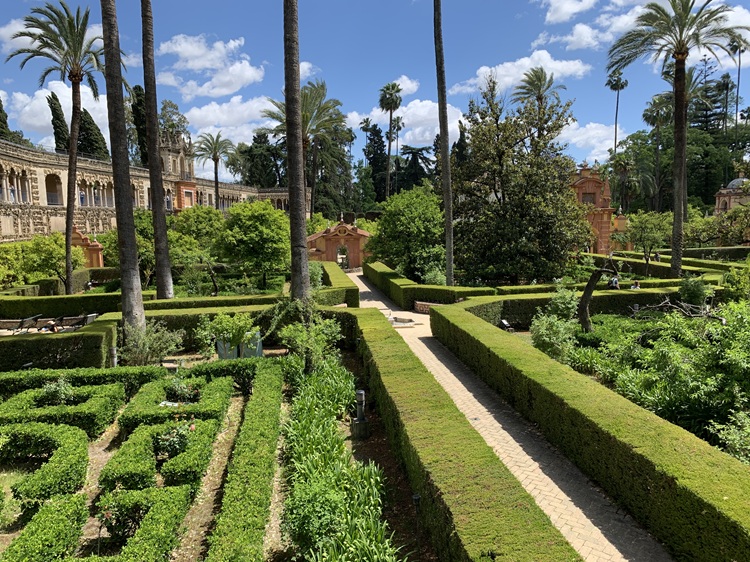
The Royal Alcazar of Seville is one of the residences of the royal family of Spain. They reside on the upper floors when they visit Seville. The ground floor is now a tourist hotspot in Seville. It’s mostly empty rooms, but the tiles and arches are beautiful.
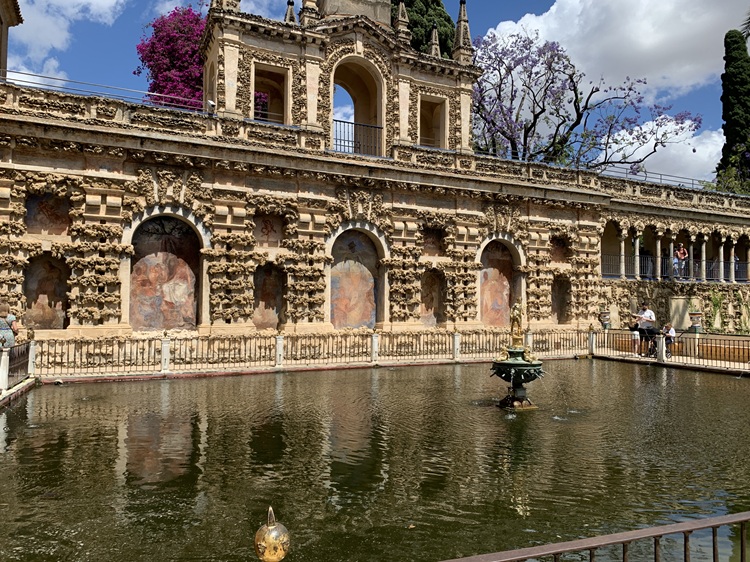
Honestly, wandering through the various rooms devoid of any furnishings wasn’t particularly satisfying. The extensive gardens behind the palace were more interesting.
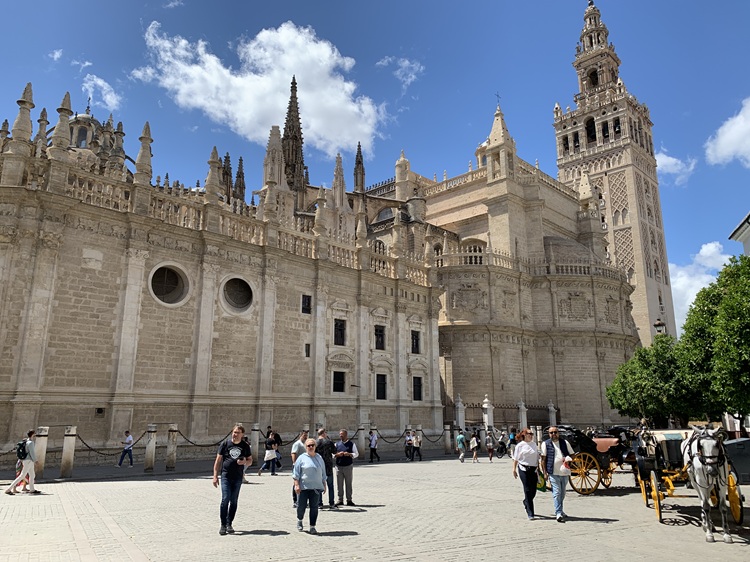
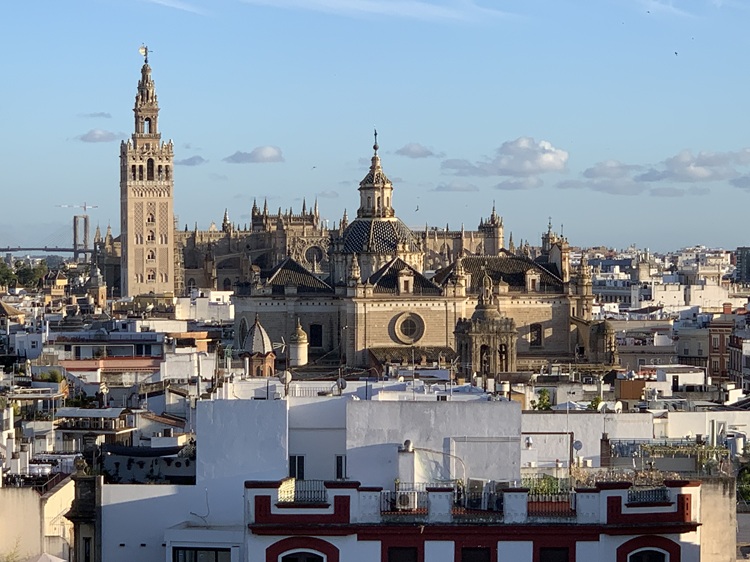
As mentioned above, we visited the cathedral on our previous visit, so we didn’t visit again this time. (We’re not much into cathedrals anyway.) But we walked past it several times, as our apartment was two blocks to the north. So here’s a picture of part of the exterior.
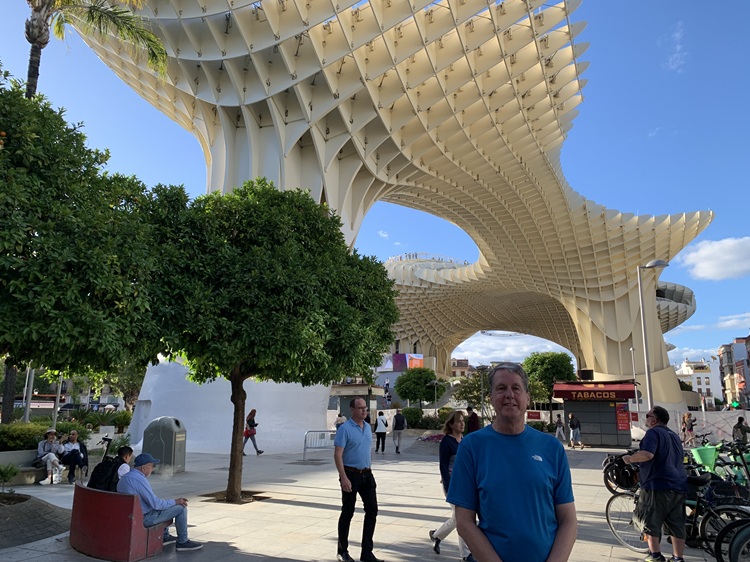
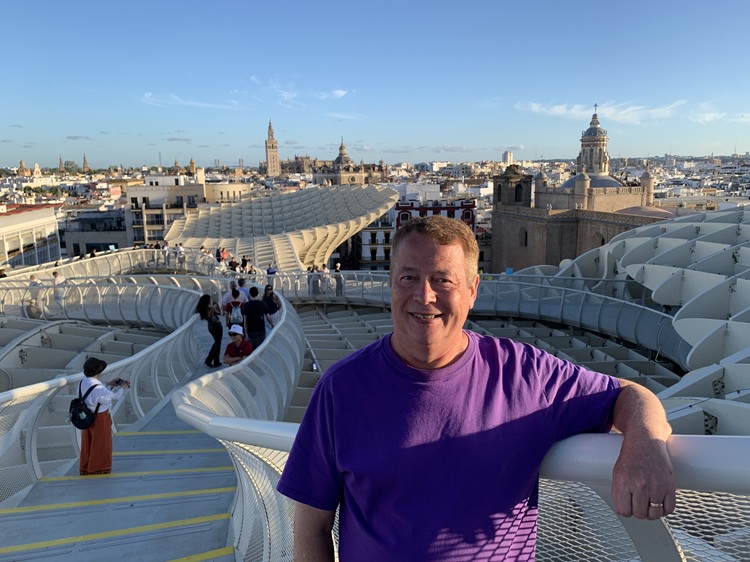
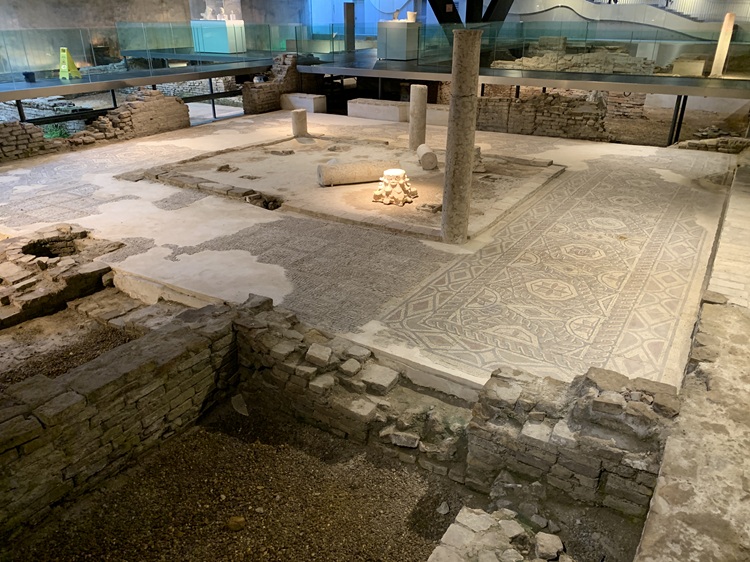
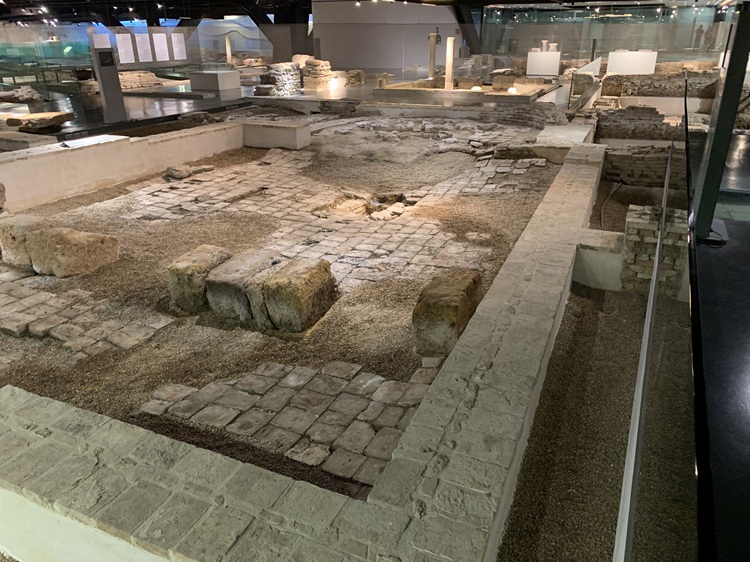
Las Setas de Sevilla (a.k.a. The Metropol Parasol or Mushrooms of Seville) sits on the site of what was once one of Seville’s busiest markets. But it gradually fell into disuse and was demolished in 1973. In the 1990s, the city decided to build an underground parking garage on the site and reconstruct a market above it. But when they began digging, they discovered archaeological remains from centuries-old structures, and plans for the parking garage were halted.
Following a competition for proposals for what to do with the area, the “Metropol Parasol,” by Berlin architect Jürgen Mayer, was selected. Now it’s an iconic tourist destination. It is constructed primarily of laminated wood. They claim it’s the largest wooden structure in the world, but after visiting the Sanctuary of Truth in Pattaya, Thailand, we question that.
In any case, it is quite a sight to behold. There is a walkway around the top, which we availed ourselves of.
The Antiquarium beneath the Mushrooms displays the archaeological remains.
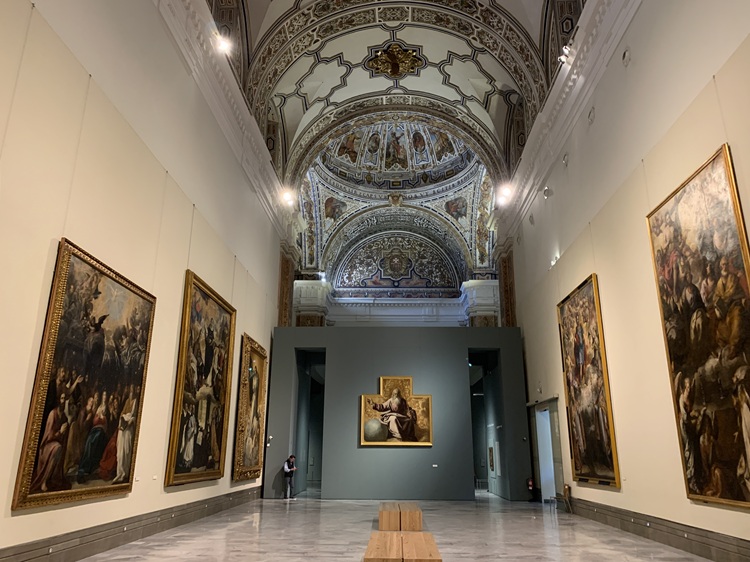
On our last day, we visited the Museo de Bellas Artes de Sevilla (Museum of Fine Arts). Housed in a former convent, it was devoted almost exclusively to religious art. We’ve already seen so much of this type of artwork, and we’re not fans of it, so we didn’t find much of interest. But our tour guide was passionate about it and possessed a deep knowledge of some of the pieces. He was able to point out elements of some works that would be missed by a casual observer. That made the experience a little more interesting.
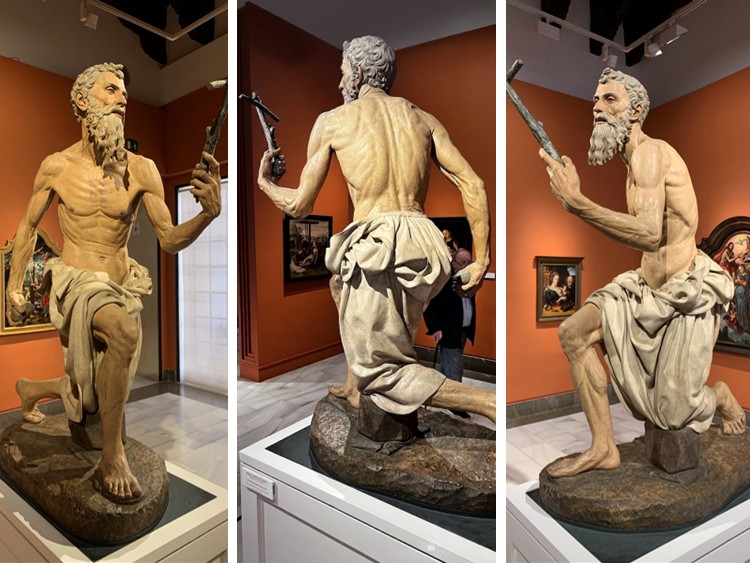
Our guide told us that this statue, San Jerónimo Penitente by Pietro Torrigiano, was widely revered for its near-perfect portrayal of the anatomy of an older man and has been studied by subsequent generations of Andalusian sculptors.
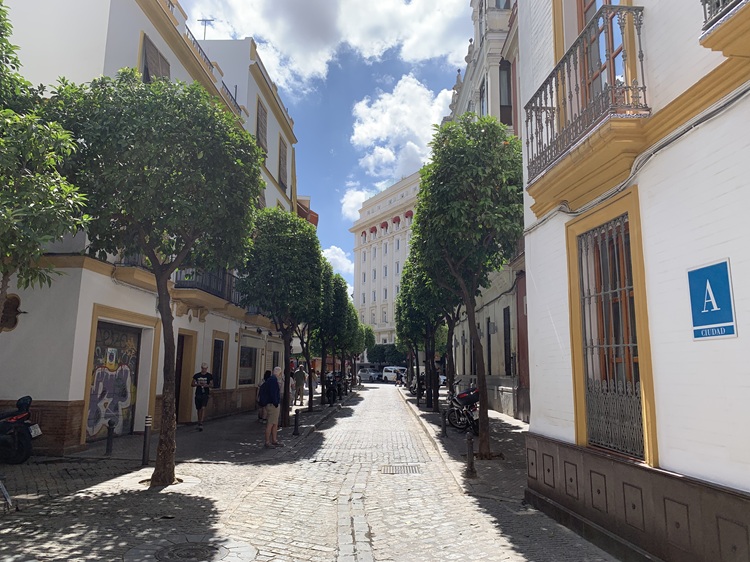
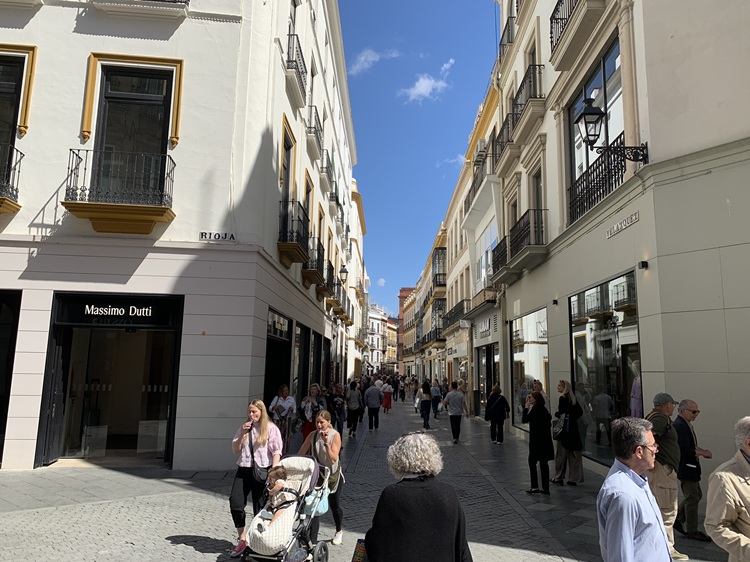
Here are a couple of random photos of the streets of Seville. Much of the old architecture remains and has been mostly well-maintained. As this is a tourist area, most buildings now have tourist-oriented businesses on their ground floors. It’s rather disappointing to see how commercialised it has become. European travel guru Rick Steves blames the proliferation of Airbnb rentals, which have forced many of the locals (and their businesses) out of the area due to higher rents. That has no doubt contributed, but we feel the area would be overrun by tourists anyway. So, apparently we’re part of the problem.
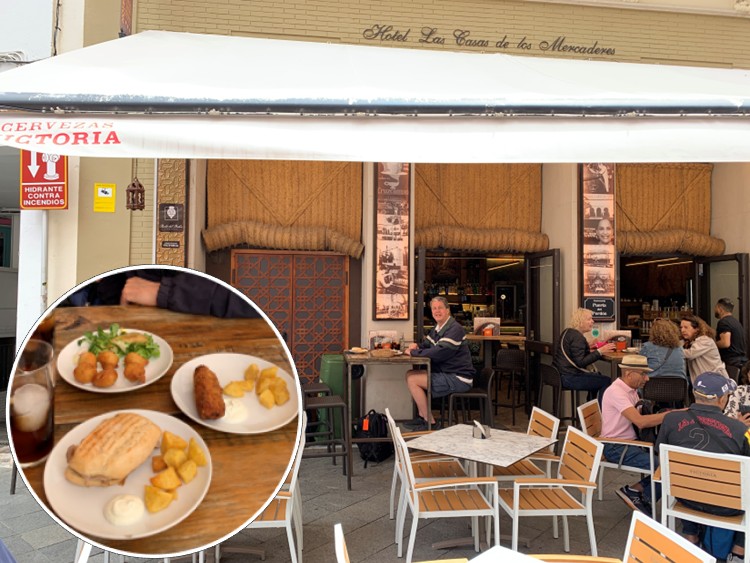
On the day we arrived, we had two hours to kill before we could check into our apartment. So we found this nearby tapas bar, claimed a table, and ordered several dishes and two Coke Zeros. In Europe’s café culture, it’s perfectly acceptable to occupy a table for an extended time. Business was light in the mid-afternoon, so we weren’t depriving any other potential customers of a table.
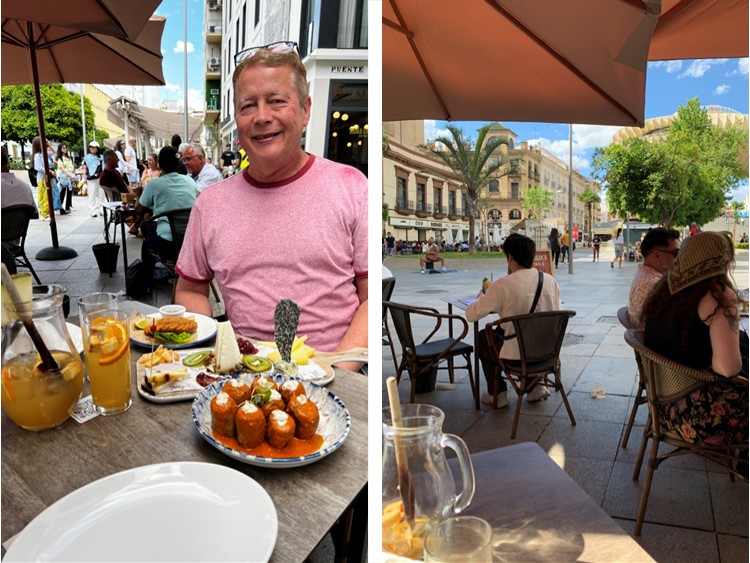
On our last day, we ate at a café near the Mushrooms. The food and sangria were delicious! And no, all of that food wasn’t for Dave; it was all for sharing. We were entertained by a talented guitarist (visible in the photo on the right) for most of our dinner.
These pictures were amazing! What a grand tour you had. The palaces were so interesting as was your descriptions.
Looking forward to your next post!
Thanks, Nancy! We’re glad you enjoyed them.
The San Jerónimo Penitente statue looks like an elderly instagram influencer with a selfie stick.
HAHAHA!!! You’re right!